
Laomedeia (Neptune XII): a small outer moon of Neptune
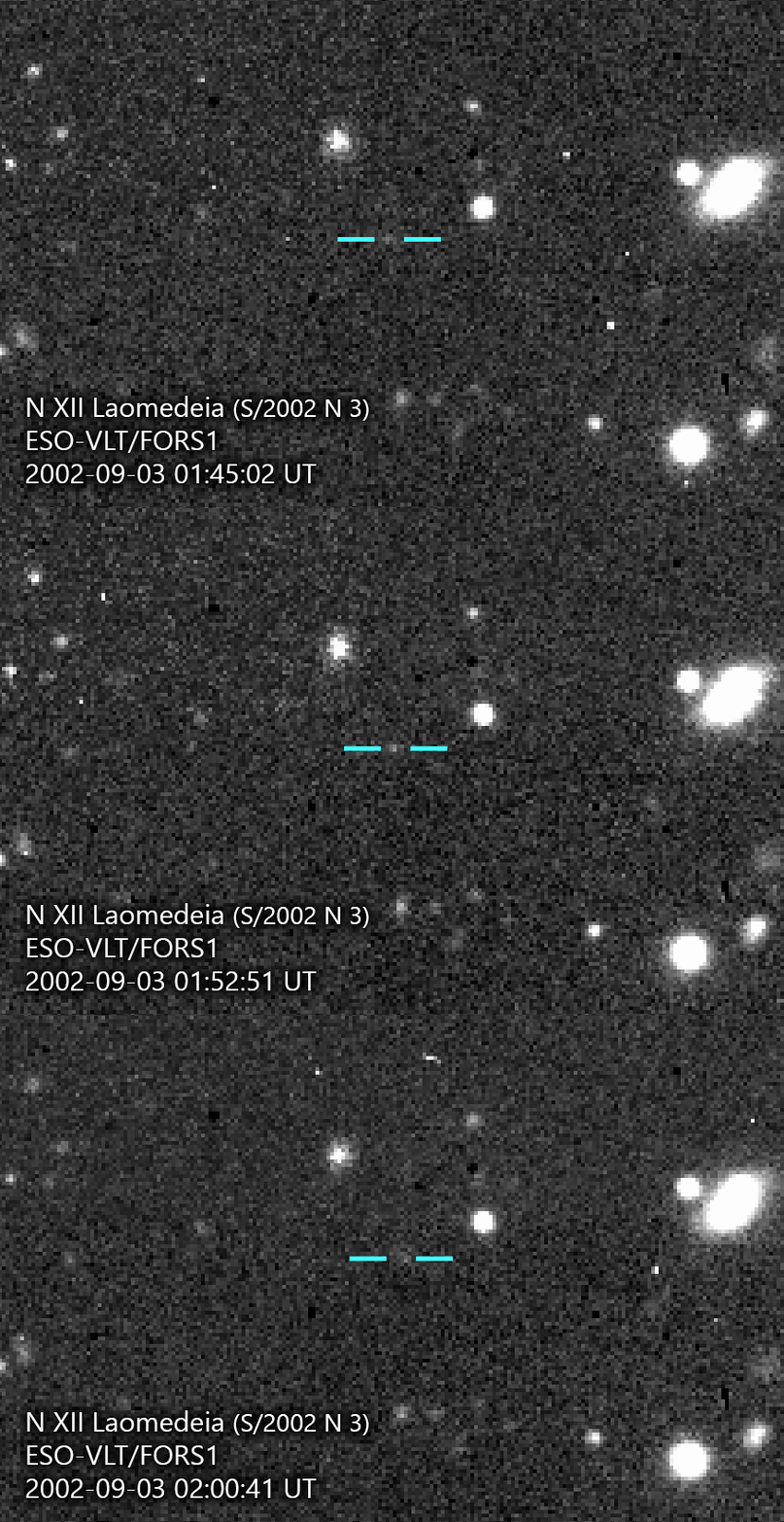
Laomedeia is a small, irregular satellite of Neptune discovered in 2002. It orbits far from the planet, is likely non-spherical, and is named for one of the Nereids; its diameter is roughly 42 km.
Overview
Laomedeia (Neptune XII) is one of Neptune's distant, small satellites. Identified in 2002, it is classified among the outer irregular moons rather than the closer, spherical inner satellites. Its modest size and weak self-gravity mean it does not have a rounded shape and is typically described as non-spherical or irregular in form. The moon's name comes from Greek mythology: Laomedeia was counted among the sea nymphs known as the Nereids.
Image gallery
7 Images


Physical characteristics
Direct measurements of Laomedeia are limited because it is faint and distant. Estimates rely on its observed brightness and assumed surface reflectivity (albedo). Using a commonly assumed low geometric albedo of 0.04, Laomedeia's diameter is approximately 42 kilometers. Key points:
- Estimated diameter: ~42 km (albedo-dependent) — see albedo assumption.
- Shape: irregular and non-spherical; insufficient mass to reach hydrostatic equilibrium — see general notes on non-spherical small bodies.
- Surface: presumed dark and cratered like other distant small satellites; color and composition are not well constrained.
Orbit and classification
Laomedeia orbits far from Neptune, with a mean orbital distance on the order of 23,571,000 kilometers. Its remote, elongated orbit and small size place it among Neptune's irregular satellites, a population thought to have been captured by the planet's gravity rather than having formed in place. The orbit is typical of outer moons in being more inclined and eccentric than inner regular satellites.
Discovery and name
The object was discovered by Matthew J. Holman and collaborators on August 13, 2002 and was provisionally designated S/2002 N 3. The discovery team and date are recorded in announcements from that period; see the discovery notice for August 13 and the year 2002. The name Laomedeia was approved and publicly announced on February 3, 2007 (IAUC 8802) — see the official notice February 3 and the circular IAUC 8802.
Context and scientific importance
Although small and faint, Laomedeia contributes to the overall picture of Neptune's satellite system and the dynamics of outer irregular moons. Studying such objects helps astronomers understand capture processes, collisional histories, and the distribution of small bodies in the outer Solar System. Because observational data are sparse, each additional measurement of brightness, color, or motion can refine estimates of size, orbit, and origin.
Notable distinctions
Laomedeia is one of many irregular satellites around the giant planets; its combination of small size, distant orbit, and mythological naming ties it to broader practices in planetary astronomy: grouping small outer moons by orbital characteristics and naming them after mythic figures associated with the host planet. Continued observations with larger telescopes or surveys may improve knowledge of its rotation, composition, and precise orbital elements.
Related articles
Author
AlegsaOnline.com Laomedeia (Neptune XII): a small outer moon of Neptune Leandro Alegsa
URL: https://en.alegsaonline.com/art/55970