
Abu Simbel temples: rock-cut monuments of Ramesses II
Two monumental rock temples in Nubia, carved for Ramesses II in the 13th century BC, moved in the 1960s to avoid Lake Nasser; a UNESCO World Heritage site and a major archaeological and tourist landmark.
Overview
The Abu Simbel temples are a pair of massive rock temples carved into a sandstone cliff by the ancient Egyptians. They stand at Abu Simbel in Nubia, in southern Egypt, not far from the border with Sudan. Located on the western bank of what is now Lake Nasser, about 230 km southwest of Aswan, the complexes form part of the UNESCO World Heritage Site known as the Nubian Monuments. The temples are among the best-known and most visually striking surviving examples of New Kingdom monumental art.
Image gallery
10 Images



Origins and purpose
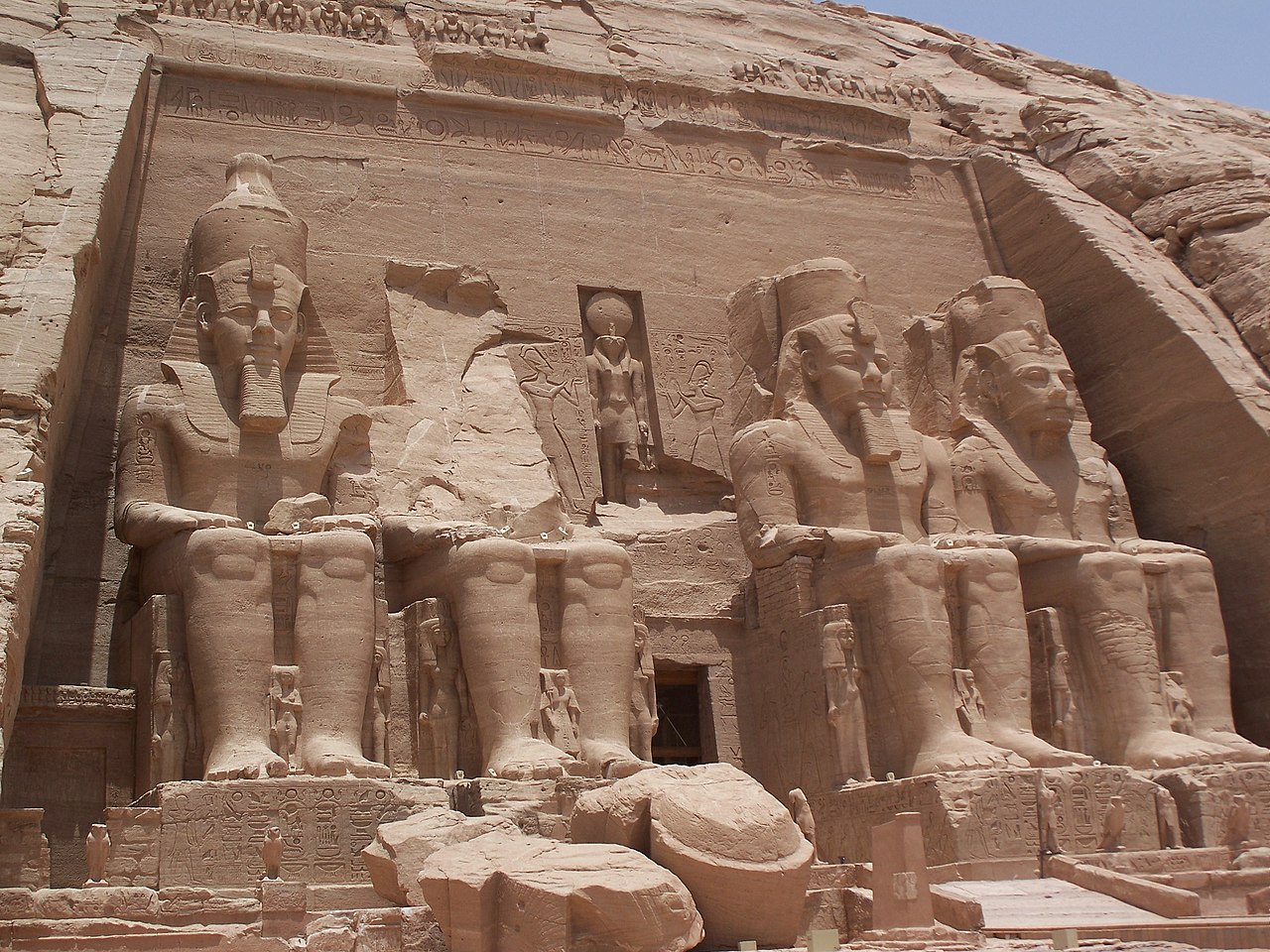
The larger temple was commissioned by the pharaoh Ramesses II in the 13th century BC as a focus for royal propaganda and religious worship. It and the smaller temple dedicated to the goddess Hathor (and to Ramesses's chief queen, Nefertari) functioned as a lasting monument to the king, celebrating military successes, royal divinity and Egyptian control of Nubia. Carved directly from the cliff face, the facades and interior reliefs convey royal power through colossal seated figures, processions, battle scenes and richly inscribed hieroglyphs.
Architecture and artistic features
The two distinct buildings are conventionally called the Great Temple of Ramesses II and the Small Temple (often called the Temple of Nefertari). The Great Temple's façade is dominated by four colossal seated statues of the king, each over ten meters tall, flanking the entrance. Inside are successive halls lined with columns, reliefs depicting the king's exploits (notably the Battle of Kadesh), and a sanctuary containing seated cult images of deities alongside the pharaoh.
- The Small Temple features smaller standing statues of Ramesses and Nefertari and interior decoration emphasizing the queen's honored status.
- One famous phenomenon is the biannual solar illumination of the Great Temple's innermost sanctuary: on two days each year sunlight penetrates the axis and lights the statues on the back wall. Dates commonly cited for this event are in October and February, though the precise historical associations remain debated.
Relocation and modern history
The construction of the Aswan High Dam in the 20th century created Lake Nasser and threatened to submerge the site. In an internationally coordinated rescue campaign led by UNESCO, the temples were painstakingly cut into large blocks, lifted, and reassembled on higher ground between 1964 and 1968. The new artificial hill recreates the temples' original orientation and many of their visual relationships to the landscape and the Nile valley.
Significance and visitation
Abu Simbel is important for its scale, its high-quality relief carving and its role in modern heritage conservation. As part of the Nubian Monuments, it attracts scholars, tourists and those interested in ancient Egyptian religion and statecraft. The relocation project is frequently cited as a landmark example of international cooperation in cultural preservation.
Notable facts and distinctions
Visitors often note the dramatic approach to the façade, the size of the colossi and the clarity of certain relief scenes that illuminate New Kingdom royal ideology. The site remains an iconic symbol of Ramesses II's reign and of the broader ancient Egyptian presence in Nubia. Scholarly work continues to refine understanding of the temples' original function, construction chronology and the precise meanings of their inscriptions.
More on the rock-cut nature • Context among ancient Egyptian monuments • Nubian setting • Geographic region • Border proximity • Distance from Aswan • UNESCO involvement • World Heritage listing • Pharaonic role • Ramesses II • Memorial purpose • Aswan High Dam • Nile and Lake Nasser
Questions and answers
Q: What are the Abu Simbel temples?
A: The Abu Simbel temples are two very large rock temples built by the ancient Egyptians, located in a village called Abu Simbel in Nubia, southern Egypt.
Q: Where is Abu Simbel located?
A: Abu Simbel is located near the border with Sudan, on the western bank of Lake Nasser, about 230 km southwest of Aswan.
Q: When were the temples built?
A: The temples were cut into solid rock during the reign of Pharaoh Ramesses II in the 13th century BC.
Q: Why were they built?
A: They were built as a lasting monument to Pharaoh Ramesses II and his queen Nefertari, to remember his victory at the Battle of Kadesh.
Q: What happened to them in 1968?
A: In 1968, they were moved to a place high above the Aswan High Dam reservoir because they would have been flooded by water from Lake Nasser which was formed by building a dam on the Nile River.
Q: Are they part of any UNESCO World Heritage Site?
A: Yes, they are part of a UNESCO World Heritage Site known as "Nubian Monuments".
Related articles
Author
AlegsaOnline.com Abu Simbel temples: rock-cut monuments of Ramesses II Leandro Alegsa
URL: https://en.alegsaonline.com/art/546
Sources
- international.icomos.org : "The Salvage of the Abu Simbel Temples"