
Nubia: An Ancient Nile Civilization and Its Legacy
Nubia — the region along the Nile in what is now southern Egypt and northern Sudan — its peoples, kingdoms (Kerma, Kush, Meroë), culture, trade, writing, Christianity and later transformations.
Overview
Nubia refers to a long inhabited region along the Nile River stretching roughly from southern Egypt into northern Sudan. It was home to several powerful and culturally distinct societies from prehistory through the medieval period. Nubian states were closely connected with ancient Egypt by trade, warfare, diplomacy and cultural exchange, yet they also developed their own languages, religions and political institutions.
Image gallery
10 Images


Geography and earliest communities
The Nile valley in Nubia provided fertile floodplains and a corridor for movement between the Mediterranean, the African interior and the Red Sea hinterland. Archaeologists recognize a sequence of prehistoric cultural phases often labeled the A‑Group, B‑Group and C‑Group, which represent changing settlement patterns, burial practices and material cultures across millennia. Early communities exploited riverine resources and long‑distance trade networks that carried gold, ivory, and other African goods to Mediterranean and Red Sea markets; these exchanges helped shape Nubia's economic importance.
Major kingdoms and political history
Over time Nubia gave rise to distinct states and dynasties. Major historical polities include:
- Kerma — a powerful Bronze Age kingdom centered near the Third Cataract that flourished independently of Egypt for centuries.
- Napata and the Kingdom of Kush — later political centers north of the Fourth Cataract that at times controlled Egypt and established the so‑called 25th Dynasty of pharaohs.
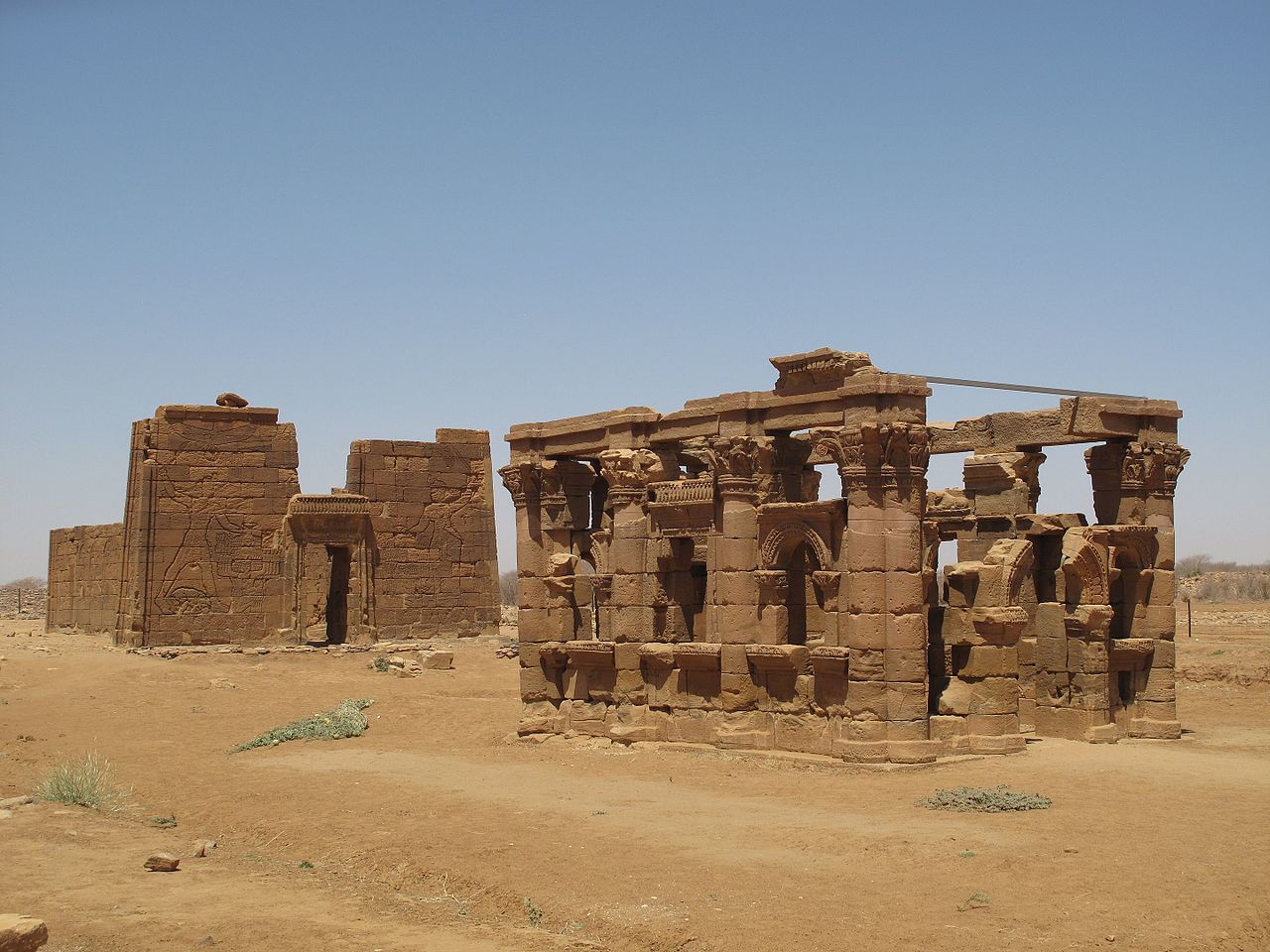
- Meroë — a southern capital that became the heart of a dynamic Iron Age and classical period kingdom noted for its industry and distinct culture.
These phases reflect continuity and change: political power shifted between northern and southern centers, and external pressures — including interactions with Egypt and later the kingdom of Axum — altered the balance of power in the region.
Society, economy and culture
Nubian societies were agriculturally based but also depended on trade, mining and craft production. Meroë in particular became known for ironworking and manufacturing. Nubian art and architecture display a blend of indigenous traditions and Egyptian influence — for example in royal iconography and funerary monuments — while also producing distinctive features like steep‑sided pyramids at royal cemeteries. Wealth flowed along river and overland routes to Red Sea ports, and merchants dealt in gold, incense, ivory and livestock; these connections are often discussed in studies of Red Sea trade and African–Mediterranean commerce.
Writing, religion and later change
The peoples of Nubia used several scripts and languages over time. The Meroitic script, used for a language that remains only partly understood, survives on monuments and inscriptions. Later, from about the early medieval period, Christianity took root in Nubian kingdoms through contacts with Alexandria and Byzantine missionaries. Christian Nubia endured for many centuries before gradual Muslim influences and shifting political realities transformed the region. Relations with neighboring polities, including participation in trade via important Nubian ports and overland routes, contributed to changing religious and linguistic landscapes.
Legacy and modern Nubians
The historical footprint of Nubia is visible in archaeological sites, monuments and continuing cultural traditions among modern Nubian peoples living in southern Egypt and northern Sudan. Modern Nubian languages (such as Nobiin and related varieties) belong to the Eastern Sudanic group of languages. In the 20th century, large development projects — most famously the construction of the Aswan High Dam — led to the relocation of many Nubian communities and the loss or rescue of archaeological sites. Today scholarship, local cultural revival and tourism help keep Nubian history and identity visible.
For introductions and further reading on topics mentioned here, consult general surveys of ancient Nubian kingdoms, studies of the Kingdom of Kush, analyses of trade networks connected to the Red Sea, resources on Nubian archaeological sites and ports, and research on historical interactions with Axum.
Related articles
Author
AlegsaOnline.com Nubia: An Ancient Nile Civilization and Its Legacy Leandro Alegsa
URL: https://en.alegsaonline.com/art/71332