
Akbar's Tomb at Sikandra: Mughal funerary monument near Agra
Akbar's Tomb is the mausoleum of the Mughal emperor Akbar, located at Sikandra near Agra. It exemplifies Mughal architecture's syncretic style and is set in a formal charbagh garden.
Akbar's Tomb is the mausoleum of the third emperor of the Mughal dynasty, generally identified with the ruler Akbar (1542–1605). It stands at Sikandra, a suburb on the outskirts of Agra, and is one of the principal Mughal funerary monuments outside the imperial city.
Image gallery
10 Images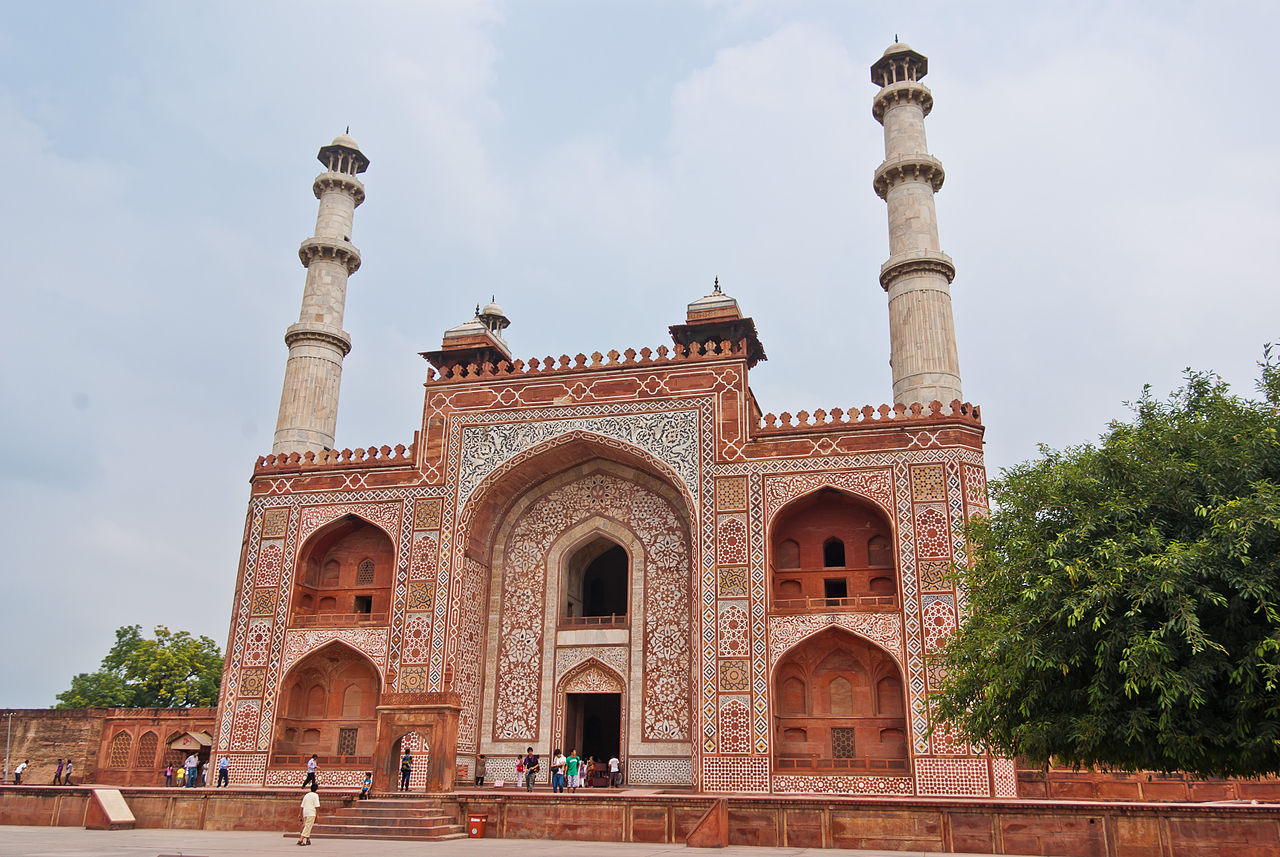


Location and setting
The tomb is sited at Sikandra, surrounded by an enclosed garden laid out in the Persian charbagh pattern. Although sometimes confused in older accounts with sites in Delhi, the structure is part of the greater Agra landscape and sits on a raised platform approached by a monumental gateway.
Architectural characteristics
The building combines red sandstone with white marble decoration, and displays a deliberate blend of Islamic, Persian and indigenous Indian motifs. Key features include a central chamber containing a raised cenotaph, an underlying burial chamber, and a series of pavilions and arcades.
Notable elements
- Charbagh garden layout and axial approach.
- Monumental gateway with inlay and calligraphic panels.
- Mullioned windows, chhatris (domed pavilions) and carved stone ornament.
Construction began during Akbar's lifetime and was completed by his successors in the early 17th century. The tomb reflects the emperor's policy of cultural synthesis and his court's engagement with multiple artistic traditions.
Today the site is visited for its historical importance and architectural qualities. Conservation efforts have been undertaken periodically to stabilize stonework and restore decorative surfaces. Visitors can approach the complex via designated entrances and view both the cenotaph chamber and the surrounding gardens.
Related articles
Author
AlegsaOnline.com Akbar's Tomb at Sikandra: Mughal funerary monument near Agra Leandro Alegsa
URL: https://en.alegsaonline.com/art/1776