
Tomb of King David (Mount Zion, Jerusalem)
Historic site on Mount Zion in Jerusalem traditionally regarded as King David’s burial place. Identification is medieval and debated; the site functions as a place of prayer, pilgrimage and contested heritage.
Overview
The Tomb of King David is a venerated burial site located on Mount Zion in the Old City area of Jerusalem. The spot is traditionally identified by many Jews as the final resting place of King David, the biblical monarch of Israel. Visitors commonly approach the site for prayer, commemoration and tourism. For reference, modern descriptions often include geographic data such as coordinates used in travel guides and maps.
Image gallery
9 Images



Location and physical features
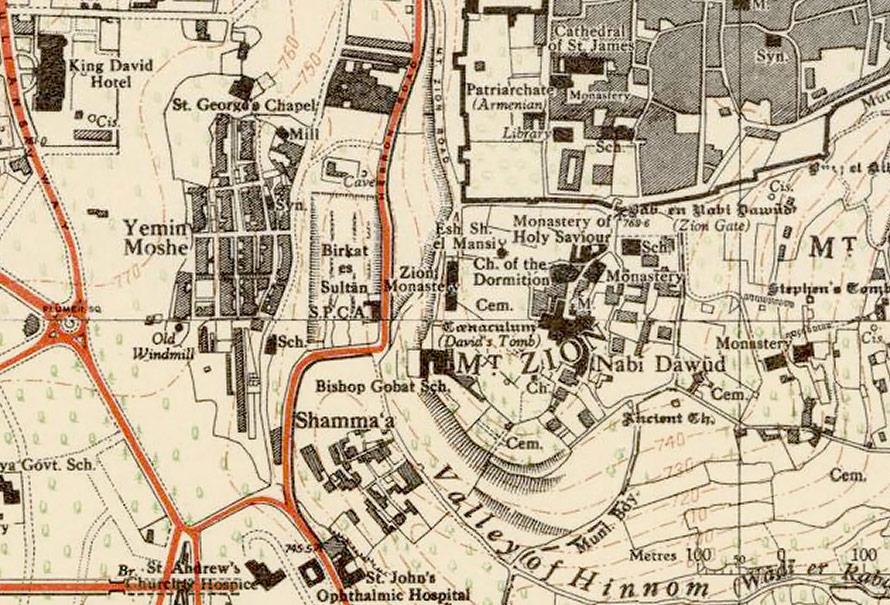
The tomb sits within and beneath a stone structure that has been adapted over centuries for devotional use. The visible chamber contains stone sarcophagus-like tomb markers and is arranged as a small prayer hall. Surrounding spaces have served as synagogues, and the complex is near traditions associated with the Christian "Upper Room" or Cenacle, a short walk from other well-known landmarks.
History and scholarly view
The identification of the site as David's tomb emerged in the medieval period and became established in later Jewish custom. Archaeologists and historians generally treat the claim cautiously: there is no decisive archaeological evidence linking the current monuments to the historical King David, whose existence and burial place remain subjects of scholarly discussion. The present building reflects layers of medieval and later alterations rather than an intact ancient royal tomb.
Uses, observance and access
Today the place functions primarily as a place of Jewish devotion and pilgrimage where visitors light candles, recite prayers and observe memorial customs. Access and hours may vary because the compound lies within a dense urban and religious landscape and is often subject to local regulations. Pilgrims and tourists of different faiths visit the area to see both the tomb complex and nearby sites of shared religious interest.
Notable facts and distinctions
- Tradition vs. evidence: The site's sacred importance rests on longstanding tradition rather than conclusive archaeological proof.
- Multiple claims: Other locations and textual readings have been proposed by scholars and communities as Davidic burial places.
- Layered history: The visible building reflects medieval and post-medieval adaptations for worship and commemoration.
- Nearby sites: Many visitors combine a visit to the tomb with nearby holy places and historical landmarks in Jerusalem.
For those researching or visiting, reliable guidebooks and institutional resources provide practical details, historical summaries and notes on access. More in-depth archaeological and textual studies treat the site as an important example of how religious memory, urban topography and historical interpretation interact in Jerusalem.
Additional reading and visitor information can be followed through site indexes and official summaries linked in travel literature and academic overviews; see also further references and curated resources at heritage portals (Jerusalem listings) or scholarly collections (biblical studies, maps).
Related articles
Author
AlegsaOnline.com Tomb of King David (Mount Zion, Jerusalem) Leandro Alegsa
URL: https://en.alegsaonline.com/art/53532