
Bayinnaung — King of the Toungoo Empire (1516–1581)
Bayinnaung (1516–1581) was the third Toungoo dynasty king who built the largest empire in Southeast Asian history and reorganized the Shan States, leaving a complex legacy in Burma and neighboring lands.
Overview
Bayinnaung Kyawhtin Nawrahta, born 16 January 1516 and deceased 9 November 1581, is remembered as the third monarch of the Toungoo dynasty and one of the most powerful rulers in the history of Myanmar. In many modern accounts his reign is described as the "greatest explosion of human energy ever seen in the region" because of the speed and scale of his military and administrative achievements. He is often identified by his native title—see the Burmese name and the contemporary Thai name.
Image gallery
10 Images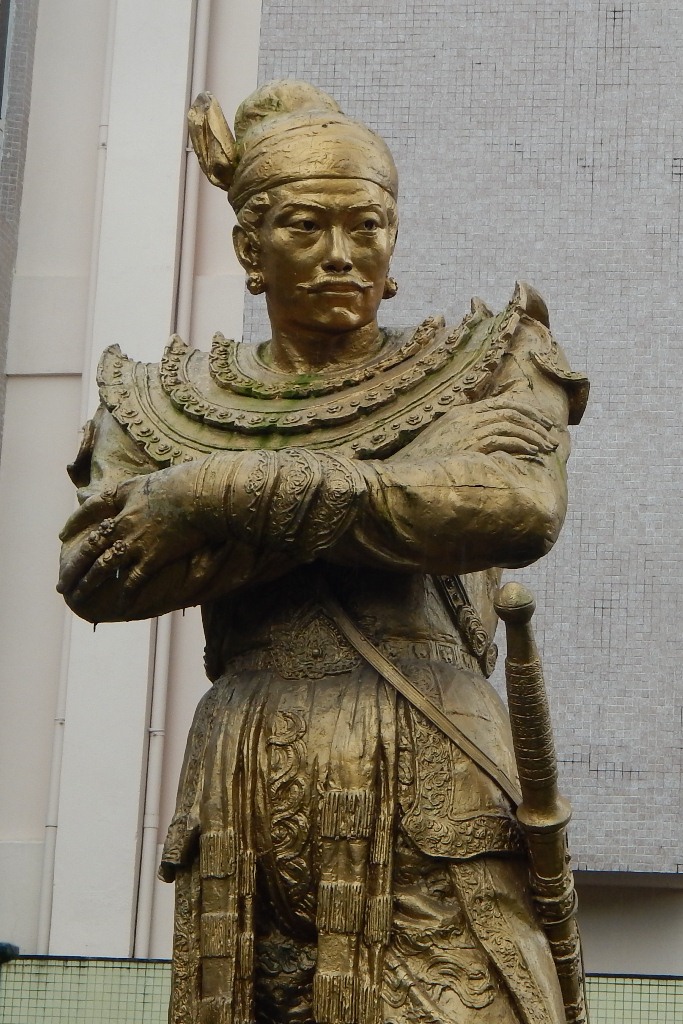




Life and conquests
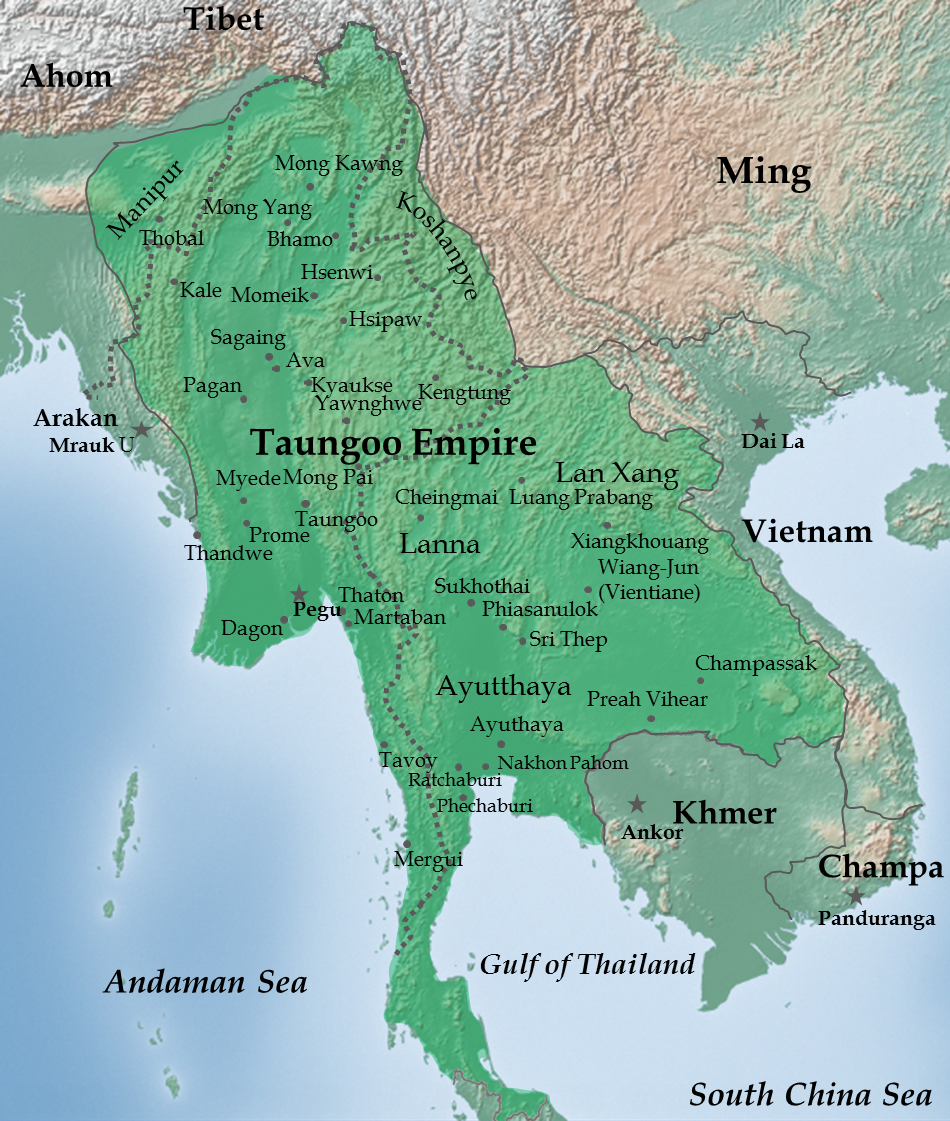
Bayinnaung rose through the ranks of the Toungoo army and succeeded to the throne in a period of renewed expansion. Over three decades he assembled what is widely regarded as the largest empire in the modern recorded history of Southeast Asia. His campaigns brought many formerly independent polities under his authority, including large portions of central Burma, the kingdom of Manipur, the Chinese Shan polities in present-day southern Yunnan, Lan Na in the north of modern Thailand, Siam (central and southern parts of modern Thailand) and Lan Xang (areas of present-day Laos).
Administration and governance
Bayinnaung did not simply conquer territory; he attempted to integrate it. He brought the Shan States into the orbit of the Burmese crown, a strategic move that reduced the long-standing threat of Shan raids into Upper Burma, a problem traced back to the late 13th century. To secure control he implemented a new administrative system that curtailed the autonomous power of hereditary chiefs (saophas), standardized certain local customs, and required submission to central authority.
- Central appointments and garrisoning of key towns to enforce royal decrees.
- Tribute arrangements that recognized local rulers as vassals rather than independent sovereigns.
- Legal and ritual standardization to bind diverse polities into a recognizable order.
These measures amounted to a coherent policy of rule by personal loyalty and hierarchical obligation rather than by a unified bureaucracy. Vassal kings swore fealty directly to Bayinnaung, a pattern that emphasized the monarch's personal authority and the requirement of loyalty.
Rise and fall of the empire
Because the empire depended heavily on personal allegiance to Bayinnaung, it proved unstable after his death. Several subject kingdoms retained local dynasties and returned to autonomy once central pressure relaxed. Siam formally broke away within a few years after his death, and by the end of the century many of the sub-kingdoms had ceased to recognize Toungoo suzerainty. Later Burmese monarchs continued to apply many of Bayinnaung's methods, and his approach remained influential until the colonial period under the British.
Legacy and cultural memory
Bayinnaung is often ranked among the three greatest kings of Burmese tradition alongside Anawrahta and Alaungpaya. Numerous towns, monuments and institutions in modern Myanmar commemorate his name, and his reputation crosses borders. In Thailand his career inspired popular cultural works: a well-known song and a celebrated book both refer to him as a model conqueror. Scholars note that his empire was remarkable for its rapid expansion, the scale of incorporation of diverse peoples, and the administrative experiments that sought to turn conquest into durable rule.
Bayinnaung's story is therefore a study in contrasts: brilliant military success and institutional ingenuity on one hand, and the fragility of a polity built largely on personal dominance rather than a fully integrated state on the other. His reign reshaped the political map of mainland Southeast Asia and left a legacy studied by historians of the region to this day.
Related articles
Author
AlegsaOnline.com Bayinnaung — King of the Toungoo Empire (1516–1581) Leandro Alegsa
URL: https://en.alegsaonline.com/art/53523