
Archamoebae: mitochondria‑lacking amoeboid protists in the Amoebozoa
Archamoebae are a group of primarily anaerobic amoeboid protists within Amoebozoa, notable for lacking conventional mitochondria and including free‑living and animal‑associated genera such as Entamoeba and Pelomyxa.
Overview
The Archamoebae are a distinctive assemblage of amoeboid protists that stand out because they lack typical, membrane‑bound mitochondria. They are placed within the larger Amoebozoa based on molecular evidence and share a common ancestry with slime molds and other amoeboid lineages. Members of the group occupy a range of lifestyles, from free‑living organisms in freshwater sediments to commensals and parasites in animal hosts.
Image gallery
2 Images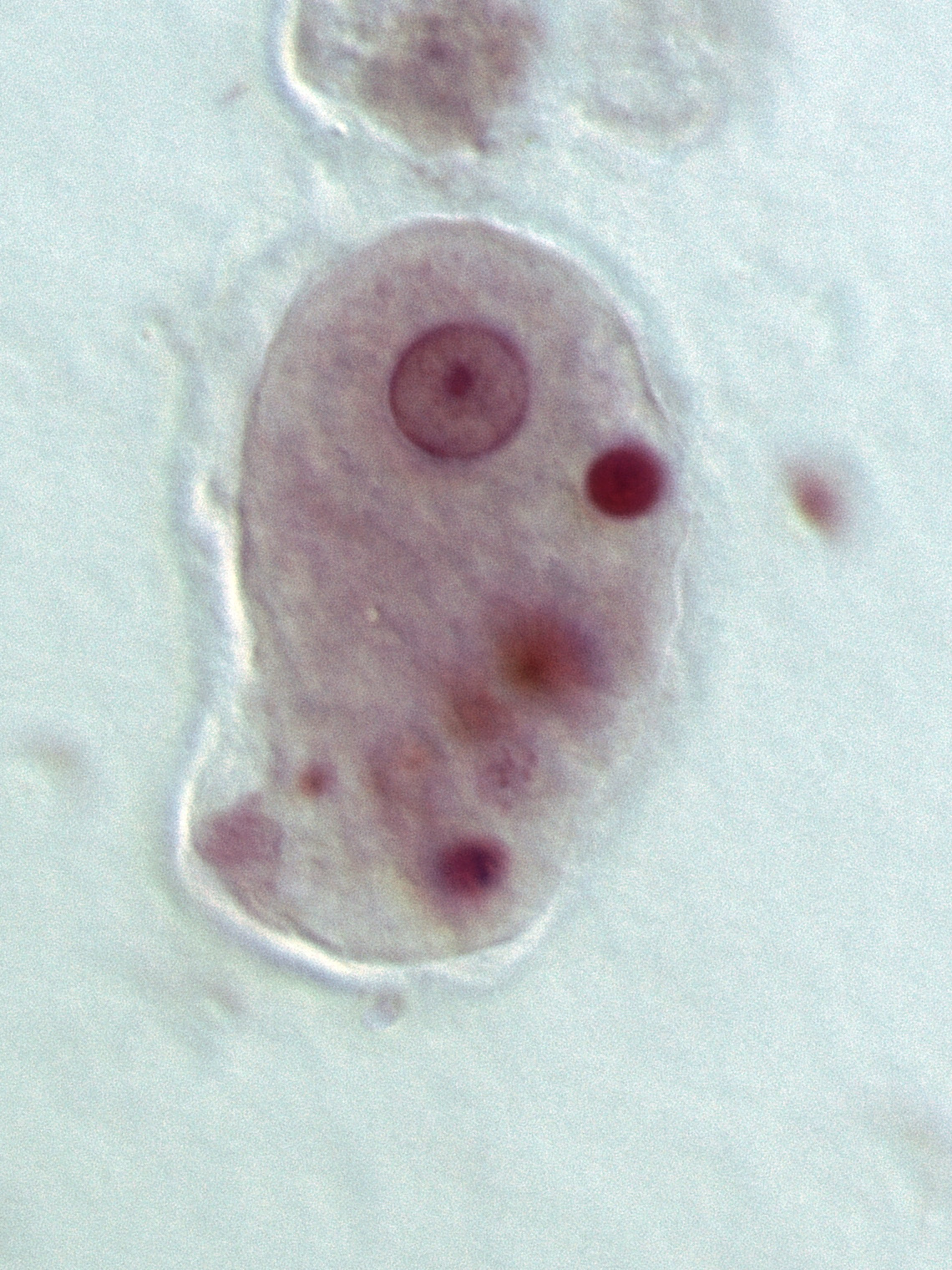

Key characteristics
Archamoebae show a mixture of simple and unusual cellular traits. Many species are small, single‑celled organisms with a single nucleus and a single emergent flagellum in some stages, while others are large and multinucleate. Because they live in low‑oxygen environments or inside hosts, they have modified energy metabolism and have lost conventional mitochondria; in some lineages only reduced mitochondrial remnants or alternative organelles remain. Morphology and life cycles vary between active amoeboid forms, flagellate stages, and resistant cysts.
Classification and evolutionary background
Extensive gene sequencing and phylogenetic studies group Archamoebae within Amoebozoa. Analyses of multiple conserved genes support the idea that their lack of ordinary mitochondria is a secondary loss rather than an ancestral absence for all eukaryotes. Parasitic and commensal lineages such as those associated with animals appear to have arisen independently from free‑living ancestors within the group, showing convergent adaptations to anaerobic or host‑associated lifestyles.
Ecology, medical importance, and adaptations
Archamoebae inhabit diverse anaerobic or microaerophilic habitats. Free‑living taxa live in freshwater sediments and anoxic substrates where they graze on bacteria and organic matter, while other genera colonize the gut or tissues of animals as commensals or parasites. Some species are medically important; for example, members of the genus Entamoeba include human pathogens responsible for amoebic dysentery and extraintestinal infections. Adaptations to low oxygen include alternative biochemical pathways and reduced mitochondria‑derived organelles that support essential cellular functions.
Representative genera and forms
- Entamoeba — includes both harmless gut residents and pathogenic species affecting humans and other animals; notable for simple trophozoites and cyst stages. amoebic dysentery
- Endolimax — a common commensal of vertebrate intestines, typically nonpathogenic but important in studies of host–microbe interactions. commensals
- Pelomyxa — large multinucleate freshwater amoebae that lack flagella in many stages and possess numerous nuclei and organelles. single nucleus (contrast in other taxa)
- Smaller flagellated forms — some archamoebae exhibit temporary or permanent flagella and occupy sedimentary or interstitial aquatic habitats. flagellate forms
Notable facts and research directions
Because loss of conventional mitochondria is rare among eukaryotes, archamoebae are of special interest for studies of organelle evolution, anaerobic biochemistry, and the origins of parasitism. Molecular investigations continue to refine their placement within Amoebozoa and to reveal how different lineages adapted independently to host‑associated or anaerobic niches. For more general context and taxonomic resources see broader treatments of Amoebozoa and protist evolution. group overview mitochondria absence research parasites
Summary lists of distinguishing traits and the diversity of lifestyles help emphasise why Archamoebae remain a focus of cell biology and evolutionary research: they combine simple external morphology with deeply divergent cell biology and varied ecological roles, making them useful models for understanding both basic eukaryotic cell function and the evolutionary transitions to parasitism. nucleus group overview commensals flagellate forms
Questions and answers
Q: What makes the Archamoebae different from other protists?
A: The Archamoebae have no mitochondria, which is unusual among protists.
Q: What are some examples of genera within the Archamoebae group?
A: Some examples of genera within the Archamoebae group are Entamoeba and Endolimax.
Q: Are all Archamoebae harmful to humans?
A: No, not all Archamoebae are harmful to humans. Some genera are human pathogens, but others live in freshwater habitats and are not harmful to humans.
Q: Do Archamoebae have flagella?
A: Some genera of Archamoebae that live in freshwater habitats have flagella.
Q: How many nuclei and flagella do most Archamoebae have?
A: Most Archamoebae have a single nucleus and flagellum.
Q: What is Pelomyxa?
A: Pelomyxa is a giant amoeba that has many nuclei and flagella.
Q: What is the relationship between the Archamoebae and the slime molds?
A: The Archamoebae are close relatives of the slime molds, as they are both a part of the Amoebozoa group.
Related articles
Author
AlegsaOnline.com Archamoebae: mitochondria‑lacking amoeboid protists in the Amoebozoa Leandro Alegsa
URL: https://en.alegsaonline.com/art/5287
Sources
- www3.interscience.wiley.com : "A revised six-kingdom system of life"
- doi.org : 10.1111/j.1469-185X.1998.tb00030.x
- pubmed.ncbi.nlm.nih.gov : 9809012
- doi.org : 10.1016/0303-2647(91)90010-I
- pubmed.ncbi.nlm.nih.gov : 1854912
- ncbi.nlm.nih.gov : PMID 11830664
- pnas.org : pnas.org/content/99/3/1414.full