
Kanchipuram: sacred city and centre of temple architecture and silk weaving
Kanchipuram, near Chennai in Tamil Nadu, India, is a major Hindu pilgrimage site famed for ancient Pallava-era temples, continuing ritual traditions and the handwoven Kanchipuram silk saree craft.
Overview
Kanchipuram lies about 60 kilometres southwest of Chennai in the state of Tamil Nadu, India. Regarded as one of the seven sacred cities (Sapta Puri) in Hindu tradition, it is both a living centre of worship and a place of concentrated historical monuments. The compact urban area combines active temple precincts, residential neighbourhoods associated with temple services and long‑established weaving quarters that continue traditional crafts.
Image gallery
10 Images


History and architecture
From ancient times Kanchipuram played a prominent role in religious and cultural life across Ancient India. It rose to special prominence under the Pallava rulers, who used it as a political and artistic centre between roughly the 6th century and the 8th century. Pallava patronage fostered innovations in stone temple design; surviving examples show early experiments in structural forms and sculptural programmes that influenced later Chola and Vijayanagara architecture.
Temples and religious life
The city is noted for a dense concentration of major Shaiva and Vaishnava temples. Important historic shrines include the Kailasanathar Temple, the Ekambareswarar Temple and the Varadaraja Perumal Temple, each attracting pilgrims and scholars. Temple complexes feature carved mandapas, tall gopurams and numerous inscriptions in regional languages that record donations, rituals and local history. Kanchipuram also hosts monastic institutions such as a Shankaracharya math and various traditional schools that preserve liturgical practices.
Silk weaving, economy and craft traditions
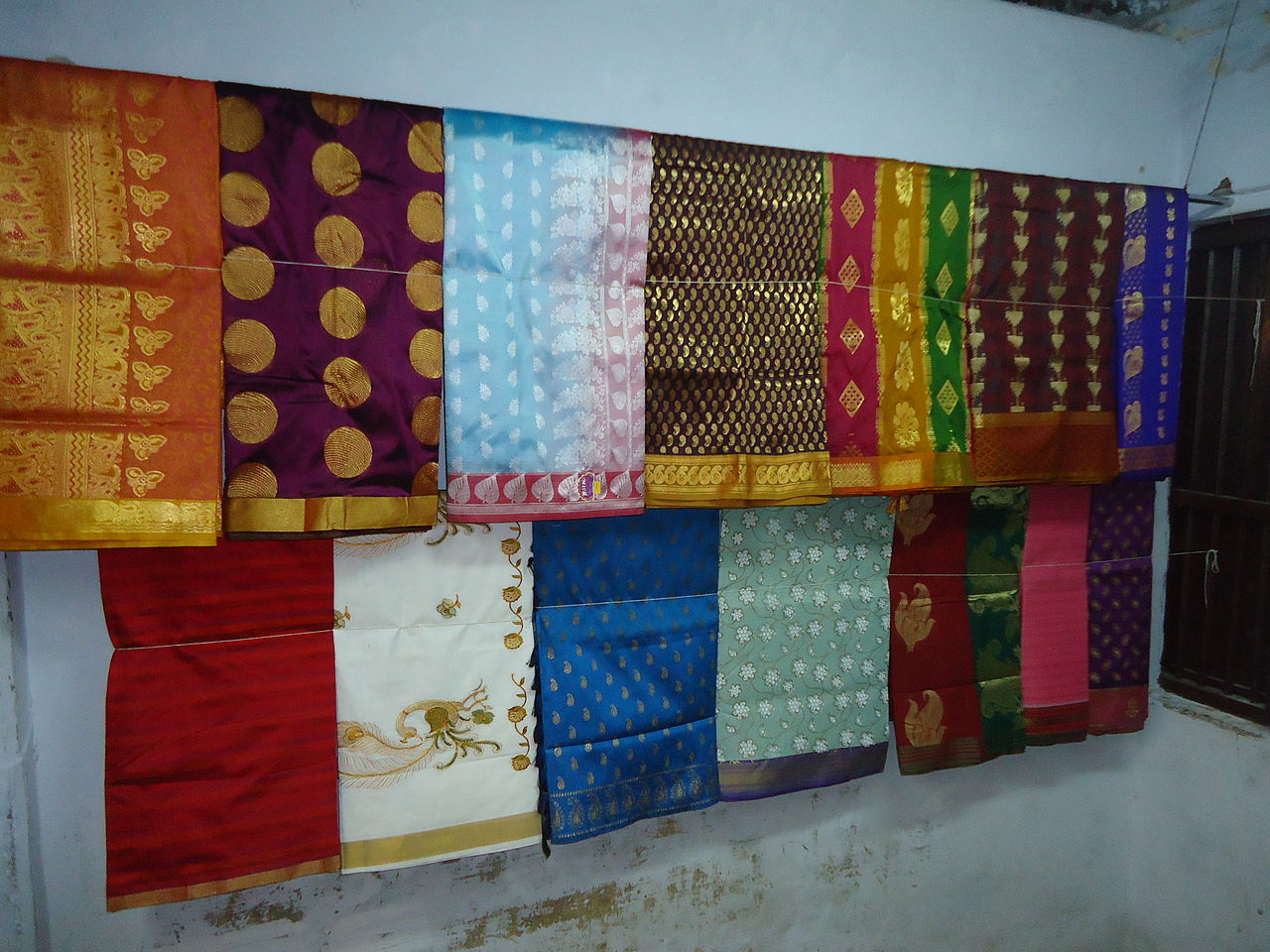
Alongside its sacred role, Kanchipuram is internationally known for handwoven silk sarees. Woven on traditional looms by specialist families and cooperatives, these sarees are prized for dense silk threads, rich zari (metallic) borders, and characteristic motifs drawn from temple art and local flora. The weaving sector remains a key source of livelihoods and contributes to the city’s reputation as a centre for high‑quality textiles and crafts.
Visiting, study and conservation
Visitors come for pilgrimage, study of South Indian temple architecture, and to see working craft workshops. Museums, interpretation centres and guided visits help explain the city’s archaeological and social history. Preservation efforts focus on protecting stonework, inscriptions and living traditions while accommodating ongoing ritual use and tourism. Local organisations and craft cooperatives play a role in sustaining skills and in promoting responsible tourism.
Quick facts
- Location: near Chennai, Tamil Nadu, India.
- Significance: one of the seven sacred cities of Hinduism and an active centre for pilgrimage and temple learning.
- Historical prominence: important under the Pallava dynasty from about the 6th century into the 8th century and later periods.
- Cultural roles: noted for religious institutions and cultural production; longstanding links to traditions of architecture and weaving.
- Heritage and craft: celebrated for handwoven Kanchipuram silk sarees and for well‑preserved temple architecture studied by historians and architects (Ancient India heritage).
Related articles
Author
AlegsaOnline.com Kanchipuram: sacred city and centre of temple architecture and silk weaving Leandro Alegsa
URL: https://en.alegsaonline.com/art/52076