
Kaḻayapiṯi — sacred rock hole of the Pitjantjatjara
Kaḻayapiṯi is a sacred rock hole in the Birksgate Range of northwestern South Australia, central to Pitjantjatjara Kaḻaya Tjukurpa (Emu Dreaming), local history, ceremonial life and drought survival.
Kaḻayapiṯi is a natural rock hole located in the Birksgate Range of northwestern South Australia. Its mapped position is sometimes given as 27°19′19″S 130°10′5″E. The place sits within the folded hills of the Birksgate Range and within the political region of South Australia. It is a long‑established focal point for the Pitjantjatjara people and appears repeatedly in accounts of pre‑contact life across this part of central Australia.
The name Kaḻayapiṯi combines two Pitjantjatjara words: kaḻaya (the emu) and piṯi, a term used for a place that marks the origin of an ancestral being or a site imbued with spiritual beginnings. In Indigenous law and cosmology this is part of the Kaḻaya Tjukurpa (Emu Dreaming), and the rock hole is regarded as a sacred node where stories, songs and law are anchored. The site continues to be used for traditional ceremonies and instruction in cultural practice.
Physically, Kaḻayapiṯi is a rock‑cut hollow that collects and retains water after rains. In arid country such features are vital; they provide reliable water and support local plant and animal life even when surrounding land is dry. Because permanent water is scarce across the Great Victoria Desert to the south, places like this were and are strategic. Oral histories emphasise the role of rock holes in survival during extended droughts, and the formation sits within a landscape of gorges and ridgelines that channel runoff into its basin.
European anthropologists and early researchers recorded Kaḻayapiṯi as central to the southern Pitjantjatjara country. The anthropologist Norman Tindale and others noted traditional movements and origins, suggesting that some Pitjantjatjara groups migrated northward from the southern coast over generations. From Kaḻayapiṯi people moved into neighbouring ranges including the Tomkinson, Mann and Petermann Ranges, following seasonal resources and social ties.
The site’s cultural functions extend beyond watering and shelter. Kaḻayapiṯi is a place for passing on songlines and Dreaming narratives, teaching kinship and law, and undertaking rites that reaffirm identity linked to the emu and related stories. Historical episodes show that in times of severe drought some families moved eastward toward the Musgrave Ranges, which are traditional country of the Yankunytjatjara; such movements illustrate regional connections and the ways environmental stress reshaped social geography.
Image gallery
1 Image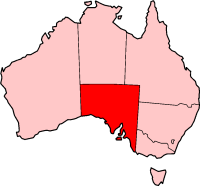
Key facts and context
- Recorded coordinates identify the site precisely on maps.
- Birksgate Range provides the local topography that contains the rock hole.
- South Australia is the modern jurisdiction where the site lies.
- Pitjantjatjara people hold Kaḻayapiṯi as a traditional heartland.
- The word kaḻaya refers to the emu, central to the site's Dreaming.
- Piṯi denotes a place of ancestral origin in local languages.
- Sites of ancestral being are key to the Tjukurpa landscape.
- Kaḻayapiṯi is listed among local sacred sites important for ceremonies.
- Traditional ceremonies continue to link people to the place.
- Historical records by Norman Tindale inform contemporary understanding.
- Scholars discuss migration and movement through this country.
- Oral histories reference movement from the southern coast.
- Kaḻayapiṯi was a staging point for travel into the Tomkinson Range.
- It also connects to lands such as the Mann Range.
- Further movement led into the Petermann Ranges.
- Its water was crucial during prolonged droughts.
- The nearby Great Victoria Desert shaped settlement patterns.
- Periods of hardship prompted travel toward the Musgrave Ranges.
Today Kaḻayapiṯi remains significant both as a place of living culture and as a landscape feature of ecological and historical interest. Management and access are shaped by Indigenous priorities, heritage protections and regional land use; researchers and visitors are generally expected to follow local protocols. For communities the site continues to be a locus for teaching, memory and ceremony, linking people to the Emu Tjukurpa and to the practical resources that have sustained life in this arid region for generations.
Related articles
Author
AlegsaOnline.com Kaḻayapiṯi — sacred rock hole of the Pitjantjatjara Leandro Alegsa
URL: https://en.alegsaonline.com/art/51952
Sources
- books.google.com.au : Australian Aboriginal Concepts
- books.google.com.au : The Nutrition of Aborigines in relation to the ecosystem of Central Australia
- books.google.com.au : Ecological Biogeography of Australia
- austlang.aiatsis.gov.au : "Language information — Pitjantjatjara"