
Mann Ranges — mountain ranges of central Australia
A compact mountain group in northwest South Australia extending into the Northern Territory; geologically part of the Musgrave Block and culturally important to the Pitjantjatjara people.
Overview
The Mann Ranges are a discrete group of low rugged hills and ridges in central Australia. Largely situated in the far northwest of South Australia, a small portion crosses the border into the Northern Territory. They are commonly referenced as the Mann Ranges and lie within an arid, sparsely inhabited landscape that connects other important upland blocks across this part of the continent.
Image gallery
1 Image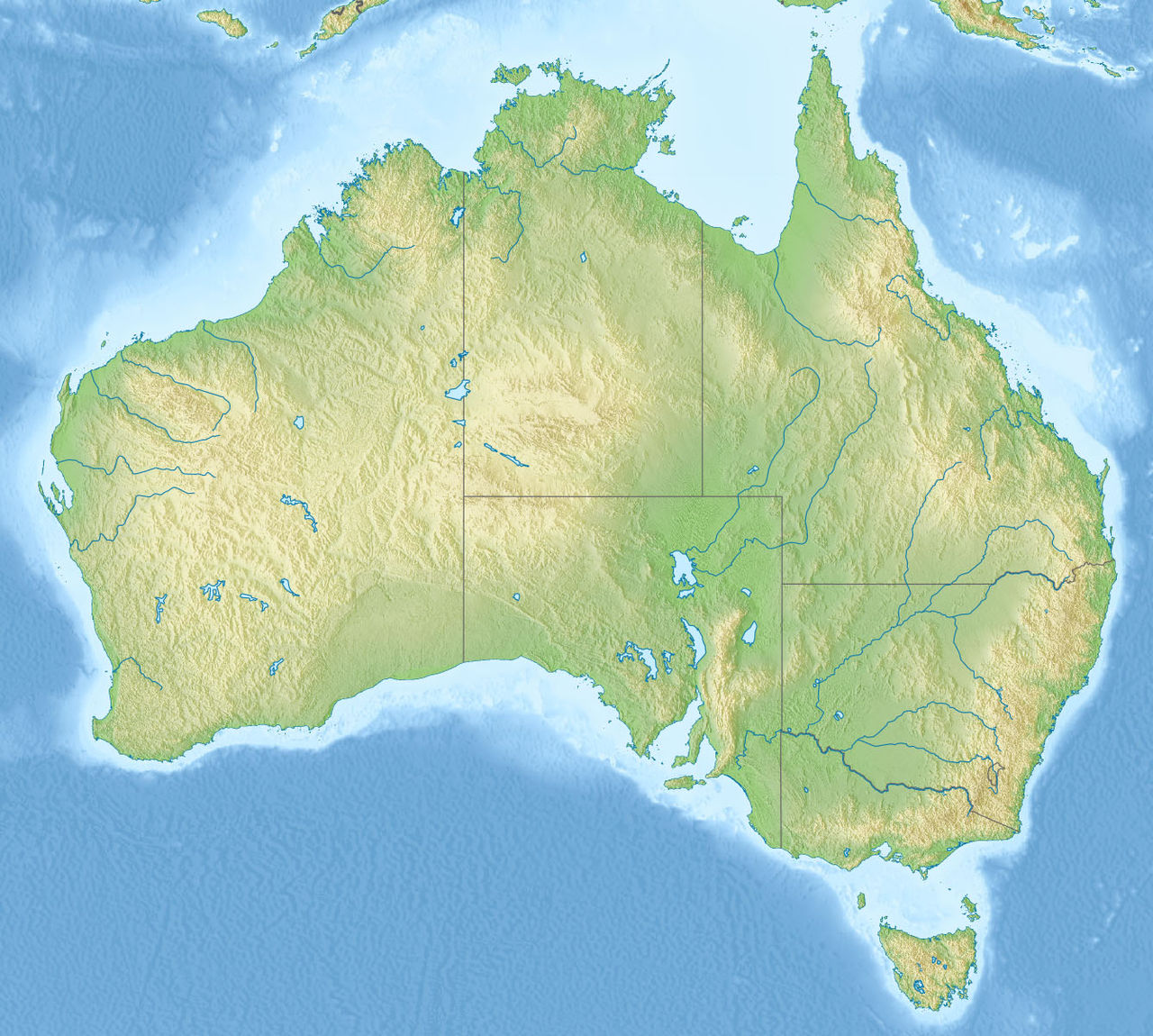
Geology and landscape
The ranges form part of the ancient Musgrave Block, a structural and metamorphic province that also includes neighbouring uplands such as the Petermann Ranges and the Musgrave Ranges. Rock assemblages in the area were affected by the broad-scale tectonic episode known as the Petermann Orogeny roughly 600–550 million years ago, which produced uplift, folding and metamorphism. The surface expression is typically weathered ridges, rocky outcrops and drainage lines that occasionally host ephemeral water after rains.
Human and cultural significance
The Mann Ranges lie on the traditional lands of the Pitjantjatjara people. For local custodians the area is an integral part of traditional country, holding songlines and creation narratives. In particular the figure of Wati Ngiṉṯaka (the perentie lizard man) appears in spiritual stories that describe the shaping of landforms. These stories belong to the broader corpus of Dreamtime lore and continue to underpin laws, ceremonies and place-based knowledge.
Communities, access and contemporary use
- Local settlements include small communities such as Kanpi and Nyapari that serve as centres for families and services.
- The region has limited infrastructure and is accessed primarily by unsealed tracks; travel is subject to seasonal conditions.
- Land use today combines cultural practice, limited pastoral activity and conservation of fragile desert ecosystems.
European exploration and recorded history
The first known European to visit the Mann Ranges was the explorer William Gosse in 1873. After seeing distant high ground from the top of Uluṟu he and his party, assisted by local Aboriginal guides, entered and examined the ranges. Gosse subsequently moved west toward the Tomkinson Ranges but retreated rather than risk crossing the Great Victoria Desert, later returning and heading east toward the Musgrave Ranges. Accounts of this period feature in the wider history of European explorers in central Australia.
Notable facts and distinctions
While not high by global standards, the Mann Ranges are geologically ancient and important for understanding Proterozoic to early Paleozoic tectonics in central Australia. Their combination of cultural significance, isolated ecology and exposed rock makes them a focus for researchers in geology, anthropology and ecology. Visitors and researchers are encouraged to respect the wishes and laws of traditional owners and to consult local communities before entering sensitive sites.
Related articles
Author
AlegsaOnline.com Mann Ranges — mountain ranges of central Australia Leandro Alegsa
URL: https://en.alegsaonline.com/art/61366
Sources
- adelaide.edu.au : "Structural and metamorphic evolution of rocks in the Mann Ranges"
- samemory.sa.gov.au : "William Christie Gosse"