
Kashmir conflict: overview, history, territorial divisions, and current issues
A concise, neutral summary of the long-running territorial and political dispute over Kashmir involving India, Pakistan and China, its origins, major events, and contemporary status.
Overview
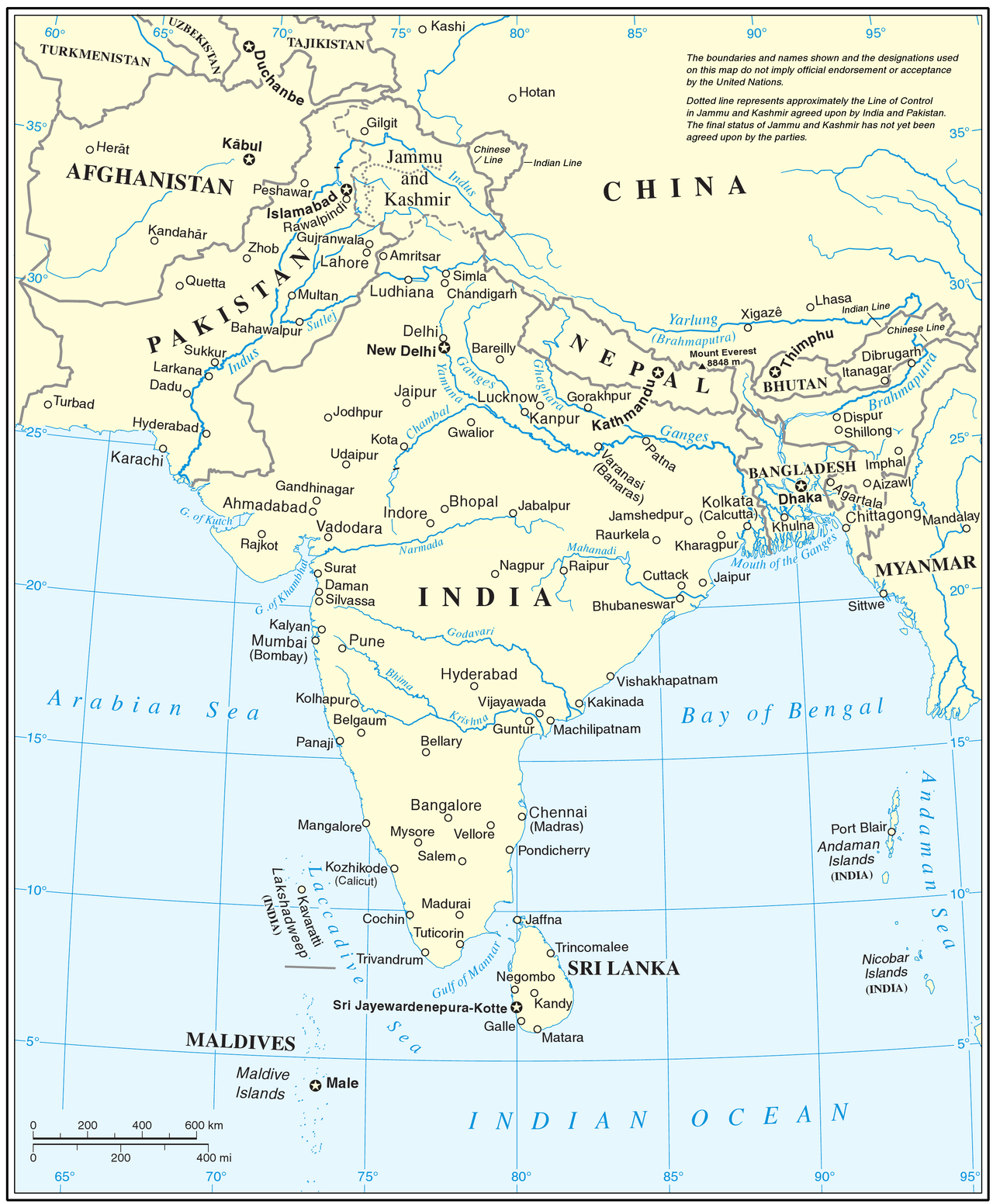
The Kashmir conflict is a long-standing territorial and political dispute over the region commonly called Kashmir. It involves three states—India, Pakistan and China—and multiple local communities with differing political aspirations. The contest centers on sovereignty, governance, and the rights of the region's inhabitants. For an outline map and related resources see Kashmir (map and overview).
Image gallery
10 Images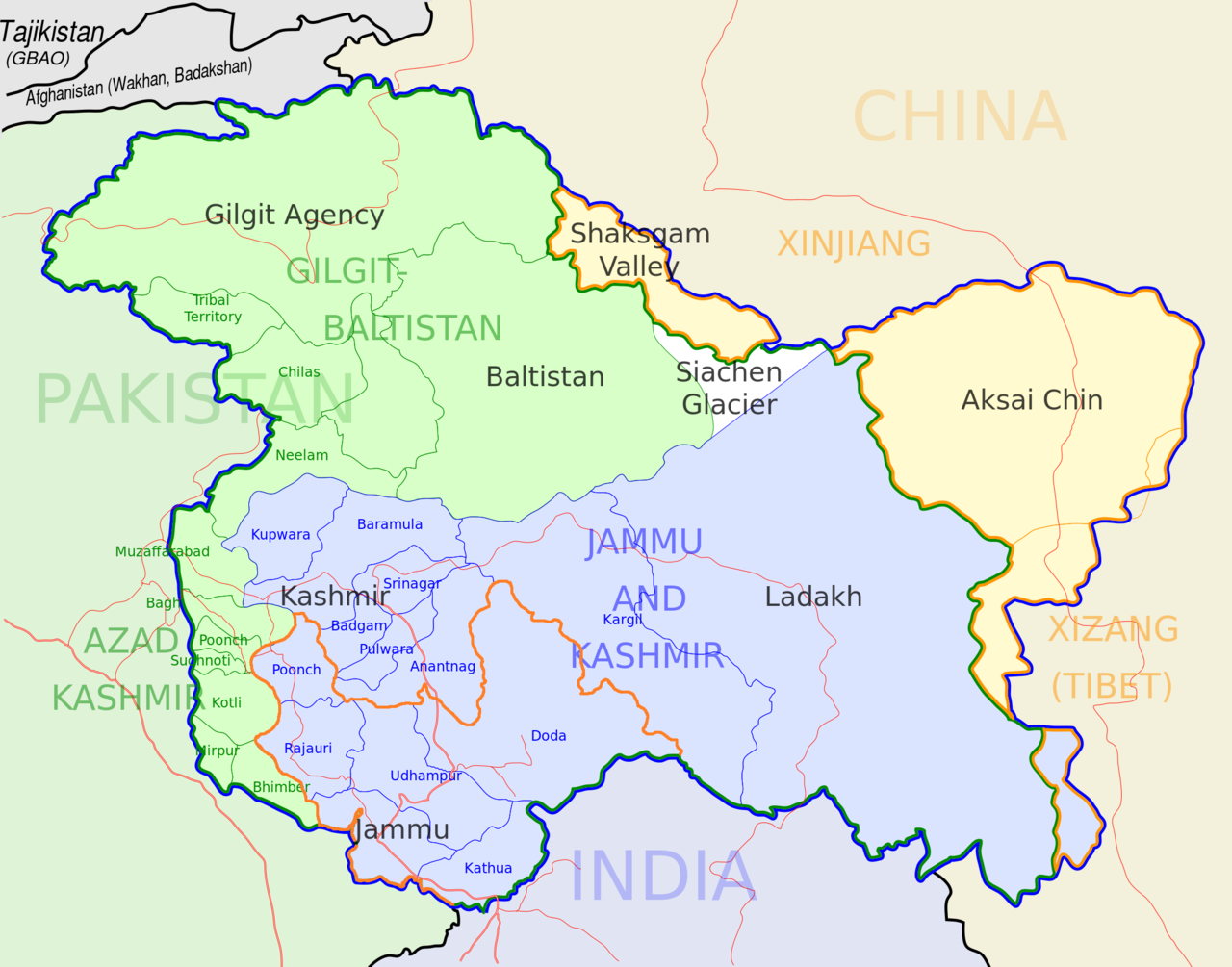




Territorial divisions and principal areas
Following partition of British India and subsequent wars, Kashmir is administered in separate parts. India administers areas including Jammu, the Kashmir Valley, parts of Ladakh and the Siachen Glacier region (Siachen). Pakistan administers what it calls Azad Jammu and Kashmir (Azad Kashmir) and Gilgit-Baltistan (Gilgit-Baltistan). China controls Aksai Chin and other areas gained after the 1950s–1960s border conflicts. The lines on the ground include the Line of Control between India and Pakistan and a separate India–China de facto boundary.
Historical background
The dispute traces to 1947 when the princely state of Jammu and Kashmir faced a choice to accede to India or Pakistan after British suzerainty ended. The ruler's accession to India prompted the first Indo‑Pak war (1947–48) and a United Nations-mediated ceasefire that left the territory divided. Subsequent conflicts—notably wars in 1965 and 1971, the 1999 Kargil conflict, the 1962 Sino‑Indian war over Aksai Chin, and recurring clashes along the Line of Control—have reinforced the partitioned status without resolving sovereignty claims.
Key events and developments
- 1947–48: First Indo‑Pak war and UN ceasefire establishing a ceasefire line.
- 1962: Sino‑Indian war leads to Chinese control of Aksai Chin.
- 1972: Simla Agreement converts the ceasefire line into the Line of Control between India and Pakistan.
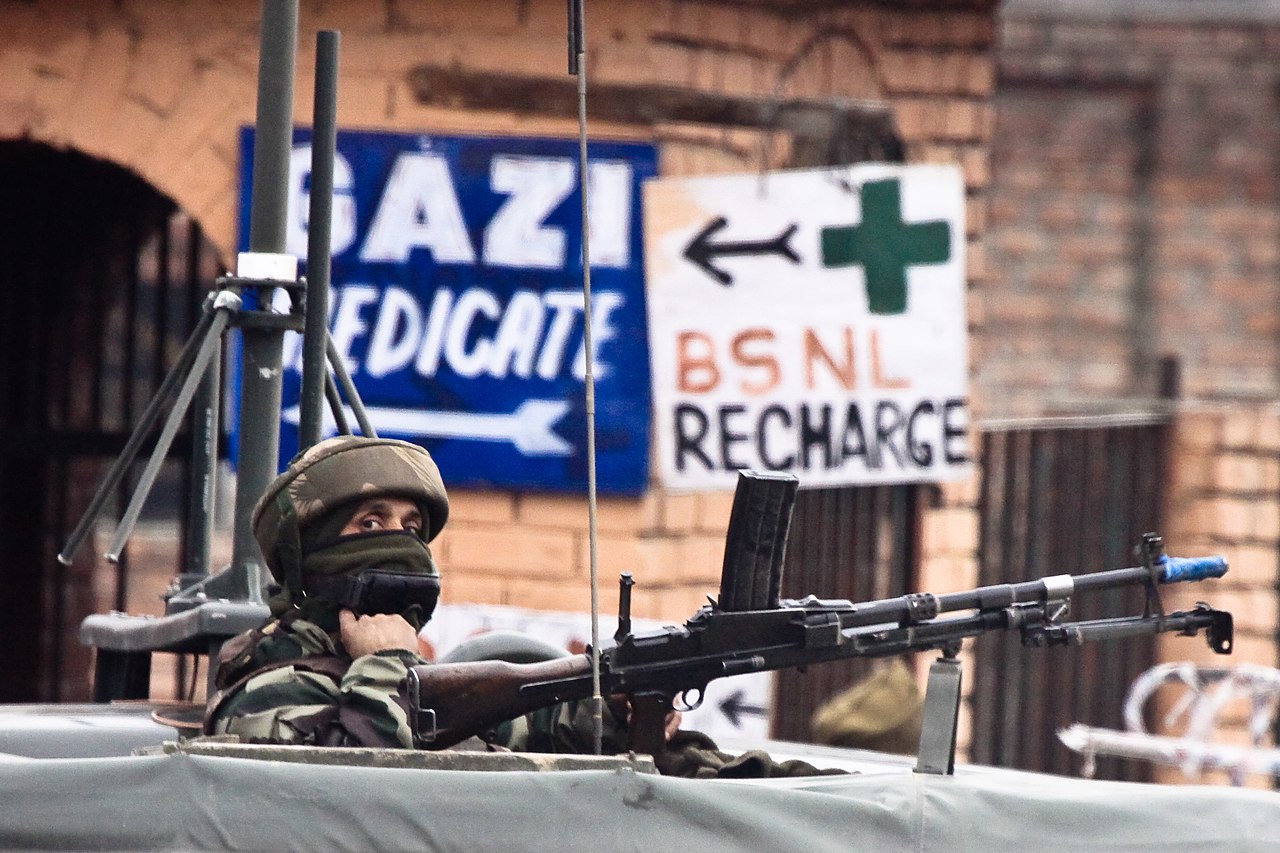
- 1980s–1990s: Armed insurgency and heavy militarization in parts of the Kashmir Valley.
- 1998: Nuclear tests by India and Pakistan increase international concern about the dispute.
- 2019: Administrative reorganization by India revoked Jammu and Kashmir’s special status and created two union territories, a move that altered governance and intensified debate.
Impact, issues and contemporary status
The conflict has deep humanitarian, political, and security consequences: displacement, civilian casualties, restrictions on movement, and economic disruption in affected areas. Calls for a plebiscite, international mediation, or bilateral negotiation have all been made at different times; however, significant disagreements persist over sovereignty, demography, security and cross‑border terrorism. The region remains one of the world’s most heavily militarized and politically sensitive territories.
Distinguishing features and notable facts
- The dispute involves overlapping legal claims, differing interpretations of accession documents, and competing narratives about self‑determination.
- United Nations resolutions from the late 1940s remain part of the diplomatic record, but implementation conditions were never met and no binding plebiscite has taken place.
- Environmental and strategic factors—glaciers, mountain passes and water resources—add complexity to political negotiations.
- International engagement has ranged from UN mediation to bilateral agreements, but resolution has rested primarily with the parties directly involved.
For further reading on specific regions and contemporary policy positions, follow links to material on India (India), Pakistan (Pakistan), China (China), the former princely state (Jammu and Kashmir), Jammu (Jammu), the Kashmir Valley (Kashmir Valley), Ladakh (Ladakh), the Siachen Glacier (Siachen), Azad Kashmir (Azad Kashmir) and Gilgit‑Baltistan (Gilgit‑Baltistan).

See also
- List of territorial disputes
Questions and answers
Q: What is the Jammu and Kashmir conflict?
A: The Jammu and Kashmir conflict is a dispute over the territory of Kashmir between India, Pakistan, and China.
Q: What does India claim about the territory of Kashmir?
A: India claims all of the region that was once a princely state which it considers its territory.
Q: How much of the Kashmir region does India currently control?
A: India currently controls about 43% of the territory, including most of Jammu, the Kashmir Valley, Ladakh, and the Siachen Glacier.
Q: What is the dispute between India and Pakistan regarding Jammu and Kashmir?
A: Pakistan disputes India's claims and controls about 45% of Jammu and Kashmir, including Azad Kashmir and Gilgit-Baltistan.
Q: What does Pakistan propose as a solution to the Jammu and Kashmir conflict?
A: Pakistan proposes that there should be a referendum in Kashmir on whether the people want to join India or Pakistan, or become independent.
Q: Who else is involved in the Jammu and Kashmir conflict besides India and Pakistan?
A: The Jammu and Kashmir conflict also involves China.
Q: Which areas of Jammu and Kashmir are under India's control?
A: India controls most of Jammu, the Kashmir Valley, Ladakh, and the Siachen Glacier, which makes up about 43% of the territory.
Related articles
Author
AlegsaOnline.com Kashmir conflict: overview, history, territorial divisions, and current issues Leandro Alegsa
URL: https://en.alegsaonline.com/art/52434
Sources
- microsoft.com : Microsoft’s Geopolitical Bug Experts
- britannica.com : "Kashmir (region, Indian subcontinent) :: The Kashmir problem"
- ibnlive.in.com : "Factbox: all about India, China's border dispute"