
Ramjet: a simple high‑speed airbreathing jet propulsion system
Ramjet — an airbreathing jet engine with no moving compressors that uses forward speed and shock compression to produce thrust; efficient at high supersonic speeds and common in missiles and high‑speed research.
Overview
A ramjet is a form of airbreathing jet engine that produces thrust by ingesting high‑speed incoming air, compressing it through the shape of the inlet and shock waves, mixing it with fuel, and exhausting hot gases through a nozzle. Unlike turbojets, a ramjet has no mechanical compressor or turbine stages; the vehicle's forward motion supplies the required compression. For a general introduction see ramjet engine basics and for flight performance considerations consult high‑speed propulsion.
Image gallery
9 Images


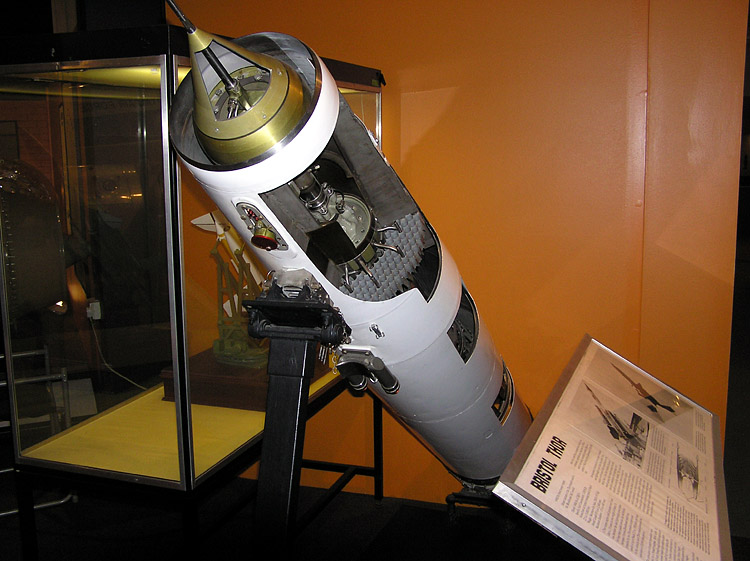
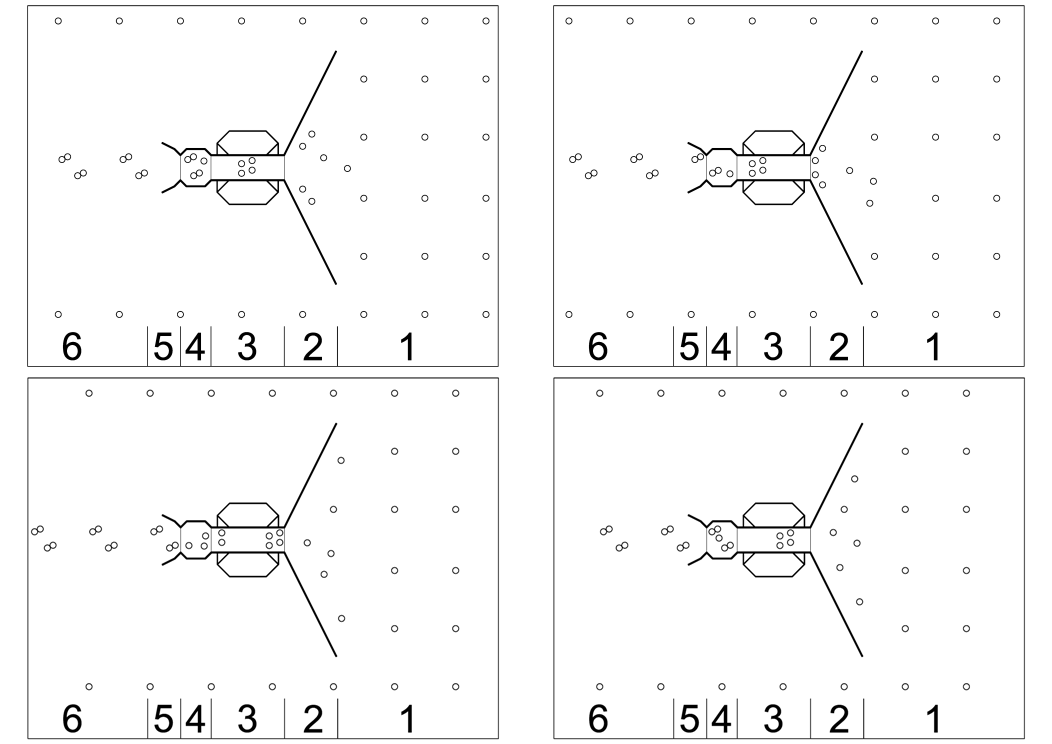
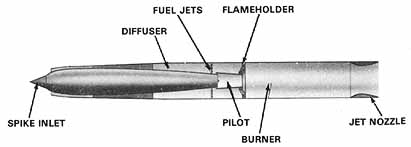
Basic components and how it works
Structurally a ramjet is simple: an inlet or diffuser, a combustion chamber with fuel injectors and flame holders, and a convergent (or convergent–divergent) exhaust nozzle. As the vehicle moves, air is slowed and compressed in the inlet. Fuel is injected and burned at nearly constant pressure, then expanded out the nozzle to produce thrust. Key elements are described further at technical overview and design references at propulsion design resources.
Performance regime and operational limits
Ramjets cannot generate useful static thrust and therefore need an external means—such as a rocket booster, catapult, or carrier aircraft—to reach operating speed. They are most efficient at high supersonic speeds; practical use typically falls in the low‑to‑mid supersonic regime. Above very high Mach numbers, alternative concepts such as scramjets become preferable because they allow combustion with supersonic internal flow. For comparative notes see speed regimes and scramjet differences.
History and development
The ramjet concept dates to the early 20th century and was explored further during mid‑century military and research programs. Its relative mechanical simplicity attracted interest for applications where compactness and high‑speed performance mattered. Development histories and program summaries are available in overview sources like propulsion history and program archives at aerospace records.
Applications, variants, and notable facts
- Common applications: high‑speed missiles, target drones, and experimental high‑Mach research vehicles where a simple, high‑thrust‑per‑weight engine is useful.
- Variants: integral rocket‑ramjets and ducted rockets blend features to provide thrust at low speed or simplify ignition. Scramjets are a closely related class that keep the airflow supersonic through combustion.
- Notable advantages: mechanical simplicity, high thrust at design speeds, and relatively low maintenance compared with turbine engines. Limitations include poor low‑speed performance and the need for a launch assist.
Further reading can be pursued via the linked topical entries above for basic theory, engineering design, program histories, and comparisons with other airbreathing engines.
Questions and answers
Q: What is a ramjet?
A: A ramjet is a type of jet engine that uses the forward motion of the engine to produce thrust.
Q: What is required for a ramjet to work?
A: Ramjets require that the aircraft is moving above the speed of sound (Mach 1) in order to work properly.
Q: How are ramjets different from turbojets?
A: Ramjets are different from turbojets because they do not have any moving parts which compress the air. Instead, they use shock waves to compress the air.
Q: Why is the ramjet named the way it is?
A: The ramjet gets its name from the fact that it "rams" the air hard enough to compress it to a combustible pressure.
Q: What are ramjets typically attached to?
A: Ramjets are most often attached to aircraft.
Q: How does a ramjet compress air?
A: Ramjets use shock waves to compress the air instead of moving parts.
Q: What is the main purpose of a ramjet?
A: The main purpose of a ramjet is to produce thrust for an aircraft while it is moving at high speeds.
Related articles
Author
AlegsaOnline.com Ramjet: a simple high‑speed airbreathing jet propulsion system Leandro Alegsa
URL: https://en.alegsaonline.com/art/81034