
Irtysh River — major tributary of the Ob across China, Kazakhstan and Russia
Long transnational river rising in the Altai, the Irtysh flows from China through Kazakhstan into Russia, joining the Ob. Important for navigation, hydroelectric power, irrigation and regional ecosystems.
Overview
The Irtysh is a long, transboundary river of Central and Northern Asia that rises in the Altai highlands and flows northwest to join the Ob, forming one of the continent's largest river systems. It passes through three countries — China, Kazakhstan and Russia — and is widely recognised as the principal tributary of the Ob. The river's course, seasonal rhythms and basin have shaped settlement, transport and industry across a vast portion of Western Siberia and the Altai region.
Image gallery
8 Images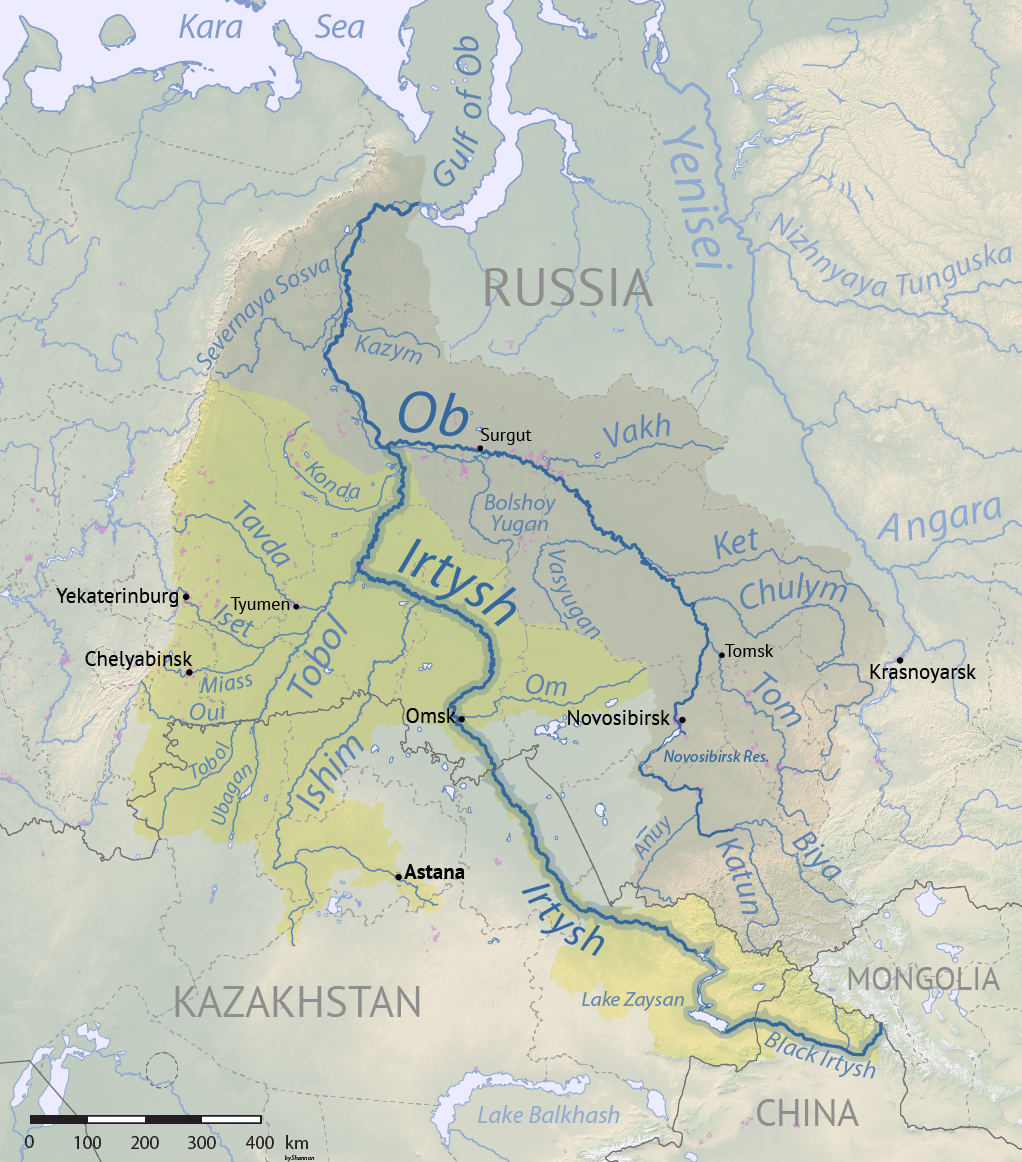


Name, languages and etymology
The river is known under several local names and spellings. In Russian it is written Иртыш, in Kazakh Ertis / Ертiс, in Chinese 额尔齐斯河 / É'ěrqísī hé, in Mongolian Эрчис мөрөн and in Tatar Иртеш / İrteş. Historical and regional qualifiers — such as "Black Irtysh" (Kara-Irtysh) for the upper reaches — reflect local language traditions and geographic usage rather than separate rivers. For more general geographic context see river and Siberia resources.
Course and physical characteristics
The Irtysh originates in the highlands of the Altai/Altay region of northwestern China (Xinjiang) and initially flows generally northwest. It passes through Lake Zaysan in eastern Kazakhstan and then continues across the Kazakh steppe and into western Siberia, where it receives major tributaries such as the Tobol and Ishim before merging with the Ob near the Khanty-Mansiysk area. The combined Ob–Irtysh basin drains a vast area of Western Siberia and the Altai and is one of the largest drainage basins in Asia. The river's international character means its hydrology is influenced by mountain snowmelt, summer rains and extensive seasonal ice cover.
Basin, tributaries and settlements
- Main tributary: the Tobol — a significant contributor to the Irtysh's flow and to the Ob–Irtysh system.
- Other important rivers in the basin include the Ishim and smaller Siberian streams that shape the floodplain.
- Key cities along or near the Irtysh include Omsk (Russia) and Semey (formerly Semipalatinsk, Kazakhstan); several smaller towns and industrial centres also depend on the river.
Human use, infrastructure and economy
The Irtysh has long been a corridor for trade, migration and cultural contact across Central Asia and Siberia. Contemporary uses include river navigation where conditions permit, agricultural irrigation in parts of Kazakhstan, municipal water supplies and hydroelectric generation at dams and reservoirs located on the river and its tributaries. Large engineering works and canals that draw from Irtysh waters support local industry and urban areas; such projects have had important economic benefits as well as environmental consequences. For regional development references see links on Kazakhstan, tributary systems and river management.
Ecology and environmental considerations
The Irtysh basin supports steppe, forest-steppe and taiga habitats and hosts fish and bird populations adapted to its seasonal cycles. Hydropower dams, water extractions and pollution linked to industry and agriculture have altered flow regimes and habitats in places, prompting monitoring and management efforts by the three riparian countries. Cross-border cooperation is an ongoing challenge because upstream changes can affect downstream water quantity and quality.
History and cultural importance
Historically, the Irtysh valley has been a route for nomadic peoples, traders and later imperial expansion into Siberia. Rivers in the region provided the easiest routes for movement and communication long before railways and roads. Regional histories and place names along the river reflect a blend of Turkic, Mongolic, Russian and other influences.
Notable facts and distinctions
- The Irtysh is the Ob's main and longest tributary and helps form one of Asia's largest river systems.
- Upper-course names such as "Black Irtysh" (Kara-Irtysh) appear in some regional usages to distinguish sections of the river.
- Because it flows through three countries, its management exemplifies transboundary water issues in Eurasia.
For further reading and language-specific entries see the regional pages: Russian, Kazakh, Chinese, Mongolian and Tatar language treatments, and broader geographic summaries at river, Siberia, Kazakhstan, tributary, drainage basin and Asia.
Related articles
Author
AlegsaOnline.com Irtysh River — major tributary of the Ob across China, Kazakhstan and Russia Leandro Alegsa
URL: https://en.alegsaonline.com/art/48273