
Iron(II,III) oxide (magnetite): properties, structure, uses
Iron(II,III) oxide (Fe3O4), commonly known as magnetite, is a mixed‑valence iron oxide with magnetic properties, found as a mineral and used in industry, pigments, and magnetic applications.
Iron(II,III) oxide is a chemical compound with the empirical formula Fe3O4. It is often called magnetite when occurring as a mineral. Chemically it is a mixed‑valence oxide that can be expressed as FeO·Fe2O3, meaning it contains iron in two oxidation states simultaneously. The substance is typically black, brittle, and strongly magnetic at ambient temperatures.
Image gallery
2 Images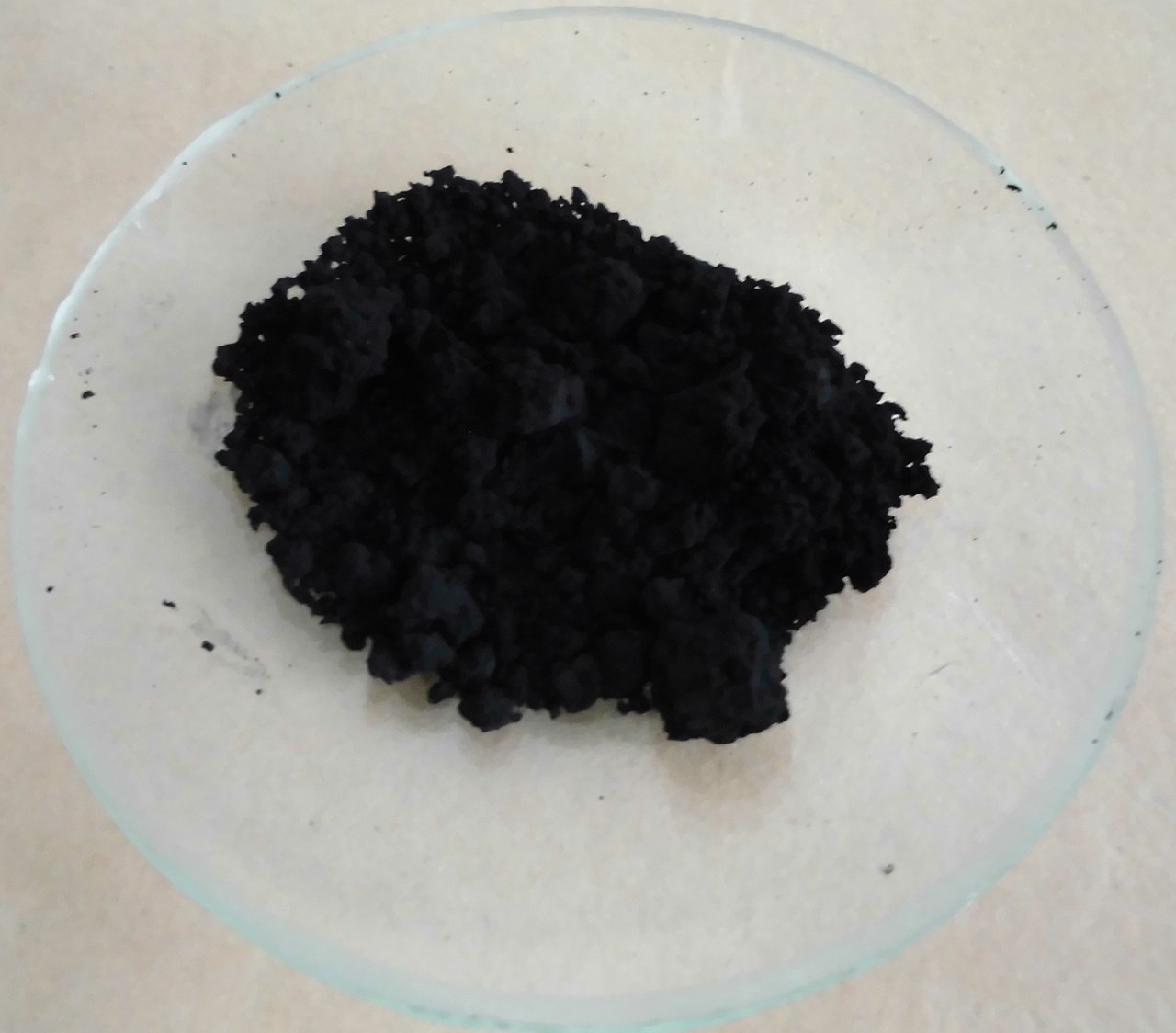

Composition and crystal structure
Fe3O4 contains both Fe2+ and Fe3+ ions arranged in a cubic inverse spinel lattice. In this arrangement some Fe3+ occupy tetrahedral sites while Fe2+ and the remaining Fe3+ occupy octahedral sites. Electron hopping between Fe2+ and Fe3+ in octahedral sites contributes to its electrical conductivity and unique magnetic behavior.
Physical and chemical properties
Magnetite is strongly ferrimagnetic and is attracted to magnets; naturally occurring magnetite that retains remanent magnetization is known as lodestone. It can oxidize over time in air or moist conditions to form red iron(III) oxide, commonly called hematite. It is denser and darker than some other iron oxides and is brittle rather than malleable.
Occurrence and historical notes
As a mineral, magnetite ore is one of the principal iron ores and has been mined since antiquity. Lodestones were used in early navigation because they align with the Earth's magnetic field. Geological processes produce magnetite in igneous, metamorphic and sedimentary settings, and synthetic forms are produced industrially.
Uses and applications
- Extraction of iron and steelmaking as a source of iron.
- Magnetic recording media and magnetic cores in some electronics.
- Water treatment and magnetic separation technologies.
- Research and biomedical applications: iron oxide nanoparticles derived from Fe3O4 are used for magnetic resonance contrast agents, drug delivery research, and hyperthermia experiments.
- Pigments and catalysts in various chemical processes.
Distinctive facts and chemical behavior
Fe3O4 is notable for its mixed valence state and for being more electrically conductive than fully trivalent iron oxides because of electron mobility between iron centers. It readily converts to hematite (iron(III) oxide) upon oxidation and can be reduced to metallic iron under strong reducing conditions. The compound is often referenced simply as Iron(II,III) oxide in chemical literature and is widely studied for its magnetic properties and technological applications. Its magnetic character—often described as magnetic — attracted to magnets—remains the feature most associated with the mineral.
Related articles
Author
AlegsaOnline.com Iron(II,III) oxide (magnetite): properties, structure, uses Leandro Alegsa
URL: https://en.alegsaonline.com/art/48242