
Iron(II) oxide (FeO): properties, formation, and uses
Iron(II) oxide (FeO) is a basic iron oxide that occurs as black wüstite and as hydrated and oxidized forms; it is important in metallurgy, geology, and materials chemistry.
Overview
Iron(II) oxide is an inorganic compound composed of iron in the +2 oxidation state bonded to oxygen. It is commonly referred to by its mineral name, wüstite, when found in nature or as a non-stoichiometric solid. In its simple form FeO is a dark, often black powder that displays different behaviour depending on temperature, humidity, and exposure to air.
Image gallery
7 Images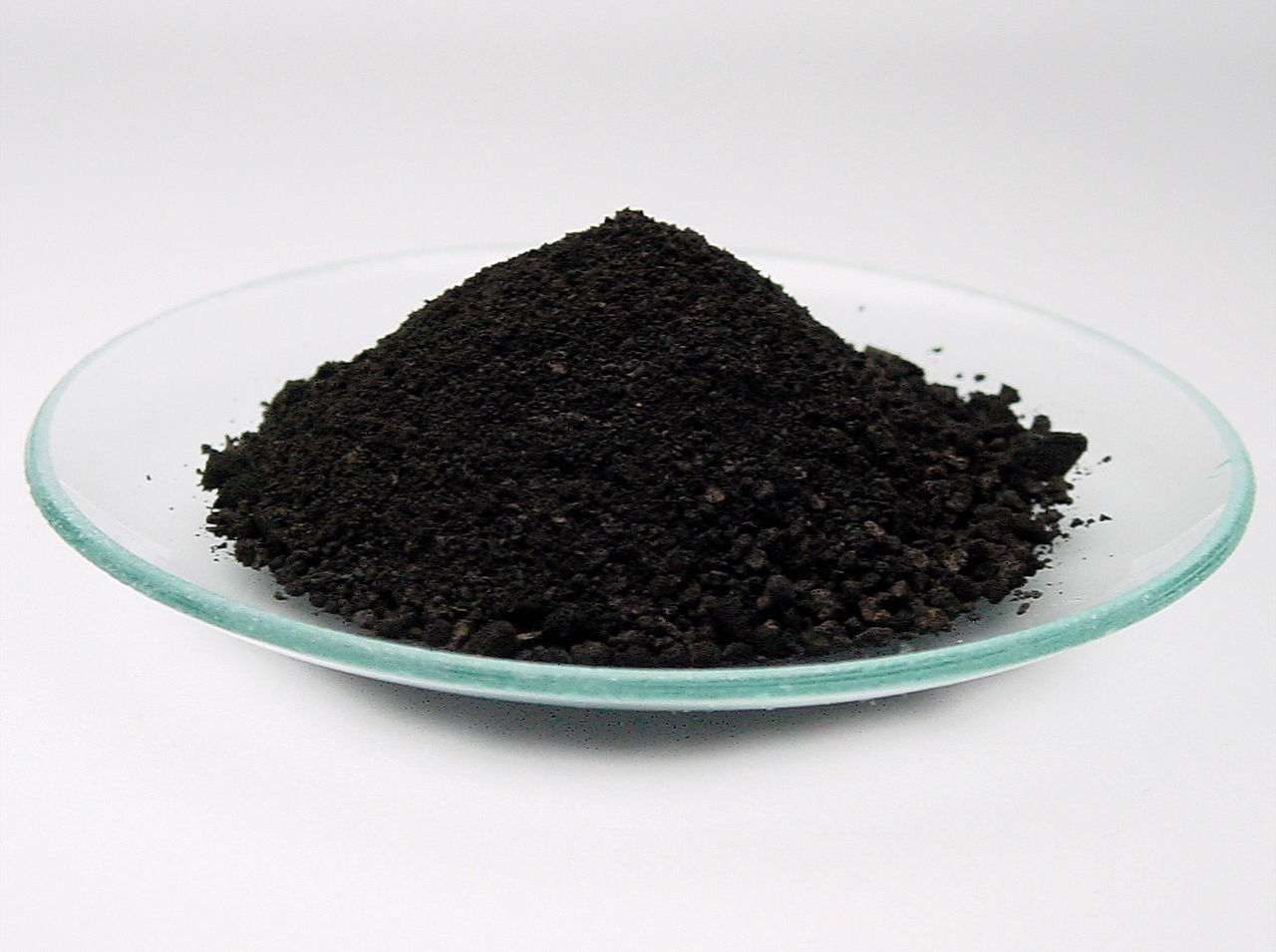





Key physical and chemical characteristics
- Appearance: typically black or dark grey powder; may turn green on hydration.
- Stoichiometry: frequently non-stoichiometric (written Fe1−xO) rather than the ideal FeO formula.
- Crystal structure: related to the rock‑salt (halite) lattice in the idealized form.
- Reactivity: susceptible to oxidation and can transform to mixed oxidation products under ambient conditions.
Formation, stability, and transformations
FeO is more stable at elevated temperatures and is commonly produced in high‑temperature environments such as blast furnaces, smelting processes, and geological settings within the Earth and some meteorites. Under ordinary atmospheric conditions it is often metastable and can undergo disproportionation or oxidation to produce mixtures that include metallic iron and oxidized iron species. When FeO absorbs water it forms a hydrated material related to iron(II) hydroxide, which is green; exposure of that hydrated phase to oxygen leads to further oxidation and the reddish or brownish iron(III) oxides, such as iron(III) oxide, commonly recognized as rust.
Uses and significance
Although pure FeO has fewer direct commercial applications than other iron oxides, it plays an important role in metallurgy as an intermediate in iron and steelmaking and in reactions inside furnaces. It appears as a component in some ceramic glazes and glass formulations where it can influence color and reduction/oxidation behaviour. In geology and planetary science, wüstite and FeO-rich phases are of interest for interpreting high‑temperature processes and the composition of deep Earth and extraterrestrial materials.
Distinctions and notable facts
FeO should be distinguished from other common iron oxides: iron(III) oxide (Fe2O3) and magnetite (Fe3O4), which contain iron in mixed or higher oxidation states and have different colors and magnetic properties. The term iron(II) oxide emphasizes the +2 valence of iron, while practical samples frequently deviate from ideal composition. For further introductory reading about the compound and related chemistry, see general resources on iron compounds and oxidation states (compound overview, elemental iron, oxidation states, oxygen, iron(III) oxide, iron(II) hydroxide).
Notes: Practical handling of FeO requires care to limit unwanted oxidation; laboratory and industrial contexts control atmosphere, temperature, and moisture to preserve the desired phase.
Related articles
Author
AlegsaOnline.com Iron(II) oxide (FeO): properties, formation, and uses Leandro Alegsa
URL: https://en.alegsaonline.com/art/48236