
Hypothalamus: brain center for homeostasis and neuroendocrine regulation
The hypothalamus is a small but essential brain region that links the nervous and endocrine systems to control temperature, hunger, thirst, sleep cycles and hormone release.
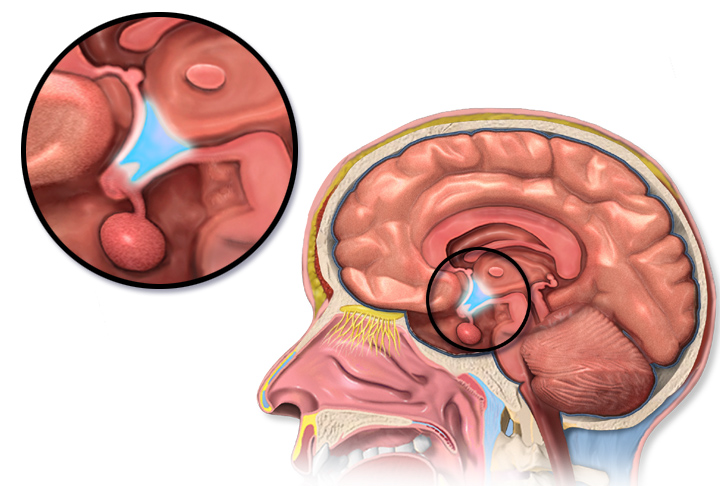
The hypothalamus is a compact region located near the base of the brain and immediately below the thalamus. Its name derives from Greek roots meaning "under the thalamus," reflecting its anatomical position. Because of that location the hypothalamus forms a central interface between higher brain structures and the brainstem, coordinating signals that influence automatic bodily functions and behavior. See general anatomy of the brain for context: brain base. The Greek origin of the name is often noted in etymological discussions: Greek etymology.
Image gallery
10 Images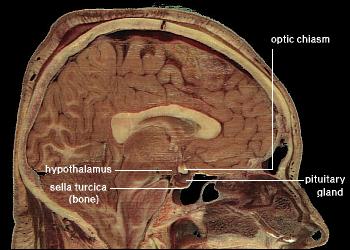

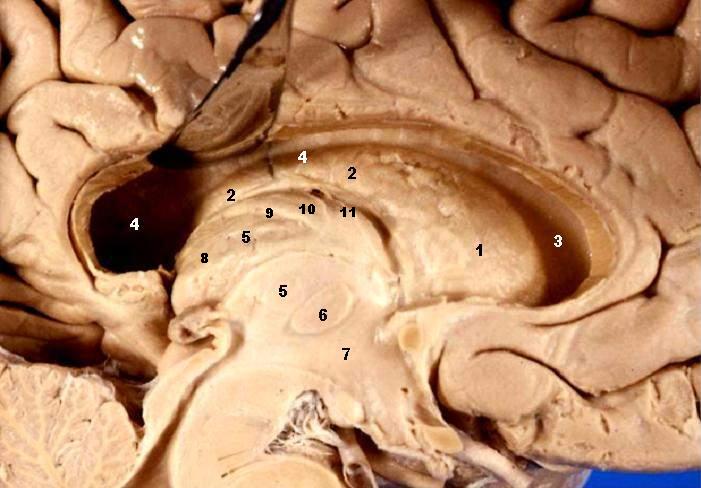

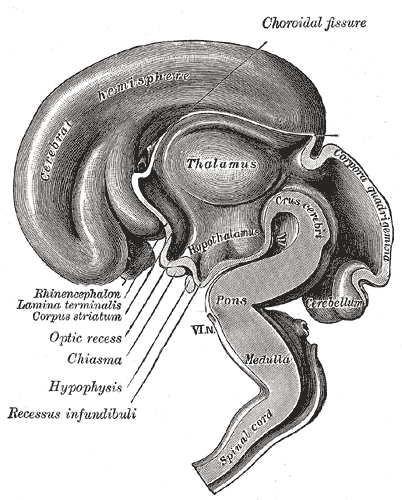


Overview and primary roles
The hypothalamus integrates neural and hormonal information to maintain the body's internal balance, or homeostasis. It monitors body temperature, energy status, fluid balance, and daily rhythms, and it issues commands that adjust physiology and behavior. It is also the principal regulator of the pituitary gland, the major endocrine gland at the brain's base. For a basic description of that gland’s role, see the entry on the pituitary gland. Through both neural projections and hormone release the hypothalamus links the nervous system with the endocrine system.
Structure and connections
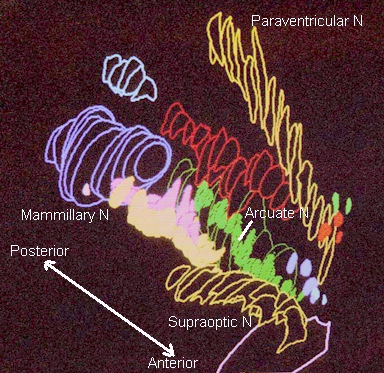
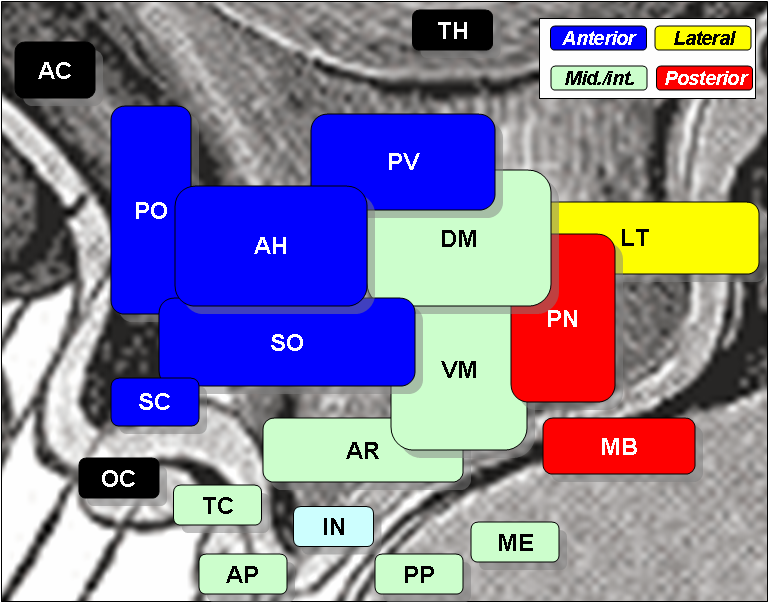
Although small, the hypothalamus is made of several distinct nuclei and fiber tracts that have specialized functions. Notable nuclei include the suprachiasmatic nucleus for circadian timing, the arcuate nucleus involved in appetite control, the paraventricular and supraoptic nuclei that produce key hormones, and lateral and ventromedial regions that influence motivated behaviors. The hypothalamus communicates with other brain areas by direct neuronal pathways and by releasing chemical signals into a specialized blood vessel network that serves the anterior pituitary. This local neurosecretory activity is central to the concept of neurosecretion.
Key functions
- Thermoregulation: sensing internal and external temperature and initiating heat-loss or heat-production responses.
- Fluid and electrolyte balance: osmoreceptors in the hypothalamus drive thirst and antidiuretic responses that control water retention; this is part of the system regulating thirst.
- Energy balance and feeding: hunger and satiety signals are integrated to regulate food intake and body weight; see more on hunger.
- Circadian rhythms: a master clock in the hypothalamus times sleep–wake cycles and coordinates physiological rhythms with the day–night cycle; see circadian cycles.
Hormones and neuroendocrine control
The hypothalamus produces neurohormones that act either on the posterior pituitary or through the hypophyseal portal system to influence the anterior pituitary. Large magnocellular neurons synthesize hormones such as oxytocin and vasopressin which are transported to and released from the posterior pituitary into the bloodstream. Other hypothalamic neurons secrete releasing or inhibiting factors that regulate anterior pituitary secretion of hormones controlling thyroid, adrenal, and reproductive glands.
Clinical significance and examples
Dysfunction of the hypothalamus leads to a range of clinical problems. Damage can cause disruptions in temperature regulation, abnormal thirst or fluid balance, altered appetite and weight, impaired sleep timing, and hormonal disorders such as central diabetes insipidus. Because it sits above the brainstem and adjacent to the pituitary, lesions, tumors, inflammation, or genetic disorders affecting this area can have widespread effects. For discussions of how the hypothalamus interacts with surrounding structures, including its relation to the thalamus and the brain stem, consult basic neuroanatomy resources.
The hypothalamus is thus a compact but powerful brain hub: anatomically small yet crucial for survival because it senses internal states and orchestrates behavioral and endocrine responses. For accessible introductions and clinical overviews see related resources on brain organization and endocrinology: neurosecretion overview, brain base, and further reading on hormonal control and behavior via endocrine links and nervous system pathways.
Related articles
Author
AlegsaOnline.com Hypothalamus: brain center for homeostasis and neuroendocrine regulation Leandro Alegsa
URL: https://en.alegsaonline.com/art/46212