
Thalamus: structure, functions, and clinical importance
The thalamus is a paired brain structure that relays sensory and motor signals to the cerebral cortex and contributes to sleep, arousal, and awareness.
Overview
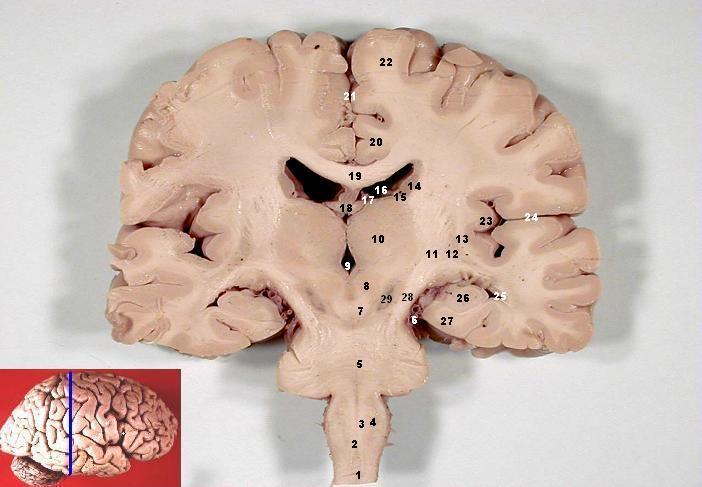
The thalamus is a midline, symmetrical structure located deep within the brain of vertebrates (see vertebrates). It lies between the cerebral cortex and the midbrain, forming a central hub for routing signals. Its position and connectivity make it a principal relay and integration center for many neural pathways.
Image gallery
10 Images


Structure and major nuclei
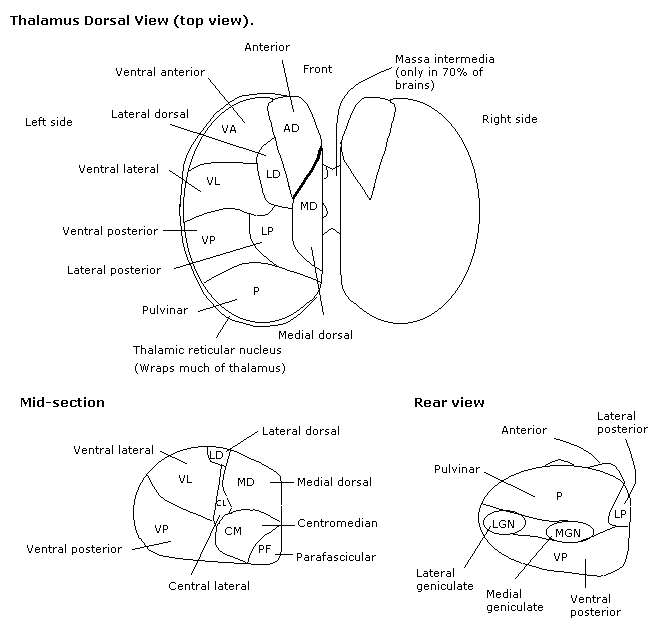
The thalamus is not a single homogeneous mass but a collection of distinct cell groups, often called nuclei. Each nucleus has characteristic inputs and outputs and contributes to different aspects of sensation, movement and cognition. Major thalamic nuclei include sensory relay nuclei for vision and hearing, motor-related nuclei that connect with the basal ganglia and cerebellum, and association nuclei that interact with frontal and parietal cortical areas.
- Lateral geniculate nucleus – primary visual relay to the cortex.
- Medial geniculate nucleus – main auditory relay.
- Ventral posterior nucleus – somatosensory relay for touch and proprioception.
- Ventral lateral and anterior nuclei – involved in motor planning and execution.
- Pulvinar and association nuclei – support attention and higher sensory processing.
Functions
The thalamus plays several interrelated roles. It relays most sensory information (notably excluding primary olfactory input) to the cortex, coordinates motor signals, and participates in the modulation of attention and cognitive processes. Through reciprocal thalamocortical circuits it contributes to states of wakefulness and consciousness and helps generate rhythmic activity associated with sleep. Specialized thalamic inhibitory networks help gate which signals reach cortical targets, shaping perception and behavioural responses.
Connections, neighboring structures, and behaviour
Anatomically the thalamus sits above the hypothalamus and beneath the cortex; its outputs and inputs form dense loops with cortical regions, the basal ganglia and cerebellum. The hypothalamus, by contrast, has a primary role in homeostatic drives and consummatory behaviours such as eating, drinking, defecation and reproduction (see consummatory behaviours) while the thalamus routes and modulates information related to those drives rather than initiating them directly.
Clinical significance and comparative notes
Thalamic damage from stroke, trauma or degenerative disease can produce sensory loss, altered arousal and chronic central pain syndromes. Disruption of thalamocortical rhythms is implicated in disorders of consciousness and some sleep disturbances. In clinical neuromodulation, selective thalamic targets are used for deep brain stimulation to treat movement disorders and certain pain conditions. Comparative anatomy shows that thalamic complexity increases in mammals and is a conserved feature across vertebrate brains, reflecting its fundamental role in integrating sensory and motor information.
For further reading and anatomical references, consult specialized reviews and neuroanatomy resources: structure, brain, vertebrate evolution, cerebral cortex relations, midbrain connections, consciousness research, sleep mechanisms, hypothalamic functions, thalamic nuclei, consummatory behaviour topics.
Questions and answers
Q: What is the thalamus?
A: The thalamus is a midline symmetrical structure in the brains of vertebrates located between the cerebral cortex and midbrain.
Q: What does the thalamus do?
A: The thalamus relays sensory and motor signals to the cerebral cortex, and regulates consciousness, sleep, and alertness. It also acts as a relay station, gathering sense information of all kinds (except olfactory) and passing it on to the cerebral cortex.
Q: Where is the thalamus located?
A: The thalamus sits above the hypothalamus, and below the cerebral cortex.
Q: What type of behaviour does it control?
A: The thalamus controls 'consummatory' behaviours such as eating, drinking, defecation, and copulation which satisfy short-term needs.
Q: Does it control olfactory senses?
A: No, it does not control olfactory senses.
Author
AlegsaOnline.com Thalamus: structure, functions, and clinical importance Leandro Alegsa
URL: https://en.alegsaonline.com/art/97354
Sources
- simple.wiktionary.org : θάλαμος
- etymonline.com : index
- faculty.washington.edu : Faculty Web Server
- google.co.uk : Search engine search page
- perseus.tufts.edu : tufts.edu
- doi.org : 10.4249/scholarpedia.1583
- elsevier.com : Elsevier B.V
- books.google.com : books.google.com/?id=WMxqAAAAMAAJ