
Hu Chunhua
Hu Chunhua is a Chinese politician who has held senior provincial posts and served on the Communist Party Politburo; he was long viewed as a leading figure of the so-called 'sixth generation'.
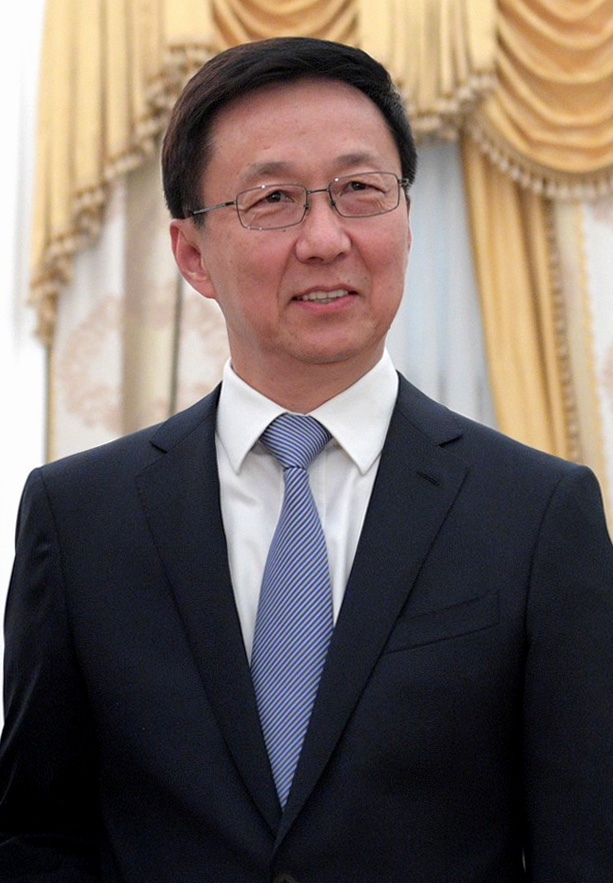
Hu Chunhua (胡春华) is a Chinese politician born in April 1963 in Hubei Province. He is a graduate of Peking University and has spent much of his career in party and government positions at both regional and central levels. Hu is widely described as a member of the Communist Party leadership generation that followed the cohorts associated with Jiang Zemin and Hu Jintao, often labeled by analysts as the "sixth generation"; he has also been identified in media and commentary as a prominent politician within this group.
Image gallery
4 Images


Early life and education
Hu entered university in 1979 and graduated in the early 1980s. Soon after leaving school he took up work in the Tibetan region, where young urban graduates frequently served in cadres or volunteer programs during that era. His early years in Tibet provided him with administrative and grassroots experience that became the foundation for subsequent promotions within the party system. During this formative period Hu worked under the local leadership then in place and developed a profile as a capable regional official (Tibet, leadership at the time).
Career progression
Hu's career followed a pattern common to several senior officials: regional service, a period in the Communist Youth League, and moves back to provincial leadership. He served in senior roles in the Youth League in the 1990s and returned later to take higher office. In the late 2000s he was appointed to provincial leadership positions and then to larger party posts. His main known appointments include:
- Senior roles in Tibet early in his career (Tibet).
- Leadership in the Communist Youth League in Beijing.
- Deputy party chief and then governor of Hebei province.
- Party secretary of the Inner Mongolia autonomous region.
- Member of the Communist Party Politburo and Party Secretary of Guangdong province.
Political significance and later developments
When he joined the central Politburo in 2012, Hu was widely regarded by observers as a potential future member of the party's top collective leadership. He and contemporaries such as Sun Zhengcai were discussed in the context of generational succession. After the consolidation of authority by Xi Jinping, expectations about a routine, predictable transition were altered. One of Hu's contemporaries was subsequently removed from office and convicted on corruption charges; Hu himself remained influential but did not join the Politburo Standing Committee (the PSC), the party's highest decision-making body.
Roles, responsibilities and public profile
Throughout his provincial assignments Hu oversaw economic and administrative affairs in some of China's most important regions, including a populous coastal province and large frontier areas. Observers note his administrative experience across distinct environments — central, frontier, and economic hubs — as a key part of his profile. He has been involved in party governance, development planning and implementation of central policies at the provincial level.
Hu Chunhua's career illustrates common pathways to power in the Chinese system: early grassroots or regional service, advancement through party institutions such as the Youth League, and successive provincial leadership roles culminating in a place on the Politburo. While he did not reach the ultimate standing committee, he remains a notable figure in recent Chinese political history and an example of the complex dynamics of promotion, factional balance and leadership renewal in the Communist Party.

Related articles
Author
AlegsaOnline.com Hu Chunhua Leandro Alegsa
URL: https://en.alegsaonline.com/art/45479
Sources
- nytimes.com : "China: A Rising Party Leader Is Elevated Yet Again"
- news.wenxuecity.com : 官场如战场:中共第六代领导人呼之欲出
- taipeitimes.com : ‘Little Hu’ may play a big role in China’s political future