
Henschel Hs 123: German single-seat biplane dive bomber
The Henschel Hs 123 was a robust single-engine biplane dive bomber built in 1930s Germany. Used in the Spanish Civil War and early World War II, it served as a close-support and ground-attack aircraft.
Overview
The Henschel Hs 123 was a single-seat, single-engine biplane designed in Germany in the early 1930s for close air support and dive-bombing. It entered service before World War II and is often noted for its simplicity, ruggedness and good handling at low speeds. Despite rapid advances in monoplane fighters and attack aircraft, the Hs 123 continued in frontline and secondary roles because of its reliability and ability to operate from improvised fields. For a concise introduction see Hs 123 overview.
Image gallery
5 Images



Design and characteristics
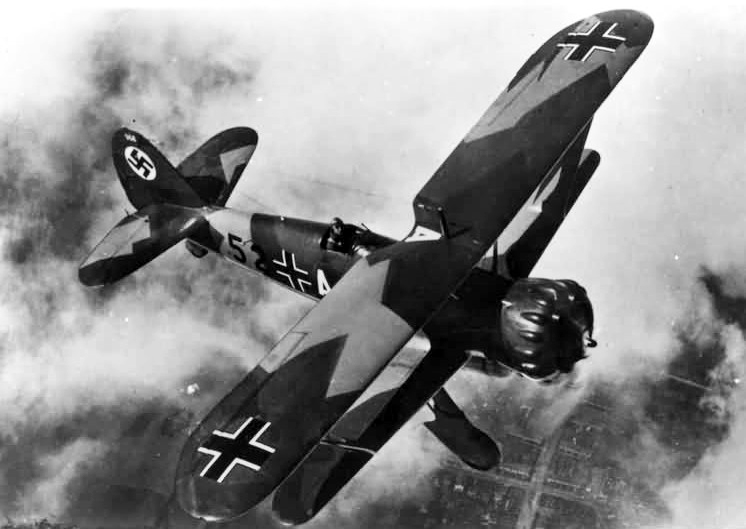
The Hs 123 featured a fixed undercarriage, staggered biplane wings and an open cockpit, reflecting the conservative design approach of its era. Its airframe emphasized strength to withstand the stresses of steep diving attacks and rough-field operations. The aircraft carried a modest bomb load and forward-firing guns, making it suitable for close support of ground troops rather than strategic bombing. Technical summaries and photographs are available at technical references and historical archives such as archive collections.
Operational history
Early combat experience came in the Spanish Civil War, where some Hs 123s were flown by German units supporting Nationalist forces. During the opening campaigns of World War II the type saw service against Poland, Belgium and France, often flown in dive-bombing and ground-attack sorties. The Hs 123 also operated on the Eastern Front and in secondary roles where its low-speed survivability was valued. Contemporary accounts and unit histories discuss its role in close air support; see operational summaries and unit reports at unit archives.
Variants, operators and roles
- Variants were limited and focused on minor improvements to equipment and armament; detailed variant lists can be found in specialized references (variant list).
- Operators included Luftwaffe units and, in limited numbers, the Spanish air force, which continued to operate some examples after the Civil War; see Spanish use and related operator records (operator records).
- Typical missions included dive bombing, close air support, artillery spotting and battlefield reconnaissance; additional mission examples appear in operational summaries (mission examples).
Legacy and notable facts
Although quickly made obsolete by faster monoplanes and more specialized ground-attack designs, the Hs 123 earned a reputation for toughness and ease of maintenance. It is often cited as an example of interwar design that retained effectiveness in niche roles into the early 1940s. For further reading and image collections consult photo archives and technical retrospectives at historical reviews or general aviation histories (aviation history sources).
Note: This article summarizes broadly known facts about the Hs 123. For detailed technical specifications, production figures and squadron-level operations consult specialized monographs and primary archival sources.
Related articles
Author
AlegsaOnline.com Henschel Hs 123: German single-seat biplane dive bomber Leandro Alegsa
URL: https://en.alegsaonline.com/art/43638