
Homosexuality in the Militaries of Ancient Greece
An overview of how same-sex relationships intersected with military life in classical Greece, including the Sacred Band of Thebes, Spartan practices, social context, functions, and modern scholarly debates.
In several Greek city-states of the classical era, intimate relationships between men intersected with military life in ways that ancient writers and later historians have seen as contributing to unit cohesion and battlefield courage. The best-known example is the reputed corps of paired lovers from Thebes, commonly discussed in modern accounts as the Sacred Band of Thebes. Other poleis displayed a variety of social practices—formal and informal—that linked erotic or mentor-like bonds to training, loyalty, and collective identity.
Image gallery
3 Images

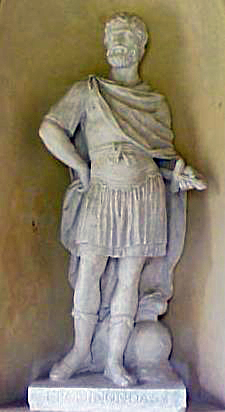
Social context and forms
Male same-sex relations in classical Greece took diverse forms, from socially structured mentorships often described by modern scholars as pederastic, to long-term adult partnerships. Such relationships were embedded in broader educational, civic, and ritual frameworks rather than existing solely within the military. In many communities, bonds between older and younger males could coexist with a public life that emphasized courage, honor, and the willingness to die for comrades.
Military manifestations
- Units reputed to be formed of lovers or paired fighters, cited in ancient accounts as demonstrating mutual protection and heightened bravery.
- Training systems and social rituals that fostered intense bonds among soldiers, cited by some observers as strengthening battlefield cohesion.
- City-state variations: practices differed between places such as Sparta, Athens and Thebes; what was admired in one context could be absent or viewed differently in another.
Ancient narratives often interpret acts of bravery as motivated by love or affection between comrades, while archaeological and literary evidence shows a complex picture. Sparta, for example, is sometimes described in later sources as encouraging close emotional ties among warriors, but scholars debate how institutionalized or erotic those ties were compared with broader training and civic ideals like honor and fraternity.
Evidence and modern debate
Our understanding relies on literary accounts, funerary monuments, and later historical writings. These sources are uneven and reflect their authors' social values and rhetorical aims. Modern historians disagree about how to weigh rhetoric and reality: some argue that erotic bonds were deliberately cultivated for military effectiveness; others stress alternative explanations such as shared upbringing, common citizenship, and ritualized camaraderie. Whatever the balance, the topic illustrates how sex, social norms, and warfare were intertwined in ancient Greek culture and why it continues to attract scholarly and public interest.
Questions and answers
Q: Was homosexuality accepted in the militaries of ancient Greece?
A: Yes, homosexuality was regarded as contributing to morale in the militaries of ancient Greece.
Q: What was the name of a military unit formed of same-sex couples in ancient Greece?
A: The Sacred Band of Thebes was a military unit formed of same-sex couples in ancient Greece.
Q: What was the role of homosexual relationships in the Spartan tradition of military heroism?
A: The emotional bonds resulting from homosexual relationships were believed to contribute to the strong sense of military heroism in the Spartan tradition.
Q: How were incidents of courage in battles interpreted in ancient Greece?
A: Various ancient Greek sources interpreted incidents of courage in battles as motivated by homoerotic bonds.
Q: Did ancient Greek sources record instances of homosexuals being ostracized from the military?
A: The text does not mention any instances of homosexuals being ostracized from the military in ancient Greece.
Q: Was homosexuality accepted by society as a whole in ancient Greece?
A: Homosexuality was generally accepted by society as a whole in ancient Greece.
Q: How did homosexuality contribute to morale in the militaries of ancient Greece?
A: Homosexuality was believed to contribute to morale in the militaries of ancient Greece by fostering strong emotional bonds among soldiers.
Related articles
Author
AlegsaOnline.com Homosexuality in the Militaries of Ancient Greece Leandro Alegsa
URL: https://en.alegsaonline.com/art/44950