
Hindenburg Line (Siegfriedstellung): German defensive system of World War I
A fortified German defensive system on the Western Front in WWI, constructed in 1916–17. A deep, layered line of trenches, bunkers and wire designed for economy of force and later breached in 1918.
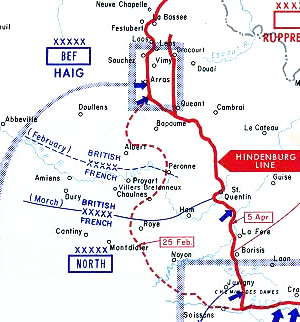
The Hindenburg Line, known in German as the Siegfriedstellung, was a major German defensive system constructed along the Western Front during the winter of 1916–17. Built and occupied by the German Empire, it represented a deliberate shortening and strengthening of the front to create a more defensible position against Allied offensives along the Western Front.
Image gallery
10 Images




Design and components
The Hindenburg Line was not a single trench but a multilayered system combining natural features with engineered works. Typical elements included:
- Multiple lines of trenches and communication galleries to allow movement under fire.
- Concrete bunkers and deep dugouts providing shelter for troops and command posts.
- Extensive belts of barbed wire and anti-infantry obstacles to slow attackers.
- Artillery positions and counter-battery facilities placed behind the front belts.
- Integration of rail and road links for rapid reinforcement and resupply.
Purpose and development
Faced with rising manpower pressures and the need to economize forces, German planners prepared a shortened defensive line that required fewer troops to hold. The transition to the new line was organized and sometimes executed as a planned withdrawal, accompanied by demolition of infrastructure in the abandoned zones to deny their use to the enemy. The name "Hindenburg Line" was used by the Allies after German commander Paul von Hindenburg; Germans generally referred to the position as the Siegfriedstellung.
Military significance and later history
The Hindenburg Line shaped Allied operations for the remainder of the war. Allied commanders launched multiple efforts to breach or outflank the system; while many attacks were costly and initially unsuccessful, breakthroughs in 1918 during the Allied offensives eventually overcame parts of the line. The concept of deep, prepared defense influenced interwar thinking about fortifications—most famously the French construction of the Maginot Line after the war.
Notable facts and legacy
Although parts of the Hindenburg Line remain visible in the landscape today, its legacy is largely tactical and symbolic: an example of industrialized, systematized defence in modern warfare and of how strategic withdrawals and prepared positions can shape operational choices. Its construction, use and eventual breach are frequently studied as a case of defensive design affecting offensive planning and the wider course of the First World War.
Questions and answers
Q: What is the Hindenburg Line?
A: The Hindenburg Line, also known as the Siegfried Position, was a system of forts built by the German Empire during World War I to defend against France.
Q: When was the Hindenburg Line constructed?
A: The Hindenburg Line was constructed during the winter of 1916-1917.
Q: What was the purpose of the Hindenburg Line?
A: The purpose of the Hindenburg Line was to defend against France during World War I.
Q: What did the French do after the war with regards to fortifications?
A: After the war, the French built the Maginot Line, a similar but more elaborate system of fortifications to defend against Germany.
Q: Who built the Hindenburg Line?
A: The Hindenburg Line was built by the German Empire.
Q: What was the Western Front?
A: The Western Front was a series of trenches and fortifications along the border between France and Germany during World War I.
Q: Did the Hindenburg Line achieve its intended objectives?
A: For a time, the Hindenburg Line was successful in defending against the Allies, but eventually it was breached and the German Empire was defeated.
Related articles
Author
AlegsaOnline.com Hindenburg Line (Siegfriedstellung): German defensive system of World War I Leandro Alegsa
URL: https://en.alegsaonline.com/art/44273