
Henry Cavendish: life, experiments and scientific legacy
Henry Cavendish (1731–1810), British natural philosopher known for discovering hydrogen, precise electrical studies and the torsion-balance measurement of Earth's density (the Cavendish experiment).
Overview
Henry Cavendish (10 October 1731 – 24 February 1810) was an English natural philosopher and experimenter whose careful laboratory measurements influenced physics and chemistry. Often described simply as a British scientist, he is best known for identifying a distinct flammable gas that later became called hydrogen and for a torsion-balance experiment that made the first precise laboratory determination of the Earth's mean density.
Image gallery
5 Images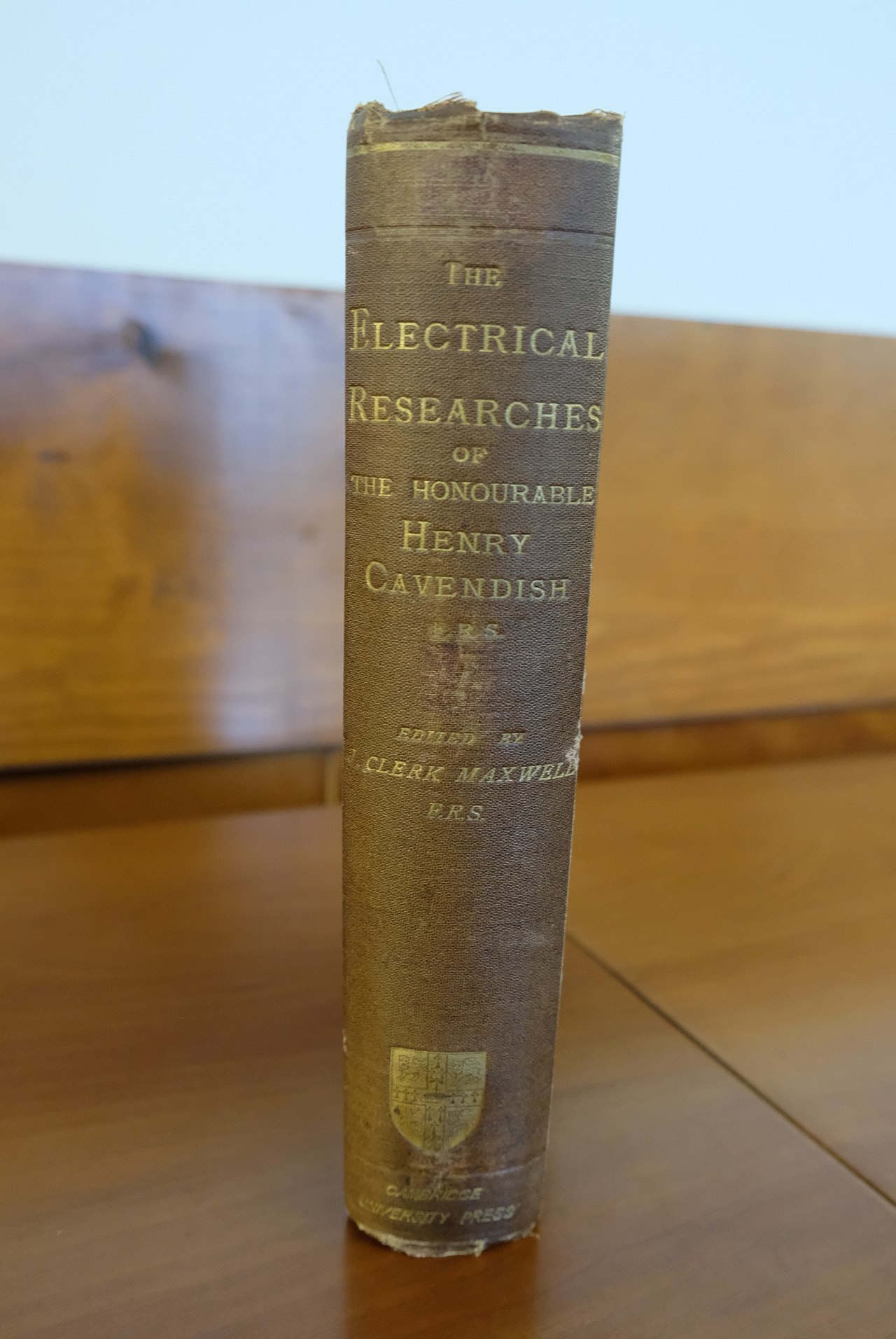


Life and education
Cavendish came from a wealthy and well-connected family and spent most of his career working in private rooms rather than a university department. He attended Peterhouse at the University of Cambridge, but he left without taking a degree. He was elected a Fellow of the Royal Society and maintained a long, largely solitary program of experimentation in a laboratory installed in the family home in London.
Major discoveries and experiments
Cavendish combined acute practical skill with precise measurement. His most cited achievements include:
- Identification and characterization of the newly recognized gas, calling it "inflammable air"; later work showed that burning this gas produced water, a key observation in developing modern chemistry (hydrogen).
- The torsion-balance investigation often called the Cavendish experiment, which measured the weak attraction between known masses and from that result inferred the density of the Earth and, indirectly, the value of the gravitational constant that appears in Newton's law of universal gravitation.
- Detailed electrical studies in which he tested the inverse-square law for electrical force, explored ideas of electric potential (which he called "the degree of electrification") and showed that conductors share a common potential on their surfaces (electric potential).
Methods and instruments
Cavendish favored quantitative work carried out with custom apparatus and great patience. He devised sensitive balances and capacitors, and he kept extensive notebooks of measurements and observations that were often more complete than his short published papers suggested. In the absence of convenient galvanometers he sometimes used his own sensations to gauge weak electrical effects; these experimental choices reflect both the novelty of electrical science in his time and his willingness to improvise.
Publication, manuscripts and influence
Only a small number of Cavendish's results were published during his lifetime; many more remained in handwritten notebooks. Decades later scholars edited and printed these manuscripts so later generations could evaluate his work. Notably, James Clerk Maxwell examined and organized Cavendish's electrical researches, helping to bring them to wider attention. Modern historians and scientists value Cavendish for the rigor of his measurements and for methods that anticipated later developments in physics and chemistry.
Notable facts and distinctions
Cavendish combined extreme precision with a reclusive personal style; he managed a long program of original experiments without leading a large laboratory or school. His name persists in scientific contexts: the torsion-balance test that bears his name remains a landmark in the empirical determination of fundamental physical quantities, and his chemical and electrical insights helped pave the way for work by later scientists.
Further reading and archival collections of Cavendish's papers and edited volumes on his work are available through modern library and museum catalogs (archival guide, university resources, biographical notes, geophysical summaries, gravitation references, college records, laboratory histories, electricity studies, potential theory, collected papers, chemical reports, experimental descriptions, Maxwell's edition).
Related articles
Author
AlegsaOnline.com Henry Cavendish: life, experiments and scientific legacy Leandro Alegsa
URL: https://en.alegsaonline.com/art/43560