
Peterhouse, Cambridge: England's Oldest College and Its Legacy
Peterhouse, founded in 1284 and located on Trumpington Street, is the University of Cambridge's oldest and one of its smallest colleges, known for medieval architecture, scholarly life, and several Nobel-affiliated alumni.
Peterhouse is the oldest constituent college of the University of Cambridge. Founded in the late 13th century, it occupies land beside the Church of St Peter on Trumpington Street in central Cambridge and has retained a compact, collegiate character: the student body is small compared with many other colleges, with fewer than 400 members in total. As a self-governing college within the wider university community, Peterhouse combines residential life, teaching links to Cambridge departments, and a long record of scholarship.
Image gallery
10 Images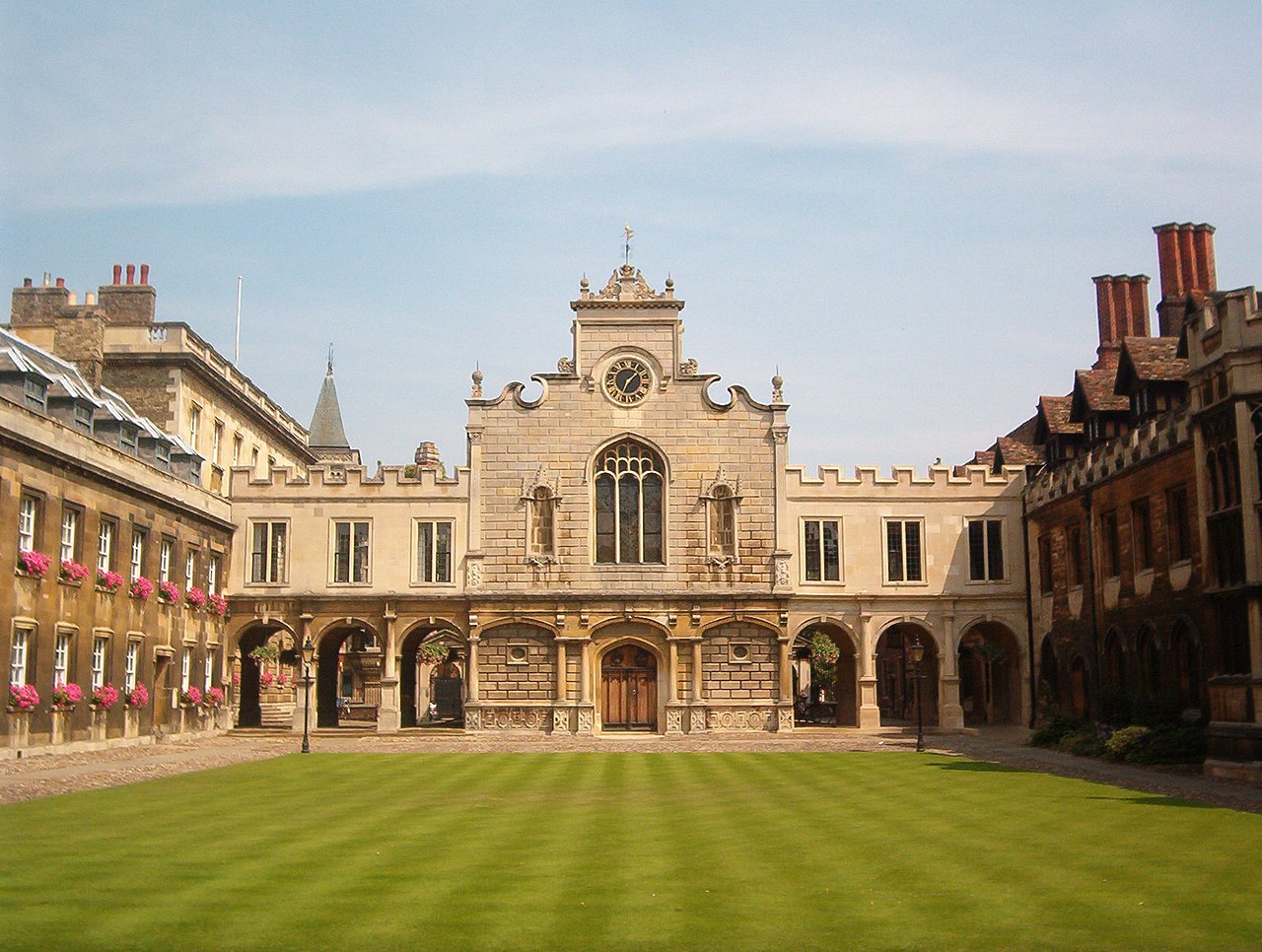


Origins and early history
The college traces its origin to Hugo de Balsham, Bishop of Ely, who in 1280 obtained permission to retain a group of scholars organized under statutes modelled on those of Merton College, Oxford. Four years later the foundation secured land near the parish church of St Peter and established what became known as Peterhouse. Its medieval foundation and church-side location have shaped both its name and its historic role in university life. Over subsequent centuries the college took part in theological and academic debates that echoed wider changes in English religious life, including discussions connected with the Protestant Reformation and other ecclesiastical controversies.
Buildings, setting and innovations
Peterhouse's buildings include medieval fabric alongside later additions; the college retains an intimate court and chapel and fronts onto Trumpington Street near other university sites. Its compact precincts reflect the medieval pattern of cloistered college life. Peterhouse also appears in accounts of early technological adoption: it is reported to have been one of the first non-government buildings in England to be fitted with electric lighting, following the installation at the Palace of Westminster and marking a step in modernizing college facilities during the Victorian era.
Academic life and governance
Like other Cambridge colleges, Peterhouse is governed by a Master and a body of Fellows who oversee admissions, scholarships and academic standards. The college supports both undergraduates and graduate students and participates in the university-wide supervision system and departmental teaching. The small scale of the college often fosters close academic mentoring and a strong residential community; formal dinners, college lectures and student societies form part of the social and intellectual life familiar to Cambridge colleges.
Notable associations and contributions
Peterhouse has been associated with a number of distinguished scholars and researchers. Several Nobel laureates have links to the college, including:
- Max Perutz and John Kendrew — awarded the Nobel Prize in Chemistry in 1962 for determining protein structures using X-ray crystallography and related methods (protein structure).
- Sir Aaron Klug — Nobel Prize in Chemistry (1982) for developments in electron microscopy and structural biology.
- Archer Martin — Nobel Prize in Chemistry (1952) for the invention of partition chromatography.
- Michael Levitt — a scientist widely cited for contributions to computational studies of biological molecules and a later Nobel laureate.
Beyond Nobel associations, alumni and fellows from Peterhouse have served in government, the church, academia and the arts, contributing to the college's reputation for scholarship across disciplines.
Distinctive features and public access
Peterhouse's identity rests on its status as the university's oldest college and on its small, concentrated community. Its central location gives easy access to Cambridge's libraries, museums and departments while preserving a sense of historical continuity around the college court and chapel. Visitors and those researching Cambridge colleges can consult college publications or official pages for current details about admissions, fellowships and events in England and within the wider university network.
For further reading and official information, see college histories and archival material available through university resources and specialist works on Cambridge colleges and their architectural and academic development (Merton connection), (early sites) and the college's role in religious debates and reforms.
Related articles
Author
AlegsaOnline.com Peterhouse, Cambridge: England's Oldest College and Its Legacy Leandro Alegsa
URL: https://en.alegsaonline.com/art/76180
Sources
- british-history.ac.uk : "'The colleges and halls: Peterhouse', A History of the County of Cambridge and the Isle of Ely: Volume 3: The City and University of Cambridge (1959), pp. 334-340"
- pet.cam.ac.uk : "About the College"