
Henry FitzRoy, 1st Duke of Richmond and Somerset (1519–1536)
Acknowledged illegitimate son of Henry VIII, created Duke of Richmond and Somerset; his status and early death shaped succession debates in the Tudor court.
Henry FitzRoy (15 June 1519 – 23 July 1536) was the only illegitimate son of King Henry VIII publicly acknowledged by the king. Born to Elizabeth Blount, commonly known as Bessie Blount, FitzRoy received unusually high status for an acknowledged royal bastard and was raised at the Tudor court as a prince-like figure. His short life—marked by ducal honours, a politically useful marriage, and roles at court—made him a focus of succession discussions in a period when Henry VIII desperately sought a legitimate male heir.
Image gallery
7 Images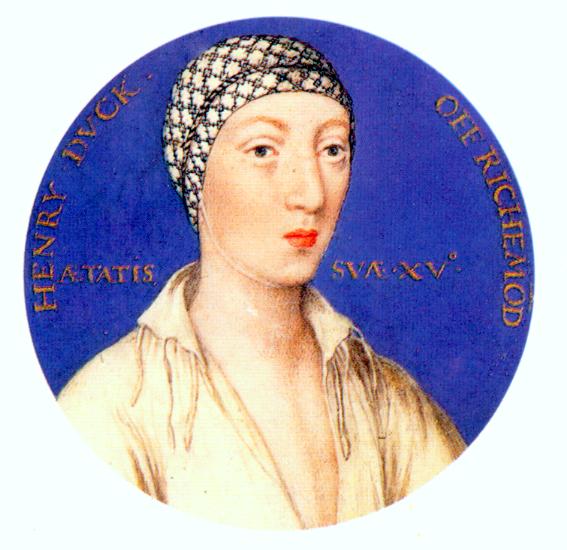



Family background and birth
FitzRoy was the product of a liaison between Henry VIII and Elizabeth Blount, who had been a lady-in-waiting. The relationship occurred while the king remained married to Catherine of Aragon. Contemporary observers and later historians note that Henry acknowledged the boy openly, a rare step for Tudor monarchs; FitzRoy was one of the few royal illegitimate offspring to receive official recognition. Henry's acknowledgement strengthened FitzRoy's public profile and set him apart from other bastards in the realm.
Titles, household and marriage
In 1525 the young Henry was elevated to the peerage as Duke of Richmond and Somerset, a creation that brought lands, income and an elaborate household suitable to a person of high rank. He was provided tutors, a courtly upbringing and visible trappings of princely status. In 1533 he entered into marriage with Mary Howard, daughter of the powerful Duke of Norfolk; the union was arranged for political alliance and produced no surviving children. The duke’s household and marriage were used by the king and his ministers as proof that FitzRoy could be presented in public as a potential successor.
Political importance and succession debate
Because Henry VIII had no legitimate son for much of his reign, FitzRoy's existence raised questions about the succession. Some at court and in parliament considered whether a recognized royal bastard might be advanced as a dynastic alternative if the king failed to produce a legitimate male heir. The suggestion was controversial: legal and religious traditions favoured legitimate descent, but the king's endorsement gave weight to the idea. Henry leveraged FitzRoy’s status at times to underline his own virility and to influence factional politics; nonetheless, no formal, lasting change to the law of succession followed from FitzRoy’s position.
Illness, death and legacy
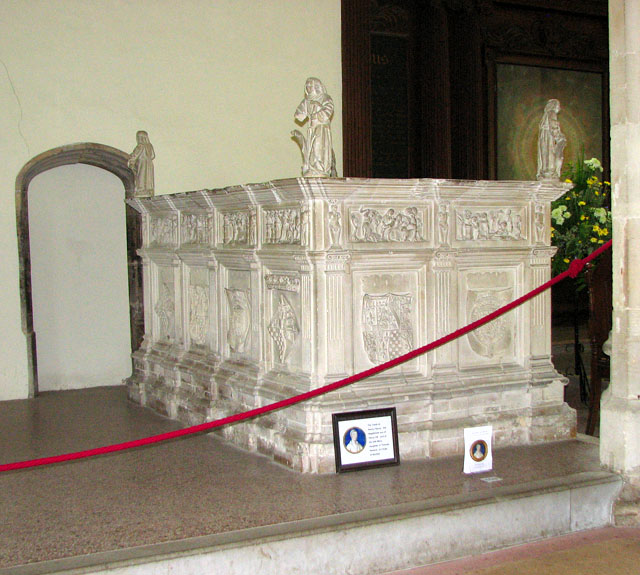
Henry FitzRoy died in July 1536 at the age of seventeen, probably of pulmonary disease historically described as consumption and today usually identified as tuberculosis. His death removed a potential, though legally uncertain, claimant to the throne and intensified the king’s anxiety about a legitimate male child. Less than a year later Henry VIII would father a legitimate son, the future Edward VI, born to Jane Seymour. FitzRoy’s early death left no heirs; his marriage to Mary Howard remained childless and his ducal line ended with him.
Notable facts and historical significance
- FitzRoy was the only one of Henry VIII’s natural children acknowledged by the king in his lifetime, which gave him exceptional standing among illegitimate offspring.
- His creation as Duke of Richmond and Somerset signalled the king’s willingness to elevate an illegitimate son unusually high in the nobility.
- Although his presence briefly intensified debate about succession, prevailing legal and dynastic norms ultimately favoured legitimate heirs over bastards.
- FitzRoy’s life illustrates how personal relationships, dynastic anxieties and political maneuvering intersected at the Tudor court during the 1520s and 1530s.
For further reading about the individuals and themes connected to FitzRoy’s story, see entries on Elizabeth Blount, the role of acknowledged bastards in royal succession, and the wider Tudor succession crisis. FitzRoy’s life remains a concise example of how status, recognition and mortality could influence dynastic politics in early modern England; his death was one piece within the larger drama that reshaped the monarchy during Henry VIII’s reign and contributed to the conditions that produced the reign of an heir-focused Tudor state.
Notes: contemporary commentators used different terms for illness and for questions of legitimacy; modern historians generally treat FitzRoy’s death as a turning point in Tudor succession history and place his life in the broader context of Henry VIII’s marital and dynastic policies.
Related topics and sources: Illegitimacy in medieval and early modern monarchy, biographies of Elizabeth Blount and studies of the Tudor succession.
See also: political uses of royal bastards and how recognition by a monarch affected noble rank and prospects.
Related articles
Author
AlegsaOnline.com Henry FitzRoy, 1st Duke of Richmond and Somerset (1519–1536) Leandro Alegsa
URL: https://en.alegsaonline.com/art/43575