
Anguis fragilis (slow-worm): biology, identification, distribution and conservation
Encyclopedic overview of the slow-worm (Anguis fragilis): appearance, behaviour, range, reproduction, ecology, how to distinguish it from snakes, and conservation issues.
Overview
Anguis fragilis, commonly called the slow-worm or blindworm, is a legless lizard native to much of temperate Europe and parts of western Asia. Although superficially snake-like, it belongs to the lizard group and shows several diagnostic lizard traits. For taxonomic context and authoritative classification notes see classification resources.
Image gallery
10 Images


Identification and distinguishing features
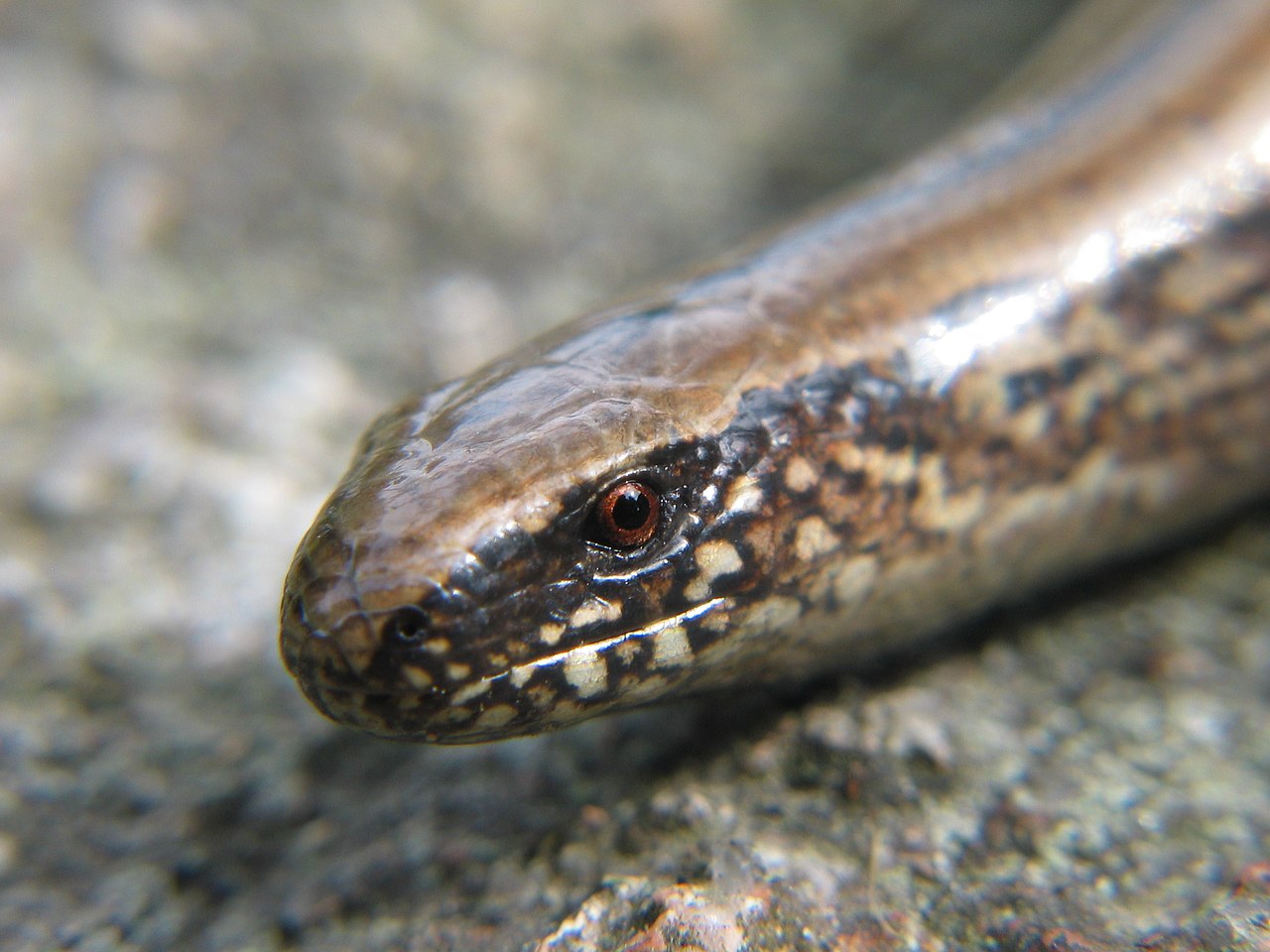
Adult slow-worms typically measure around 40–50 cm in total length, though size varies with region and individual; comparative measurements are discussed in field guides and databases at size and measurements. The body is smooth, cylindrical and covered in small overlapping scales that give a glossy appearance. Colouration ranges from brown, grey, copper or bronze; females often retain a pale or dark dorsal stripe, while males may develop bluish spots or mottling, especially during the breeding season.
Key features that separate slow-worms from snakes include movable eyelids (they can blink), small external ear openings and a head that is not distinctly narrower than the neck. Slow-worms shed their skin in small patches rather than as a single complete skin as many snakes do. When threatened they may perform caudal autotomy (drop their tail) to distract predators and later regenerate a shorter replacement tail; more on this behaviour is available at autotomy references.
Distribution, habitat and ecology
Anguis fragilis has a broad distribution across much of Europe and extends into parts of western Asia; regional range maps and status assessments are provided at European range summaries and Asiatic range summaries. Typical habitats include grassland, heathland, woodland margins, hedgerows, rocky outcrops and gardens. The species favours sites with loose soil, compost heaps, stone piles and dense ground vegetation that offer both cover and a supply of invertebrate prey.
Diet and behaviour
Slow-worms feed almost entirely on invertebrates. Their diet commonly includes earthworms, slugs, snails and a variety of insects; this makes them useful predators in gardens and agricultural margins. Activity patterns are often diurnal or crepuscular, with individuals basking to raise body temperature and retreating to cool, shaded refuges during hot weather. They are generally solitary and secretive, often discovered under stones, logs or garden debris.
Reproduction and lifespan
Unlike most reptiles that lay eggs, female slow-worms are viviparous and give birth to live young. Litter sizes vary with maternal size and environmental conditions; a single brood may contain several juveniles. Gravid females commonly bask in exposed warm spots in the days leading up to parturition. Slow-worms are relatively long-lived for small reptiles; reliable reports of advanced ages exist but maximum longevity estimates should be treated cautiously.
Conservation, threats and human interactions
Populations have declined in some areas owing to habitat loss, agricultural intensification, road mortality and urban development. In gardens and suburban settings they can be vulnerable to predation by domestic cats, disturbance from garden maintenance and accidental killing. Practical guidance on coexistence, habitat enhancement and mitigation measures can be found at conservation and management. Local legal protection and conservation status vary by country and region, so consult regional assessments for current listings.
Relationship to people and useful references
Slow-worms are often mistaken for snakes; educational resources that summarise identification differences and natural history for the public are available from field guides and outreach pages such as identification guides. For researchers and enthusiasts, regional distribution data and monitoring projects can be explored through databases and natural history organisations that maintain species accounts at regional data portals and range surveys.
Summary of notable features
- Legless lizard with smooth, shiny scales and a cylindrical body.
- Can blink and has ear openings—traits that distinguish it from snakes.
- Uses tail autotomy as a defence and regenerates a shorter tail.
- Viviparous: females give birth to live young rather than laying eggs.
- Beneficial in gardens as a predator of slugs, snails and other invertebrates.
Related articles
Author
AlegsaOnline.com Anguis fragilis (slow-worm): biology, identification, distribution and conservation Leandro Alegsa
URL: https://en.alegsaonline.com/art/4235
Sources
- arkive.org : "Slow worm videos, photos and facts - Anguis fragilis"
- species.wikimedia.org : Anguis fragilis