
Anguis — slowworms (legless lizards)
Anguis is a genus of legless lizards called slowworms or blindworms, native to Europe and western Asia. They resemble snakes but retain lizard traits such as eyelids, ear openings and tail autotomy.
Overview
Anguis is a small genus of legless reptiles in the family Anguidae commonly called slowworms or blindworms. Although their appearance is snake-like, slowworms are true lizards, sharing specific anatomical features with other lizards rather than with snakes.
Image gallery
10 Images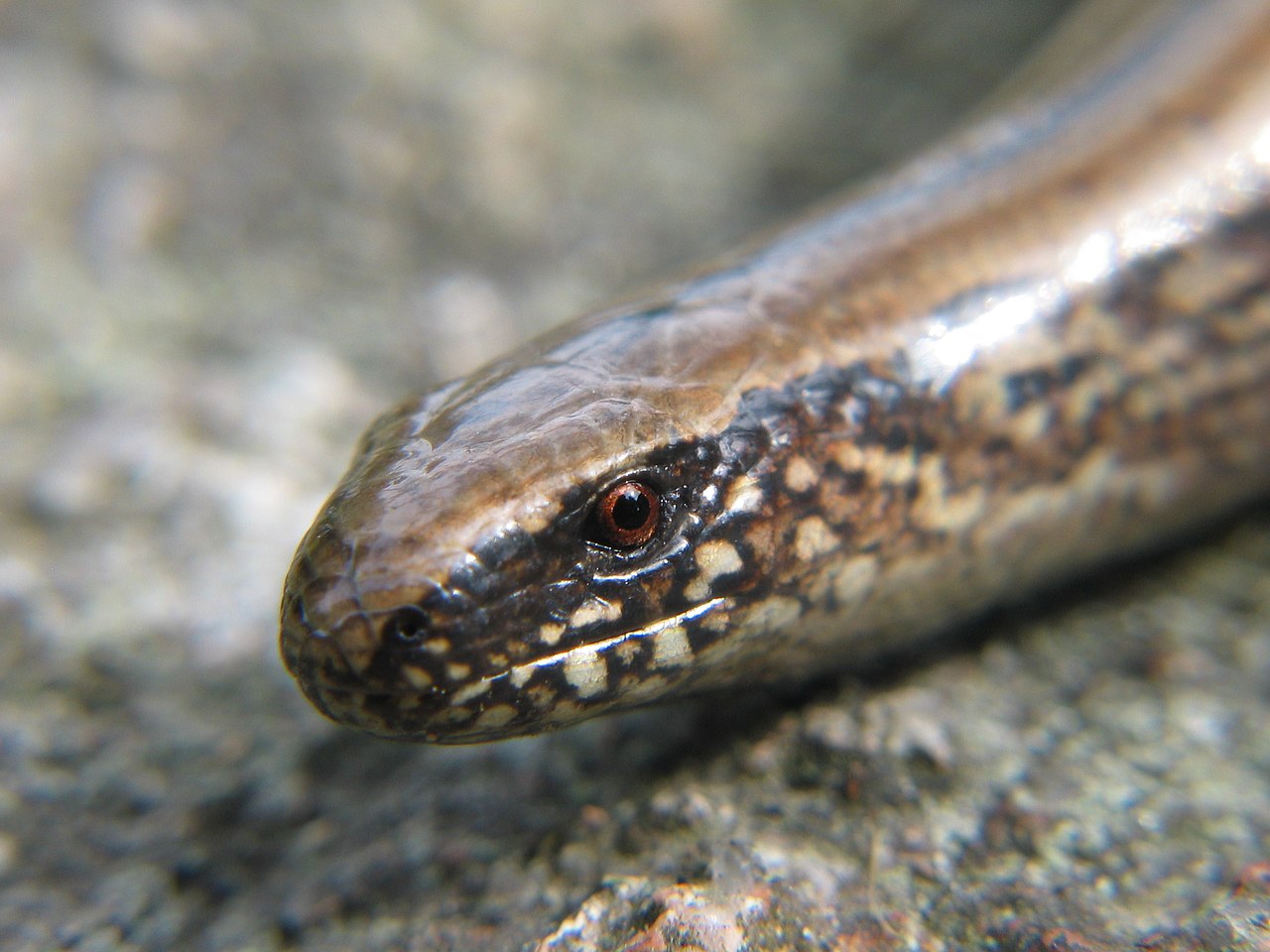


Physical characteristics
Individuals in this genus have elongated, cylindrical bodies covered in smooth, shiny scales. Distinguishing features include movable eyelids that allow blinking, external ear openings, and the ability to shed (autotomize) the tail to escape predators. Their limbs have been lost through evolution, giving them a streamlined profile suited to moving through leaf litter and soil.
Taxonomy and species
The genus belongs to the family Anguidae. Taxonomic treatments vary, but several species are widely recognized, differing mainly in distribution and subtle morphology. Examples include:
- Anguis fragilis — commonly called the common slowworm, widespread in many parts of Europe.
- Anguis colchica — often referred to as the eastern slowworm, found in parts of eastern Europe and western Asia.
- Anguis veronensis and Anguis cephallonica — names applied to populations in southern Europe; status and boundaries have been refined by recent studies.
Habitat, diet and behavior
Slowworms inhabit grasslands, hedgerows, gardens, woodland edges and rocky slopes. They are secretive and often found under stones, logs or garden debris. Their diet consists largely of small invertebrates such as slugs, earthworms and insects. Slowworms are ectothermic and commonly bask in sunlit spots to regulate body temperature. Reproduction is viviparous in most species, with females giving birth to live young rather than laying eggs.
Conservation and human interactions
Populations may be affected by habitat loss, fragmentation and persecution due to confusion with snakes. In many regions slowworms are protected by law and appreciated for their role in controlling garden pests. Conservation typically focuses on preserving suitable habitat, reducing road mortality and public education to prevent unnecessary killing.
Related articles
Author
AlegsaOnline.com Anguis — slowworms (legless lizards) Leandro Alegsa
URL: https://en.alegsaonline.com/art/4236