
Anglerfish (order Lophiiformes)
Predatory marine fishes known for a rod-like bioluminescent lure used to attract prey; diverse forms live from shallow reefs to the deep sea and show extreme sexual dimorphism in some families.
Anglerfish are a diverse group of marine fishes in the order Lophiiformes. They are best known for a distinctive bait-like appendage that projects from the head and functions as a lure. The common name derives from their hunting strategy: like an angler with a rod and line, these fishes use a mobile attractant to draw prey within striking range. Anglerfish vary greatly in size, shape and habitat, with species adapted to shallow coastal reefs as well as the darkest, high-pressure environments of the deep sea. For a concise introduction see overview resources.
Image gallery
10 Images
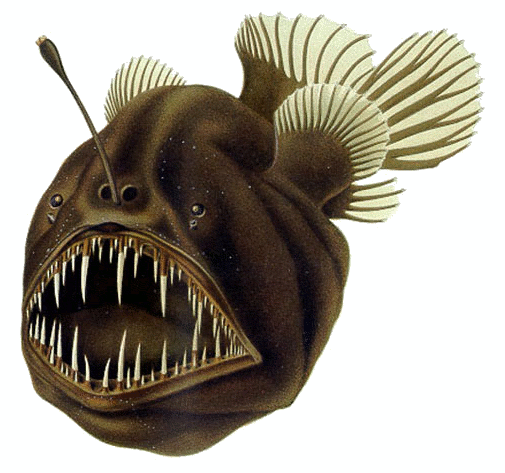
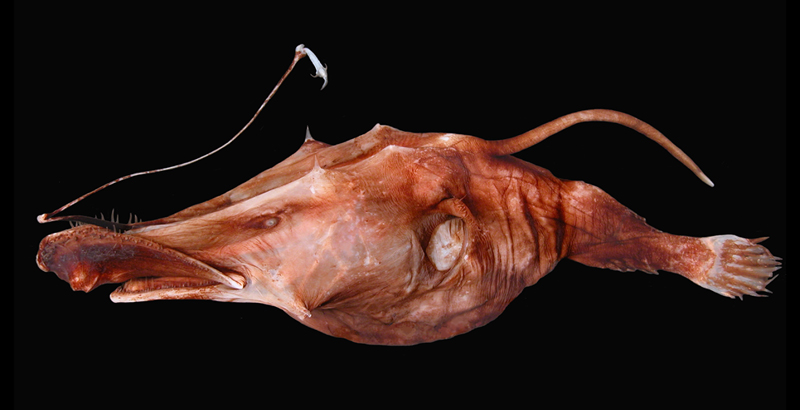


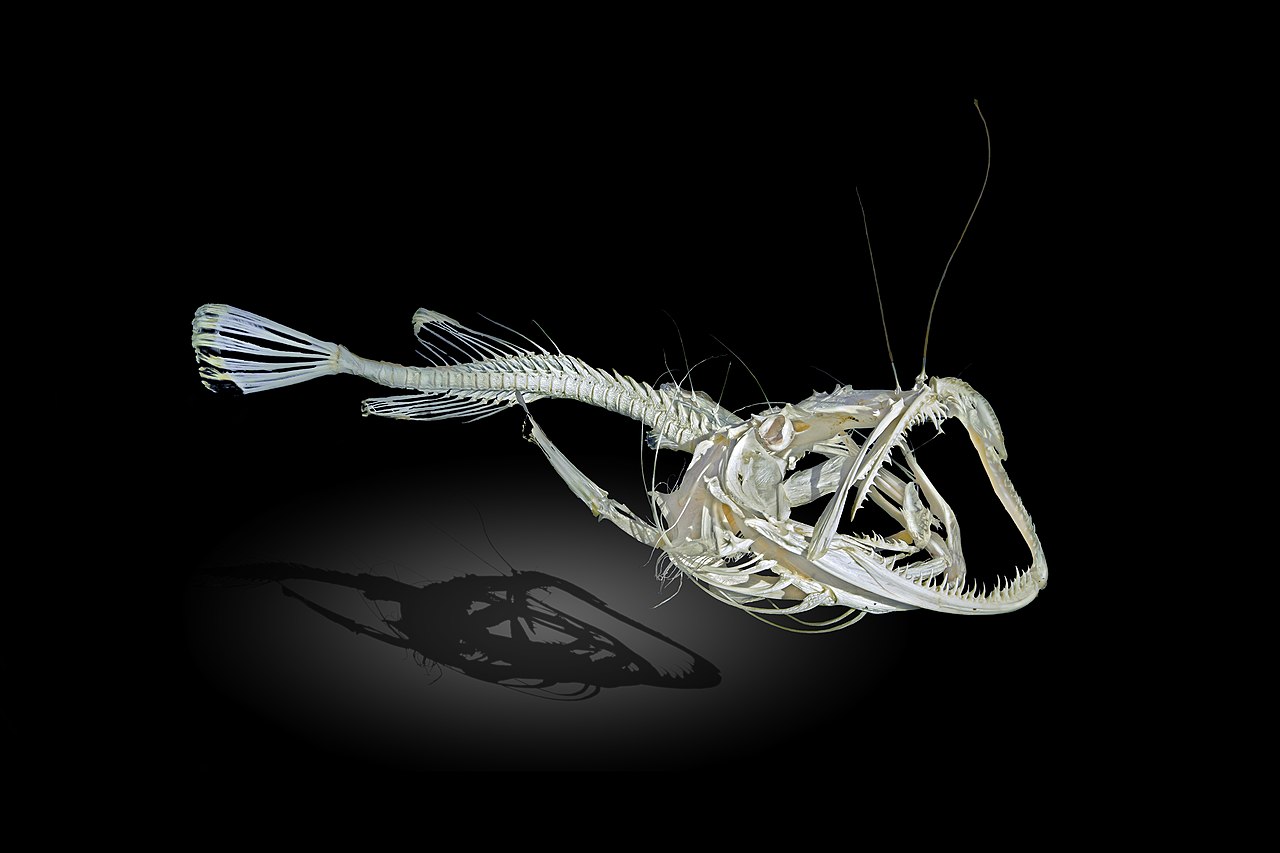
Anatomy and defining structures
The characteristic lure consists of a modified first dorsal-fin spine called the illicium and its terminal tip, the esca. The illicium acts as a flexible rod and the esca may take many forms—filaments, bulbs or wormlike projections—that mimic small prey. In many deep-sea species the esca glows by bioluminescence, produced either by the fish’s own cells or by symbiotic bacteria housed in the lure. The illicium and esca sit in front of the mouth on the head; additional features include enormous, tooth-lined jaws, a highly distensible stomach, and cryptic skin or appendages that help conceal the fish from passing animals.
Characteristics and adaptations
- Illicium and bait: a pole-like spine separated from the remainder of the dorsal fin (separated fin) and often tipped with a fleshy lure (appendage).
- Placement: the lure projects from just above the mouth and head region (head), allowing close-range ambush attacks.
- Feeding: rapid lunging and a gape-and-suction bite that can ingest prey nearly as large as the anglerfish.
- Body plan: many are flattened or globose with reduced swim bladders; coloration and skin flaps provide camouflage.
- Sensory tuning: adaptations to low-light or no-light environments, including enhanced olfactory and lateral-line systems.
Habitat, distribution and diet
Anglerfishes are found worldwide, from tropical shelves to abyssal plains. While some families inhabit shallow reefs and tide pools, the image most people have of anglerfishes comes from deep-sea species that drift in open water or sit on the seafloor, using bioluminescent lures to attract small fishes, crustaceans and cephalopods. The ambush tactic conserves energy in food-poor environments: the angler wiggles its esca to mimic a small animal and waits for an approaching predator or prey item to come close enough to be swallowed whole.
Reproduction and unusual mating strategies
Reproductive biology varies across Lophiiformes, but some deep-sea families exhibit extreme sexual dimorphism. In notable groups such as the family Ceratiidae a tiny male locates a female and permanently fuses to her body, attaching so completely that their tissues and circulatory systems merge; the male becomes a sperm-producing appendage. Other anglerfish species display temporary attachment or free-living males that do not fuse. Larvae are often planktonic, dispersing with currents before adopting an adult lifestyle.
Scientific and cultural significance
Anglerfish attract attention for their dramatic specializations: evolutionary biologists study their extreme sexual strategies, physiologists investigate bioluminescent symbioses, and engineers find inspiration in their lure mechanics. They also appear in popular culture as emblematic deep-sea predators. For more detailed taxonomic or ecological information consult bait-and-lure studies, anatomical descriptions at dorsal spine references, and accounts of habitat diversity at distribution sources and morphology pages. Further reading on bioluminescent systems is available at bioluminescence resources and general overviews at head and sensory references.
Related articles
Author
AlegsaOnline.com Anglerfish (order Lophiiformes) Leandro Alegsa
URL: https://en.alegsaonline.com/art/4174
Sources
- animals.nationalgeographic.com : "Anglerfish, Anglerfish pictures, Anglerfish facts - National Geographic"
- ncbi.nlm.nih.gov : PMID 20178642