
Angloposeidon: large Early Cretaceous sauropod from the Isle of Wight
Angloposeidon is an informal name for a very large sauropod known from fragmentary remains found on the Isle of Wight; important for studies of Early Cretaceous European dinosaur faunas.
Overview
Angloposeidon is the informal name given to a very large sauropod dinosaur known from limited fossil material discovered in southern England. The remains come from deposits of the Early Cretaceous and indicate an animal much larger than most British dinosaurs, suggesting that substantial, long-necked herbivores persisted in Europe during that time.
Image gallery
10 Images




Discovery and context
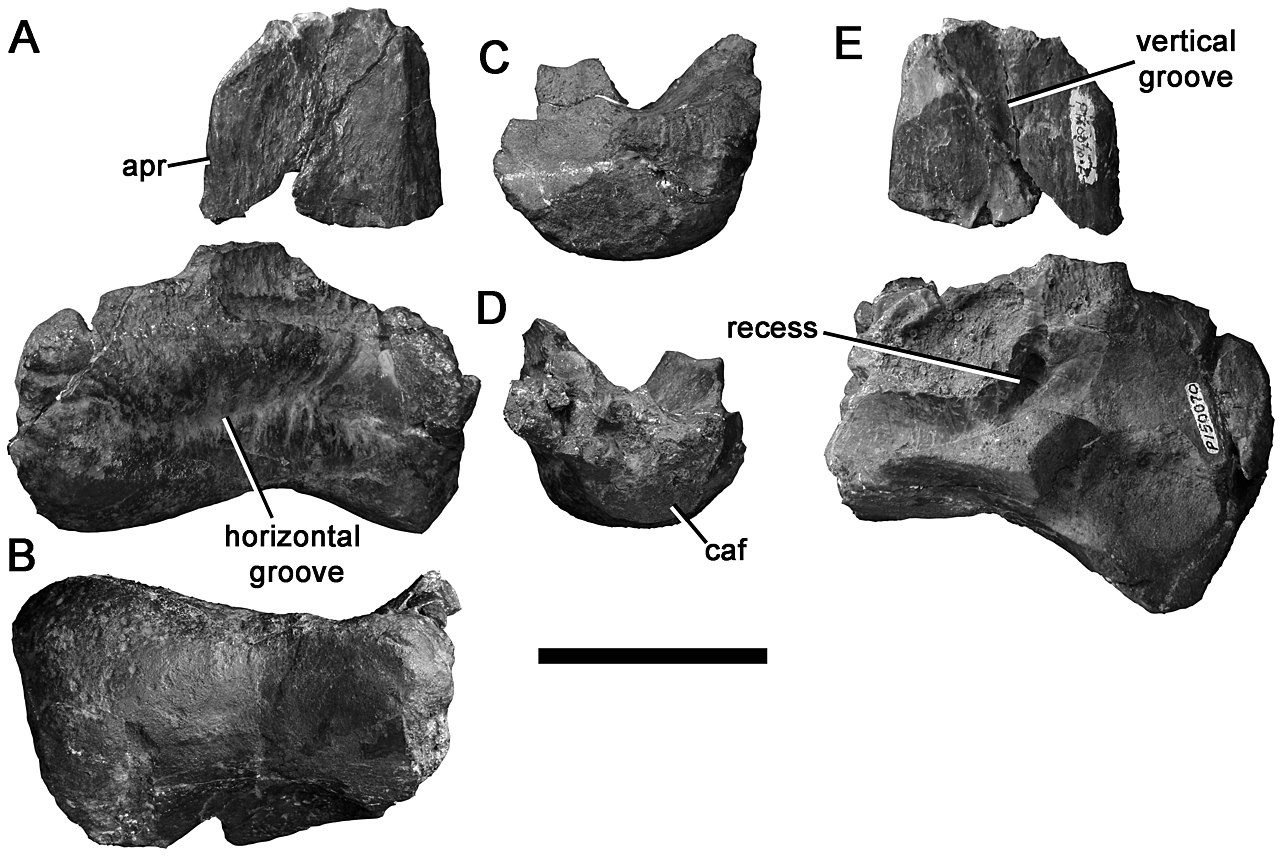
The specimen was recovered on the Isle of Wight, a site famous for its Cretaceous fossils. The find consists primarily of a single large element, commonly described as a single vertebra, and was collected from strata exposed along the island's coasts. The material was found in what is now England and has attracted interest because of its size and rarity in that region.
Anatomical features
Because the remains are fragmentary, detailed anatomy is uncertain. The preserved bone is massive and exhibits characteristics typical of large sauropods: pneumatized (air-filled) spaces in the vertebra, robust centrum and neural arch structures, and attachment areas for large neck or trunk muscles. These traits imply a long-necked, quadrupedal herbivore with column-like limbs.
Classification and significance
The name Angloposeidon has been used informally in the literature and by collectors; it has not been universally accepted as a formally described genus based on the available material. Researchers treat the specimen cautiously, often classifying it among macronarian or titanosauriform sauropods pending more complete remains. Its importance lies in showing that very large sauropods were present in Early Cretaceous Europe and in prompting renewed fieldwork on the Isle of Wight.
Limitations and future research
Because the taxon rests on a single, fragmentary element, many aspects remain unresolved: precise size estimates, exact relationships to other sauropods, and details of its biology. Additional discoveries—more bones from the same horizon or associated material—would be needed to confirm whether Angloposeidon represents a distinct genus or can be assigned to a known group of sauropods.
Notable facts
- Represents one of the largest dinosaur remains reported from Britain.
- Highlights the Isle of Wight as a productive locality for Cretaceous vertebrates.
- Demonstrates how fragmentary finds can stimulate research and targeted excavation.
For further background on the locality and Early Cretaceous environments, see regional summaries and fossil site reports linked through specialist resources (period overview, locality reports, national collections, specimen records).
Related articles
Author
AlegsaOnline.com Angloposeidon: large Early Cretaceous sauropod from the Isle of Wight Leandro Alegsa
URL: https://en.alegsaonline.com/art/4203
Sources
- darrennaish.blogspot.com : "Angloposeidon', the unreported story, part IV"
- scienceblogs.com : "Tetrapod Zoology Book One is here at last"
- svpow.com : "World first: a peek inside "Angloposeidon""