
Guru Granth Sahib (Adi Granth): The Sikh Scripture
The Guru Granth Sahib, also called the Adi Granth, is the central religious scripture of Sikhism. It is treated as the eternal living Guru and contains hymns and spiritual teachings used in worship and daily life.
Overview
The Guru Granth Sahib is the primary sacred text of Sikhism. Compiled in the early 17th century, it is variously called the Adi Granth (the original volume) and, after a later institutional decision, the Guru Granth Sahib, reflecting the Sikh belief that the scripture itself is the eternal spiritual teacher or Guru. The work brings together devotional poetry, ethical instruction, and reflections on the nature of the Divine, intended to guide personal conduct and communal life. Sikhs often refer to it with honorifics and accord it the status of a living guide rather than merely a book, describing its place in the community and worship as uniquely central.
Image gallery
10 Images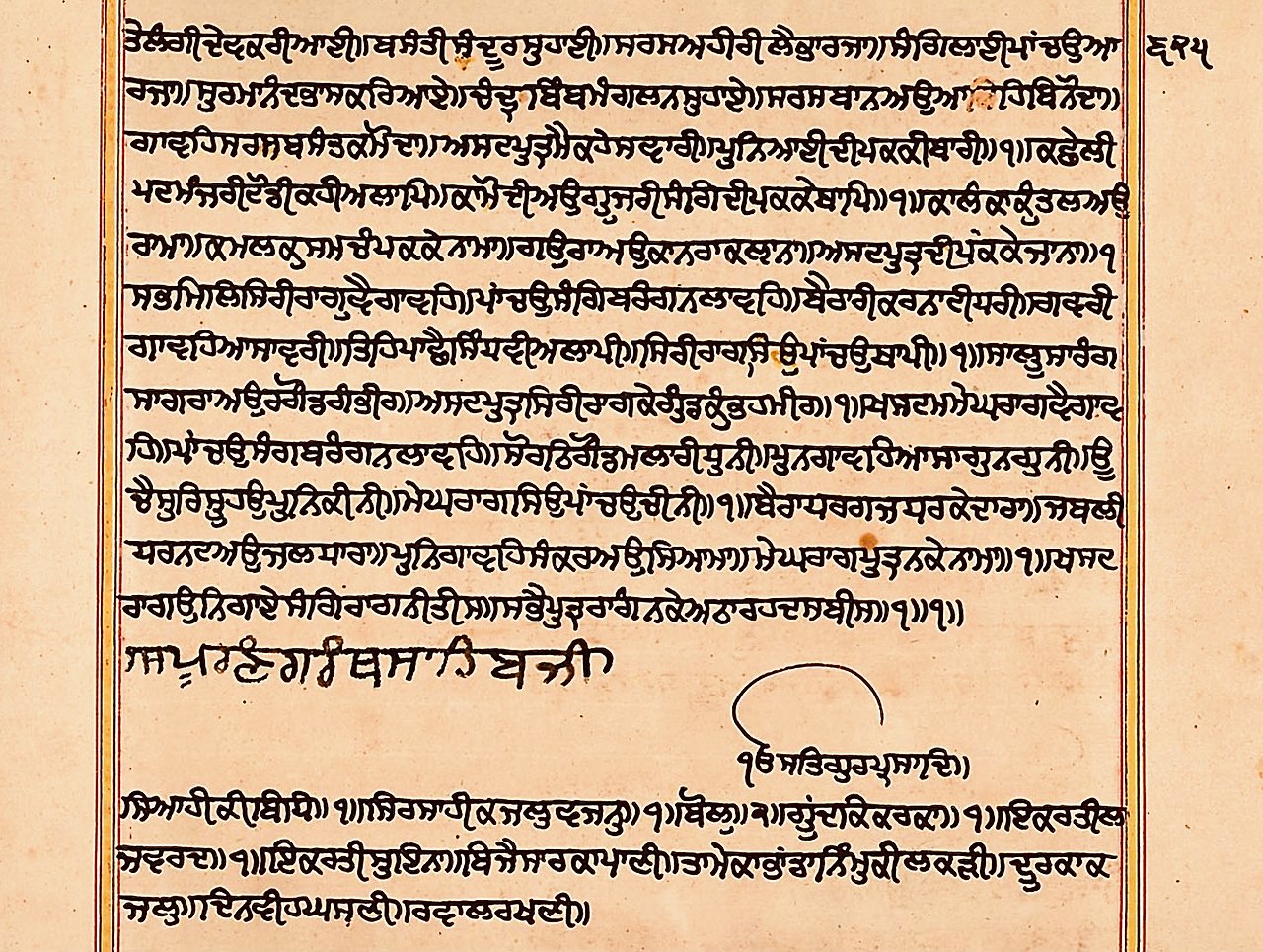


Composition and structure
The text is composed in a range of north Indian languages and dialects and is principally written in the Gurmukhi script, though its contents reflect linguistic influences from Punjabi, Braj, Sanskritized vocabulary, and Persian forms. It is organized primarily by musical measure (raag), with hymns grouped according to the musical mode in which they are traditionally sung. The scripture begins with the foundational formula known as the Mool Mantar and includes writings by Sikh Gurus and a number of devotional poets and saints from different backgrounds.
- Contents: hymns, devotional poems, and liturgical passages often used as prayers and hymns in services.
- Authors: the Sikh Gurus and selected bhagats and saints whose compositions were included for their spiritual message.
- Order: arranged by raag to guide musical recitation and daily reading.
History and compilation
The core of the book was compiled and sanctified in the early 1600s under the direction of the fifth Sikh Guru, who collected selected hymns and organized them into a single volume. This edition is commonly called the Adi Granth. Subsequent developments in Sikh tradition led to the text being installed and treated as the successor to the line of human Gurus, after which it received the formal title Guru Granth Sahib. The process of compilation and the selection of compositions reflect the movement's emphasis on devotion, egalitarian teaching, and a shared spiritual inheritance that crossed social and religious lines.
Role in worship and community life
In Sikh houses of worship the scripture occupies the central and most revered place. It is respectfully placed on a raised platform and covered, and daily rituals include continuous or periodic reading, musical singing of selected hymns, and the practice of the hukam (a reading offered as guidance for the congregation). For life-cycle events, communal gatherings, and daily devotion, passages from the Guru Granth Sahib are recited to provide instruction, consolation, and inspiration.
Respect, handling, and public practice
Sikhs show respect to the Guru Granth Sahib through specific practices: the text is usually handled with clean hands, the head is covered in its presence, and people remove footwear before approaching its resting place. The scripture is transported, placed, and honored with rites that reflect its status; for example it is often escorted with ceremonial reverence when moved and is seated on a high platform known as a palki or under a canopy in the main hall of the temple (gurdwara). These practices emphasize the role of the text as both guide and living spiritual authority.
Notable distinctions and facts
The name itself is illustrative: the word "Guru" denotes spiritual teacher; "Granth" means book; and "Sahib" is an honorific. Thus the title conveys veneration and authority. The scripture includes teachings from diverse voices and is used not only for liturgy but as a source of moral teaching, communal identity, and daily meditation. Its presentation, musical order, and ritual care make it central to Sikh worship, study, and social life across the world.
For further reading about its textual history and role in contemporary practice consult general reference summaries and introductions to Sikh scripture and tradition: holy scripture overview, meaning of the name, Sanskrit roots of some terms, language contexts, Hindi and related terms, Urdu honorifics.
Related articles
Author
AlegsaOnline.com Guru Granth Sahib (Adi Granth): The Sikh Scripture Leandro Alegsa
URL: https://en.alegsaonline.com/art/41498