
Gurdwara (Sikh temple): purpose, structure, practices and social role
A gurdwara is the Sikh place of worship and community centre. This article explains its religious functions, architecture and symbolism, daily routines, social services, historical context and civic importance.
Overview
A gurdwara (literally “gateway to the Guru”) is the principal place of worship for Sikhs and a community hub for spiritual, social and charitable life. It centers on the Sikh scripture, which is treated as the living guide, and on communal practices such as prayer, devotional singing and public assemblies. A gurdwara is open to people of all backgrounds and emphasizes equality, service and hospitality as core values.
Image gallery
10 Images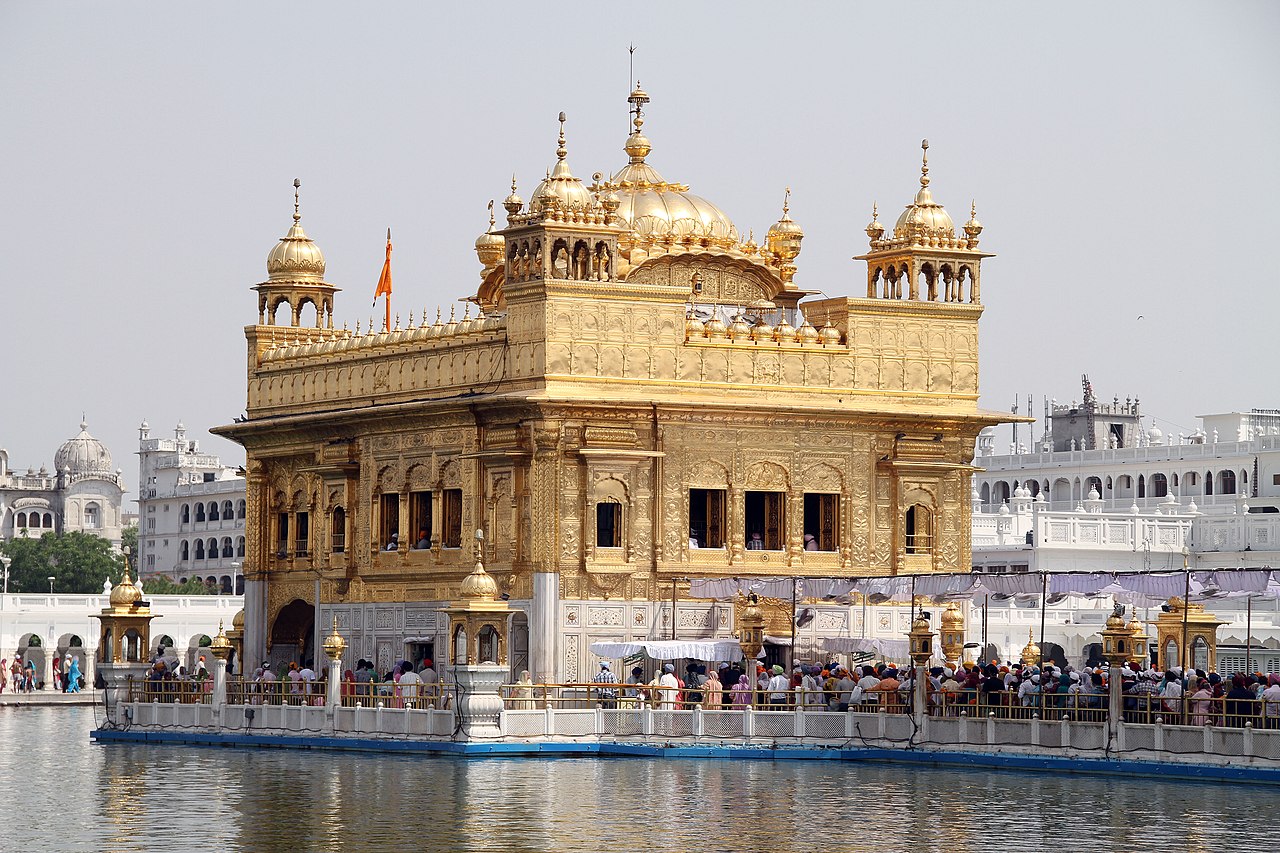


Key elements and symbolism
Most gurdwaras contain a main prayer hall where the Guru Granth Sahib is placed on a raised platform beneath a canopy and treated with continuous respect. Devotional music (kirtan) and readings from the Sikh scriptures take place there, often accompanied by sermons and communal prayers (sermons and ardas). Externally, a gurdwara is identified by the saffron-coloured triangular flag, the Nishan Sahib, flown on a tall flagpole.
Traditional symbolism includes four entrances to the building, signifying openness to every direction and to everyone regardless of background. These thresholds are frequently explained as representing access to peace, livelihood, learning and grace. The gurdwara’s layout and ritual objects reflect the Sikh commitments to dignity, discipline and practical service.
Rituals, services and community life
Daily life in a gurdwara commonly includes recitation of the scripture, meditative singing, and communal prayer. A strong ethic of voluntary service (seva) organizes many activities: preparing and serving the free communal meal called Langar, maintaining the premises, and caring for visitors. The kitchen and dining area are managed so that anyone may eat without charge, and men and women usually sit together.
- Religious rites: naming, initiation (such as baptism or Amrit ceremony), marriage and funerary memorials.
- Education and culture: classes about history, ethics and culture, and instruction in scripture and music.
- Welfare: shelter, care for the sick and elderly, and assistance for the disabled.
Social role and values
Gurdwaras function as both religious and civic institutions. They promote equality across distinctions such as caste and creed, and encourage moral instruction (morality) and community discussion. Local congregations (sangat) may meet to address community concerns, ranging from pastoral support to collective decisions; historically, some meetings have included deliberation about appropriate discipline when norms are breached, although formal legal powers are not vested in the gurdwara (punishment).
Gurdwaras are expected to remain independent of party politics (politics) and sectional interests (sectional interests), serving the whole community impartially. They also welcome visitors from other traditions to learn about Sikh customs and promote interfaith understanding by hosting festivals and public events (festivals).
History and notable distinctions
The institution of the gurdwara evolved as Sikh communities established permanent centres for worship and social life. While architectural styles vary—from modest village buildings to large urban complexes—certain elements persist worldwide: a central scripture, communal meal, open-door policy, and the flag. In practice, individual gurdwaras differ according to local needs, size of the congregation and historical context, but they share the common purpose of nurturing spiritual learning and social solidarity within the broader Sikh community.
For further reading and resources about practices, architecture and community roles, see links on scripture and institutions: scriptures, sermons, festivals, congregations, baptism, Guru Granth Sahib, caste, creed, disabled, culture, morality, Sikh community, punishment, sectional interests, politics, Langar, customs.
Questions and answers
Q: What is a Sikh temple?
A: A Sikh temple, also known as a Gurdwara, is a place of worship in the Sikh religion.
Q: What activities take place in a Gurdwara?
A: In the temple, the Sikh scriptures are recited or sung, and sermons are given. Festivals are celebrated there and birth, death, baptism, and marriage ceremonies also take place.
Q: Where is Guru Granth Sahib usually placed in the temple?
A: Guru Granth Sahib is usually placed at one end of the temple, high up under a canopy.
Q: What purpose does the Gurdwara serve?
A: The Gurdwara serves many needs. It is a place where people can develop spiritual knowledge and wisdom. It offers shelter and food to anyone in need and it provides care for the sick, elderly, and disabled. It also promotes culture and health by teaching children about morality, Sikhism, and history. Additionally it serves as an area for discussing problems facing the Sikh community such as when someone has broken their code of discipline so that they can decide on what punishment should be given if needed.
Q: How does the Gurdwara play a socio-economic role in its community?
A: The Gurdwara plays an important socio-economic role by being expected to be free from any sectional interests or party politics while providing free kitchen services (Langar) to everyone who visits it regardless of age sex caste or creed. This helps improve relations between Sikhs and other communities by satisfying curiosity about Sikhism while helping visitors better understand its religion customs culture etc..
Q: What symbol marks a Gurdwara?
A: A Gurdwara is marked by the Nishan Sahib which is essentially a large flag with four colors representing different aspects of life; blue for infinity orange for courage white for purity green for growth/prosperity .
Q: What do each of the four doors of a Sikh Temple represent?
A:The four doors of a Sikh Temple represent The Door Of Peace , The Door Of Livelihood , The Door Of Learning , And The Door Of Grace . These doors must always remain open to everyone regardless of their background or beliefs
Related articles
Author
AlegsaOnline.com Gurdwara (Sikh temple): purpose, structure, practices and social role Leandro Alegsa
URL: https://en.alegsaonline.com/art/90361