
Guineafowl: African ground birds of the family Numididae
Guineafowl are ground-dwelling African birds (family Numididae) with spotted plumage and helmet-like casques. They have an ancient galliform lineage and include wild species and the widely kept helmeted guineafowl.
Overview
Guineafowl are a group of terrestrial birds placed in the family Numididae and treated as members of the order Galliformes. Native to Africa, they are recognizable by their compact bodies, bare heads, and often heavily spotted feathers. Several species are adapted to open woodland, savanna and scrub, where they forage on the ground for seeds, invertebrates and other small foods.
Image gallery
10 Images


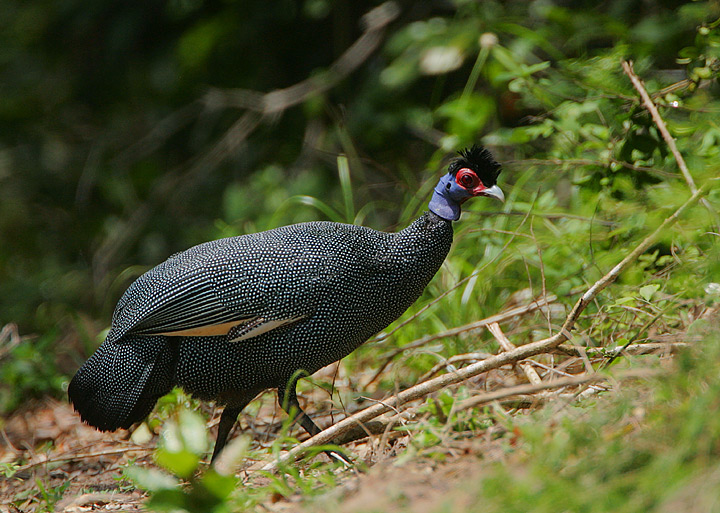
Physical characteristics and behavior
Most guineafowl are medium-sized, stocky birds with strong legs, short wings and a habit of running rather than flying when disturbed. Many species show a helmet-like knob or casque on the skull and have largely dark plumage marked with white spots. They are social birds, commonly forming flocks outside the breeding season and communicating with loud, distinctive calls. Diet and foraging techniques vary but commonly include insects, small vertebrates, and vegetable matter.
Taxonomy and evolutionary history
Guineafowl are among the more ancient lineages of galliform birds. Fossil evidence and phylogenetic analyses indicate they diverged early in the diversification of Galliformes. An Eocene-era Eocene fossil line called Telecrex has been associated with early relatives; specimens attributed to that genus were found in Mongolia. Comparative studies link guineafowl relationships to other ground birds and to early true phasianids, such as the blood pheasants. These connections help explain how some galliform groups later evolved specialised forms in different regions, for example high-altitude species that arose with geological changes like the uplift of the Tibetan Plateau.
Species, distribution and notable examples
All wild guineafowl species originate from Africa, but a few have become established outside their native range where humans introduced them. The best known is the helmeted guineafowl, which has been widely introduced and kept as a domestic or semi-domestic bird. Other familiar types include vulturine, crested and black guineafowl. Key characteristics used to distinguish species include head ornamentation, the pattern of spotting on the plumage, and vocalizations.
Uses, relationship with people and examples
Guineafowl have long been kept by people for meat, eggs and as watchdogs in rural settings because of their loud calls and wary nature. The helmeted guineafowl in particular has been domesticated or managed in gardens and farms across many regions. They are also valued for pest control: a foraging guineafowl can reduce populations of insects and ticks in agricultural and peri-domestic environments.
Conservation and notable facts
Conservation status varies by species. Some guineafowl remain common across broad habitats, while others face pressure from habitat conversion, hunting and local persecution. Their early branching among galliform birds makes them of interest to ornithologists studying the evolution of ground-dwelling birds. Distinctive features — spotted plumage, social flocks, and the casque or bare face — make guineafowl easy to recognize in both wild and managed settings.
- Typical habitats: savanna, open woodland, scrub.
- Diet: omnivorous — insects, seeds, small animals.
- Human uses: meat, eggs, pest control, ornamental flocks.
Related articles
Author
AlegsaOnline.com Guineafowl: African ground birds of the family Numididae Leandro Alegsa
URL: https://en.alegsaonline.com/art/41314
Sources
- poultryhub.org : "Guinea Fowl - Poultry Hub"