
Guppy (Poecilia reticulata): overview, biology, care and significance
Small colorful livebearing freshwater fish widely kept in aquariums and studied in biology; notable for sexual dimorphism, rapid breeding, and many domesticated color strains.
Overview
The guppy (Poecilia reticulata) is a small, livebearing freshwater fish native to northeastern South America that has become one of the most popular aquarium species worldwide. Known colloquially as the millionfish or rainbowfish, guppies are prized for their vivid colors, active behaviour and ease of care. Wild guppies are typically smaller and duller than selectively bred strains kept by hobbyists.
Image gallery
10 Images


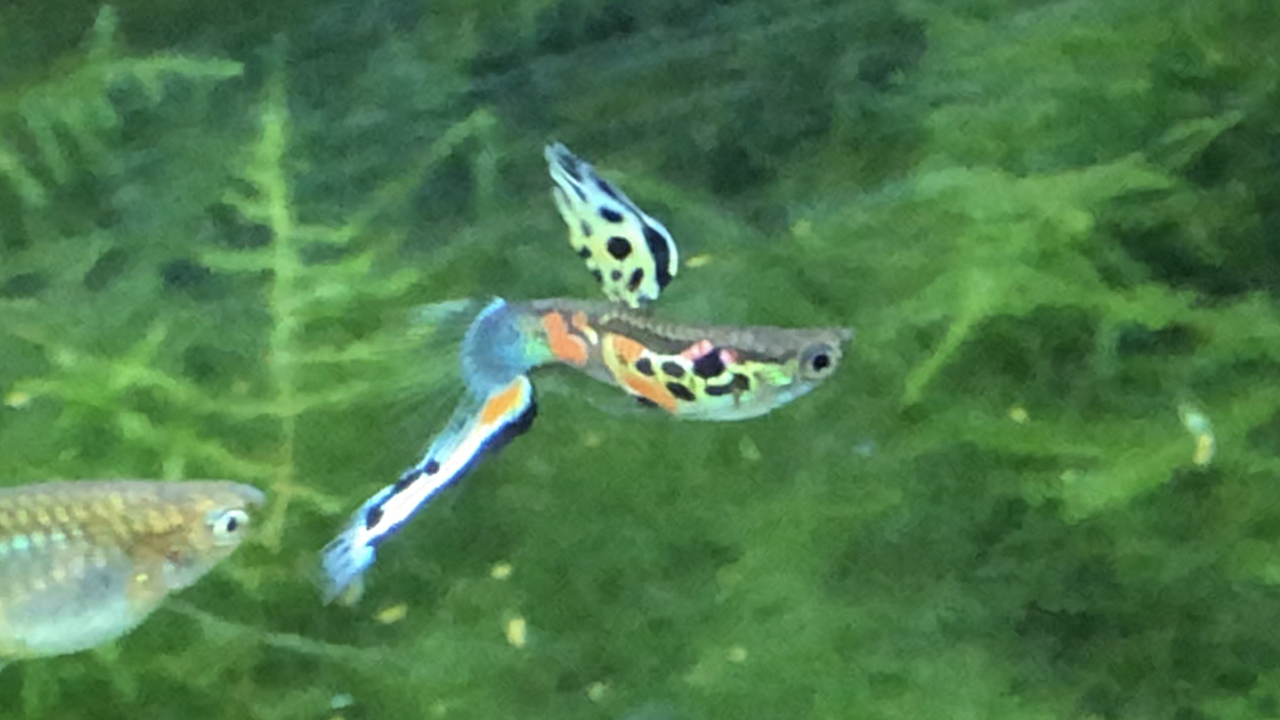


Appearance and sexual dimorphism
Guppies show marked sexual dimorphism. Adult females are larger (commonly 4–6 cm long) and less brightly colored, while adult males are smaller (about 2.5–3.5 cm) and develop elaborate fins and bright patterns. Selective breeding has produced a large variety of color morphs, tail shapes and fin types used in the ornamental fish trade. The male’s anal fin is modified into a gonopodium, a tubular organ used for internal fertilization.
Biology and anatomy
Guppies are members of the family Poeciliidae and are ovoviviparous: embryos develop inside the female and are born as free-swimming juveniles. Their respiratory system relies on gills for gas exchange; water passes over gill filaments where oxygen is absorbed and carbon dioxide expelled. The circulatory system is single-circuit, with a two-chambered heart composed of an auricle and a ventricle that pumps blood to the gills before it circulates through the body. The nervous system is centralized around the brain and spinal cord, with specialized regions such as the cerebellum coordinating movement and olfactory structures supporting a keen sense of smell. Guppies feed on a mixed diet in the wild that may include algae, small invertebrates and detritus; in captivity they accept flake food, frozen or live foods such as brine shrimp and daphnia.
Habitat, distribution and ecology
Originally from riverine and coastal habitats in northeastern South America, guppies have been introduced to many regions around the world, sometimes becoming feral. They tolerate a wide range of environmental conditions but favour warm, slow-moving or still waters. In the wild they are important prey for larger fish and birds and also act as predators on mosquito larvae and other small invertebrates, a trait that has contributed to their intentional introduction in some areas for mosquito control.
Aquarium care and breeding
Guppies are often recommended for beginner aquarists because they are hardy and adaptable. Typical care guidelines include maintaining water temperatures roughly between 22–28 °C, moderate hardness and a neutral to slightly alkaline pH; frequent partial water changes, a planted tank or hiding places, and feeding a varied diet. Key husbandry points include:
- Tank size and stocking: small groups in starter tanks, but avoid overstocking to reduce stress and aggressiveness.
- Water quality: stable parameters, filtration and routine maintenance help prevent disease.
- Breeding: guppies breed readily; females can store sperm and produce multiple broods. Gestation commonly lasts about three to four weeks and fry benefit from sheltered nursery areas or separate grow-out tanks.
History, uses and notable facts
Guppies have been kept in captivity since at least the 19th century and were popularized by hobbyists and breeders for their ornamental diversity. They are used in scientific research, particularly in studies of evolution, sexual selection and population ecology, because of their rapid life cycle and easily observable traits. While valuable in aquaculture and education, introduced populations can impact local ecosystems by competing with native species. For more detailed taxonomic, ecological or care information, see resources on the species habitat and distribution, captive care guides (aquarium care) and breeding articles (breeding techniques), and consult anatomy references about fish physiology such as gill function and the nervous system.
Because of their adaptability and the wide variety of domesticated forms, guppies remain one of the most recognizable and accessible fish for hobbyists and researchers alike, combining striking coloration with straightforward care and high reproductive rates.
Related articles
Author
AlegsaOnline.com Guppy (Poecilia reticulata): overview, biology, care and significance Leandro Alegsa
URL: https://en.alegsaonline.com/art/41469