
Blood pheasant (Ithaginis cruentus) — overview, appearance, habitat, conservation
A small Himalayan pheasant with distinctive red markings. Found in montane forests and alpine scrub across northern India, Nepal, Bhutan and China; taxonomically unique and of conservation interest.
Overview
The blood pheasant (Ithaginis cruentus) is a compact, short-tailed bird of the pheasant group known for reddish markings that give it its common name. It is the sole living species in the genus Ithaginis and is usually treated as a member of the pheasant or pheasant family complex. Its principal distribution lies in the eastern Himalayas, where it occupies a band of montane and subalpine habitat across several countries.
Image gallery
7 Images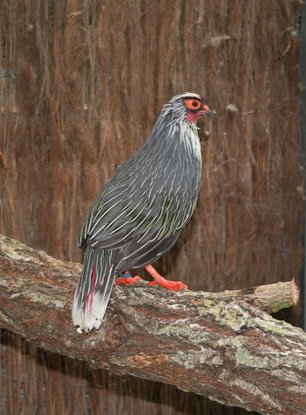


Description and identification
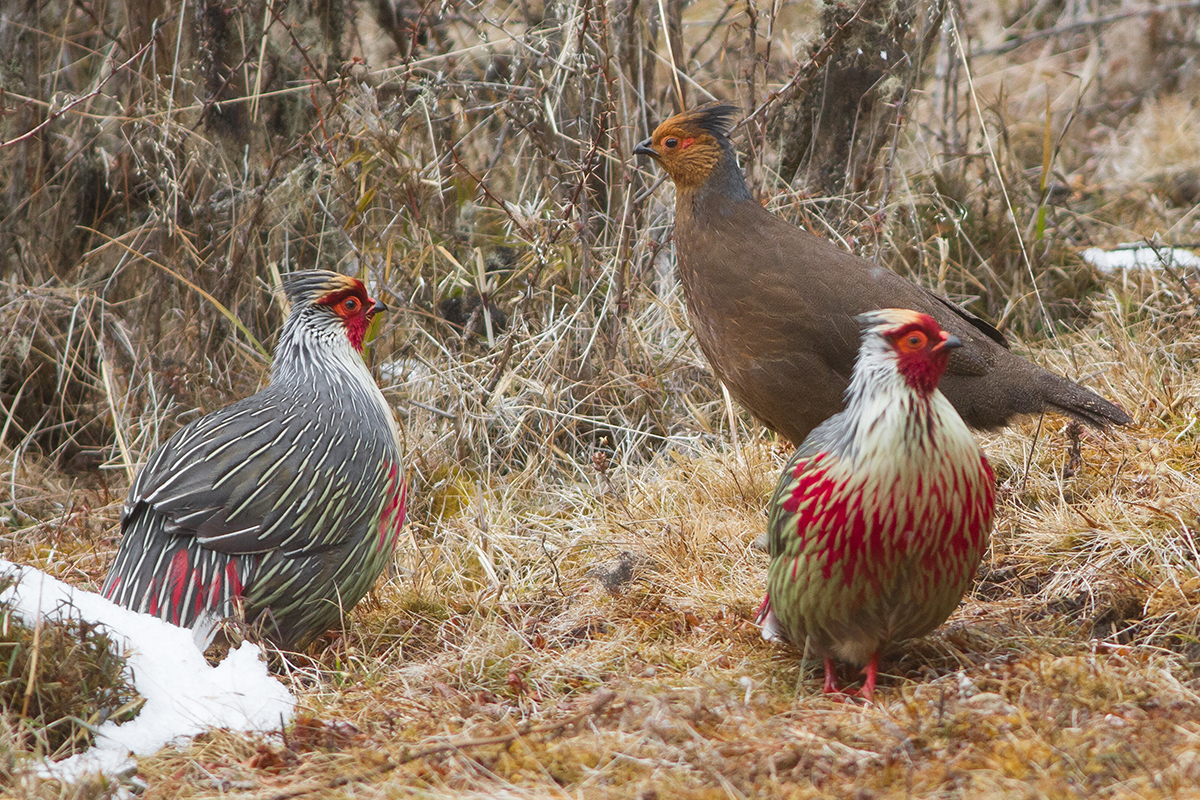
The blood pheasant is relatively small compared with many other pheasants and shows a short, rounded tail and compact body. Plumage is cryptic overall but marked by localized patches of warm red or rust tones on the face, flanks and underparts in adult males; females are plainer and more cryptically patterned. Aspects of its appearance and vocalisations help distinguish it from other high-altitude gamebirds and grouse-like species. For taxonomic context see Ithaginis and related pheasant entries.
Habitat and range
Blood pheasants inhabit montane forests, scrub, bamboo thickets and alpine meadows at higher elevations. Their range extends across northern regions of South Asia and adjacent China, including parts of northern India, Nepal, Bhutan and China. Seasonal movements are reported in some populations, with birds shifting altitude in response to snow and food availability; distribution maps and local notes may be found through regional resources and range summaries (range, population trends).
Behavior and diet
Typically secretive and ground-oriented, blood pheasants forage on the forest floor for seeds, berries, shoots and invertebrates. They are often seen in small parties rather than large coveys and may be crepuscular in activity. Breeding is terrestrial, with nests concealed among low vegetation; young are precocial and leave the nest soon after hatching. Observations of behaviour and ecology contribute to understanding local conservation needs (species assessments).
Conservation, threats and importance
The species has been assessed at the global level as of conservation interest and, while not currently regarded as critically threatened, its numbers are thought to be slowly declining owing to habitat alteration, livestock grazing, disturbance and localized hunting. It benefits from occurrence in several protected areas and from legal safeguards in parts of its range (national and regional measures). Because it is the national bird of the former kingdom of Sikkim, the blood pheasant also holds cultural and symbolic value in some communities.
Key distinctions and further reading
- Only species in its genus: Ithaginis.
- Associated with higher-elevation habitats across the eastern Himalayas and adjacent regions (range, population trends).
- Conservation status and assessments: see global evaluations and national lists (pheasant conservation pages).
For accessible summaries and images consult regional bird guides and conservation portals listed in specialised resources (India, Nepal, Bhutan, China) or general species accounts (pheasant family, northern distributions, national protections, cultural notes, related taxa). For conservation planning and population monitoring contact appropriate local authorities and biodiversity programmes (range, population, assessment).
Tags
Related articles
Author
AlegsaOnline.com Blood pheasant (Ithaginis cruentus) — overview, appearance, habitat, conservation Leandro Alegsa
URL: https://en.alegsaonline.com/art/12254
Sources
- iucnredlist.org : "Ithaginis cruentus"