
Goitered gazelle (Gazella subgutturosa): description, range and status
A medium-sized gazelle of Central Asian steppes and deserts, noted for males' throat swelling during rut and for running fast without the pronounced leaping of other gazelles.
Overview
The goitered gazelle (Gazella subgutturosa), also called the Persian or black-tailed gazelle, is a species of antelope native to arid and semi-arid regions of Asia. It is named for the temporary swelling in the throat and neck of males during the breeding season, a feature reflected in the Latin name subgutturosa (literally "full below the throat"). Unlike some other gazelle species, it typically runs at high speed without the pronounced leaping or bounding motions often seen in related species.
Image gallery
4 Images


Physical characteristics
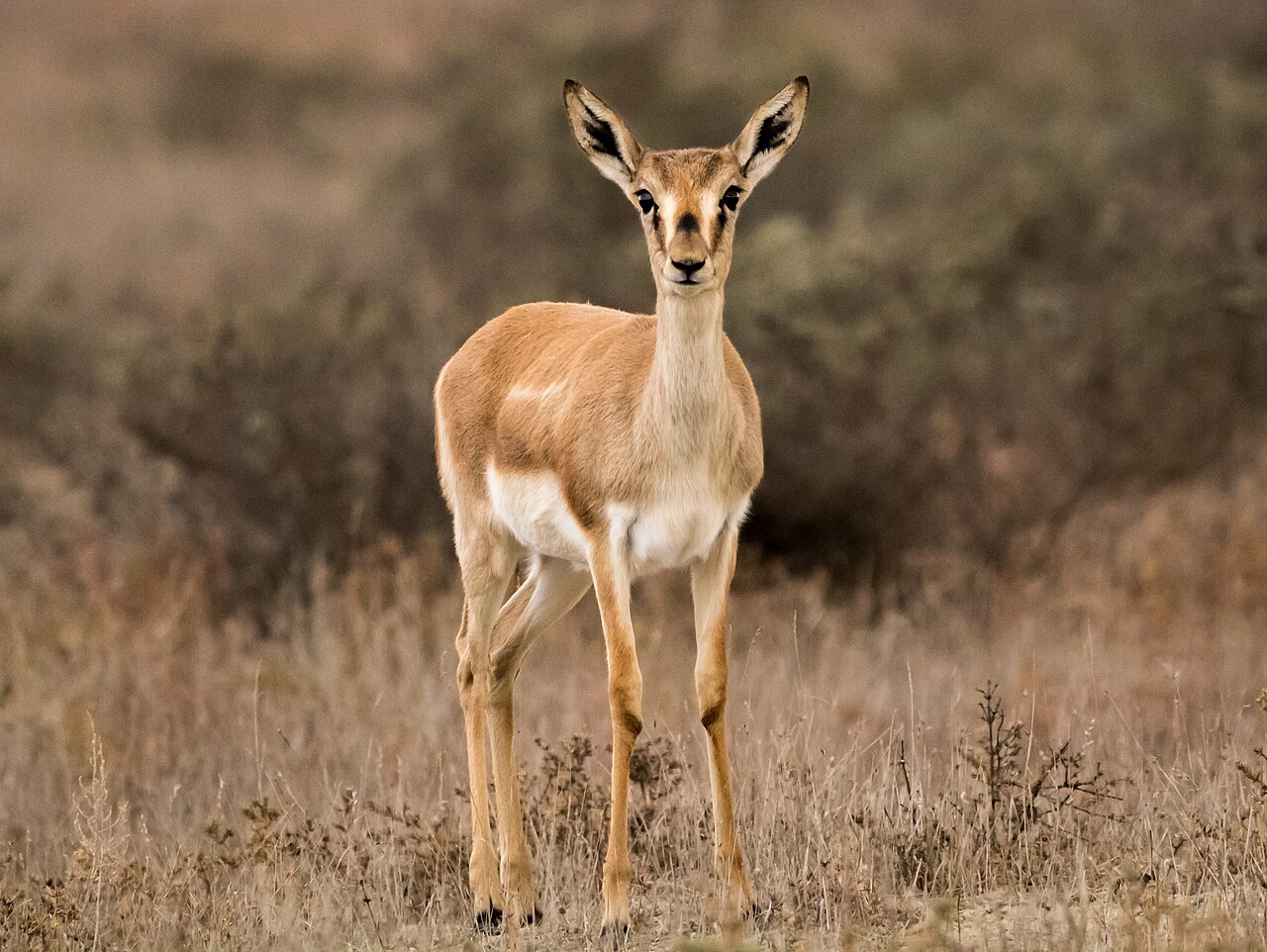
Goitered gazelles are medium-sized, with slim bodies, long legs and relatively short horns borne by both sexes in some populations (usually more prominent in males). They often have a pale sandy coat that provides camouflage in open steppe and desert habitats and a darker tail which can give rise to the common name "black-tailed". During the rut, males develop an enlarged, inflatable throat pouch that is used in visual and possibly acoustic display.
- Size and build: slender, adapted for sustained running.
- Coat: sandy to reddish-brown with lighter underparts.
- Behavior: fast, cursorial movement rather than high stotting.
Range and habitat
This species occupies a broad band of Central and Southwest Asia, from parts of the Iranian plateau and adjacent areas of Pakistan in the west to the arid zones of Central Asia and into the Gobi region in the east. Populations occur in steppes, semi-deserts and desert fringes where grasses and scattered shrubs supply forage. See examples of its range in Central Asia and neighboring countries via regional resources: Central Asia, Iran, Pakistan and the Gobi Desert.
Ecology, threats and conservation
Goitered gazelles graze and browse on a variety of grasses, herbs and shrubs and are prey for large carnivores where these persist. Human pressures — including habitat conversion, competition with livestock, poaching and disturbance — have reduced numbers in many areas. Because of local declines, the species is a conservation concern in parts of its range; conservation actions include protection of key habitats, anti-poaching enforcement and, in some places, captive breeding or reintroduction programs. The species' ecology and population trends vary regionally, so conservation status is assessed at national and international levels.
Notable facts
The goitered gazelle's unusual throat swelling during the rut and its relatively smooth, non-leaping running style distinguish it from many African and Eurasian gazelles. It occupies open landscapes where speed and endurance are more important than the high jumps used by some species to confuse predators or communicate alarm.
Related articles
Author
AlegsaOnline.com Goitered gazelle (Gazella subgutturosa): description, range and status Leandro Alegsa
URL: https://en.alegsaonline.com/art/39442