
Golden pheasant (Chrysolophus pictus)
A vividly colored gamebird native to western China, the golden pheasant (Chrysolophus pictus) is kept in aviaries worldwide and has established feral populations in parts of Europe and elsewhere.
Overview
The golden pheasant, also called the Chinese pheasant or rainbow pheasant, is a visually striking gamebird in the order Galliformes and the family Phasianidae. Native to forested, mountainous areas of western China, it is valued for its bright plumage and is widely kept in captivity. Escaped or released birds have formed small, persistent feral populations in parts of the United Kingdom and other regions.
Image gallery
8 Images




Taxonomy and names
The scientific name is Chrysolophus pictus. Common names reflect its appearance and origin: golden pheasant, Chinese pheasant and rainbow pheasant. It is closely related to other pheasants and sometimes kept alongside similar species in collections, where hybridization can occur.
Description
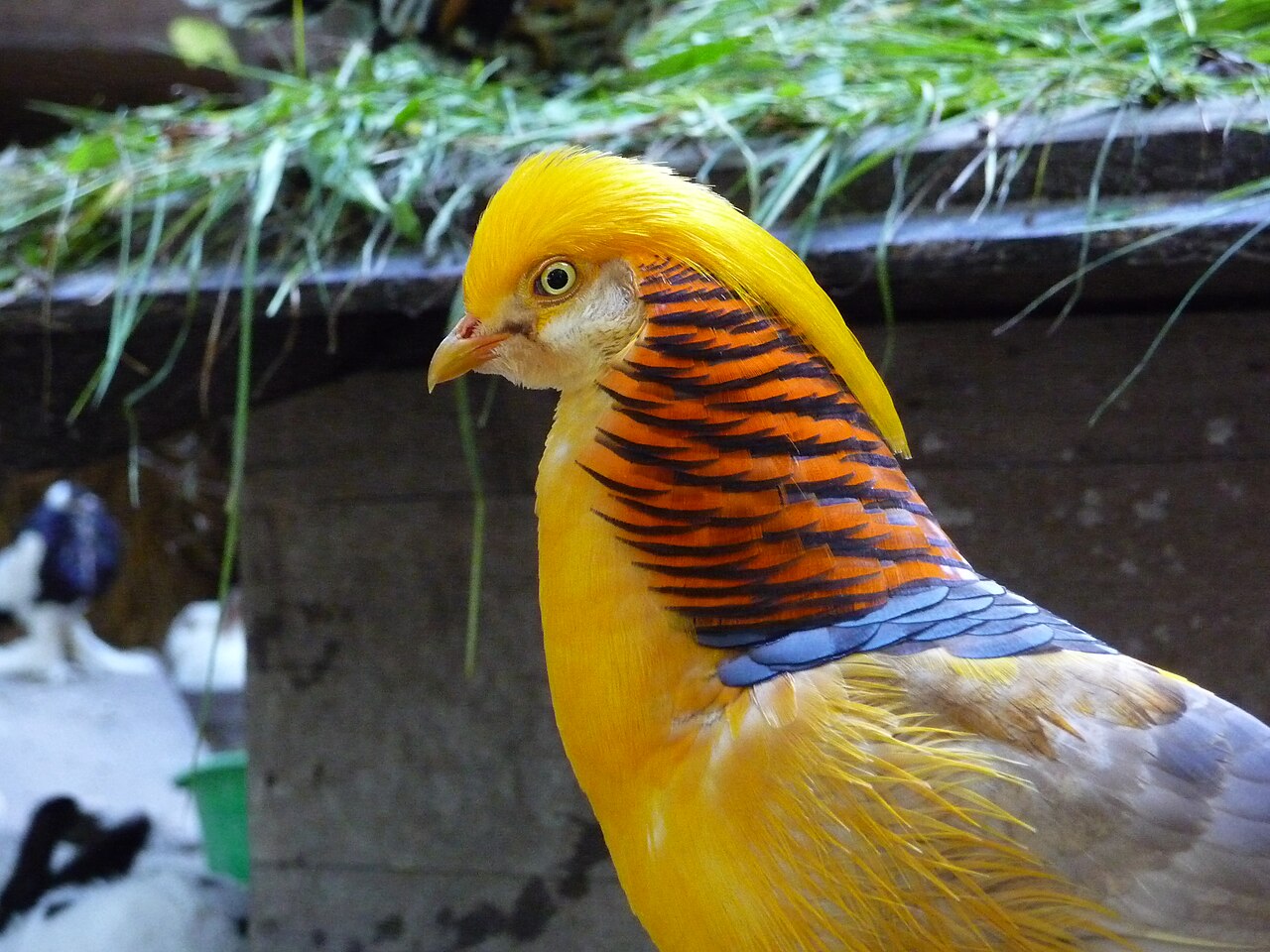
Males are notable for a golden-yellow crest that falls over the neck, a bright red body, and a richly patterned mantle that can show iridescent tones. A long tail and contrasting wing markings add to the male's ornate display. Females and immature birds are cryptically coloured in mottled browns and buff tones, which helps conceal nests on the ground. Plumage differences between sexes are a clear example of sexual dimorphism.
Distribution and habitat
In its native range the golden pheasant inhabits dense undergrowth in conifer forests and bamboo thickets of western China; for general regional information see sources on western China. Since the 19th century it has been introduced to parks and estates beyond its native range for ornamental purposes. Some introductions produced small established populations, notably in parts of the United Kingdom, where birds survive in sheltered woodlands and parklands.
Behavior, diet and reproduction
Golden pheasants are primarily ground-dwelling birds that feed on seeds, leaves, shoots and invertebrates. They run readily, fly short distances when startled, and commonly roost in trees. During the breeding season males perform visual displays, fanning capes and tails to attract females. Nests are shallow depressions on the ground concealed by vegetation; chicks are precocial and leave the nest soon after hatching.
Human interactions and conservation
The species is popular in aviculture and public collections because of its vivid coloration. Where captive and wild ranges overlap, hybridization with related pheasants has been recorded. The golden pheasant is not generally regarded as globally threatened; it is maintained in captivity and persists in local wild populations, though habitat change could affect some native populations. For taxonomic context consult Galliformes and Phasianidae, and for records of introduced populations consult reports from the United Kingdom and regional wildlife surveys.
- Scientific name: Chrysolophus pictus
- Common names: golden pheasant, Chinese pheasant, rainbow pheasant
- Habitat: forest undergrowth, bamboo thickets, sheltered woodlands
- Notable: sexually dimorphic, popular in aviaries, established feral groups outside native range
Related articles
Author
AlegsaOnline.com Golden pheasant (Chrysolophus pictus) Leandro Alegsa
URL: https://en.alegsaonline.com/art/39505
Sources
- iucnredlist.org : "Chrysolophus pictus"