
Golden eagle (Aquila chrysaetos): description, range, behavior and conservation
Overview of the golden eagle (Aquila chrysaetos): appearance, distribution across the Northern Hemisphere, diet and hunting, breeding and life history, threats, conservation and cultural importance.
The golden eagle (Aquila chrysaetos) is a large diurnal raptor widely recognized across the Northern Hemisphere for its size, power and characteristic golden-brown nape feathers. It belongs to the family Accipitridae and to the group commonly called eagles. Adults are mainly dark brown with lighter golden tones on the back of the head and neck; juveniles show pale patches on the wings and tail that are lost with age. Sexes are similar in plumage but females are typically larger, a common trait among birds of prey.
Image gallery
10 Images


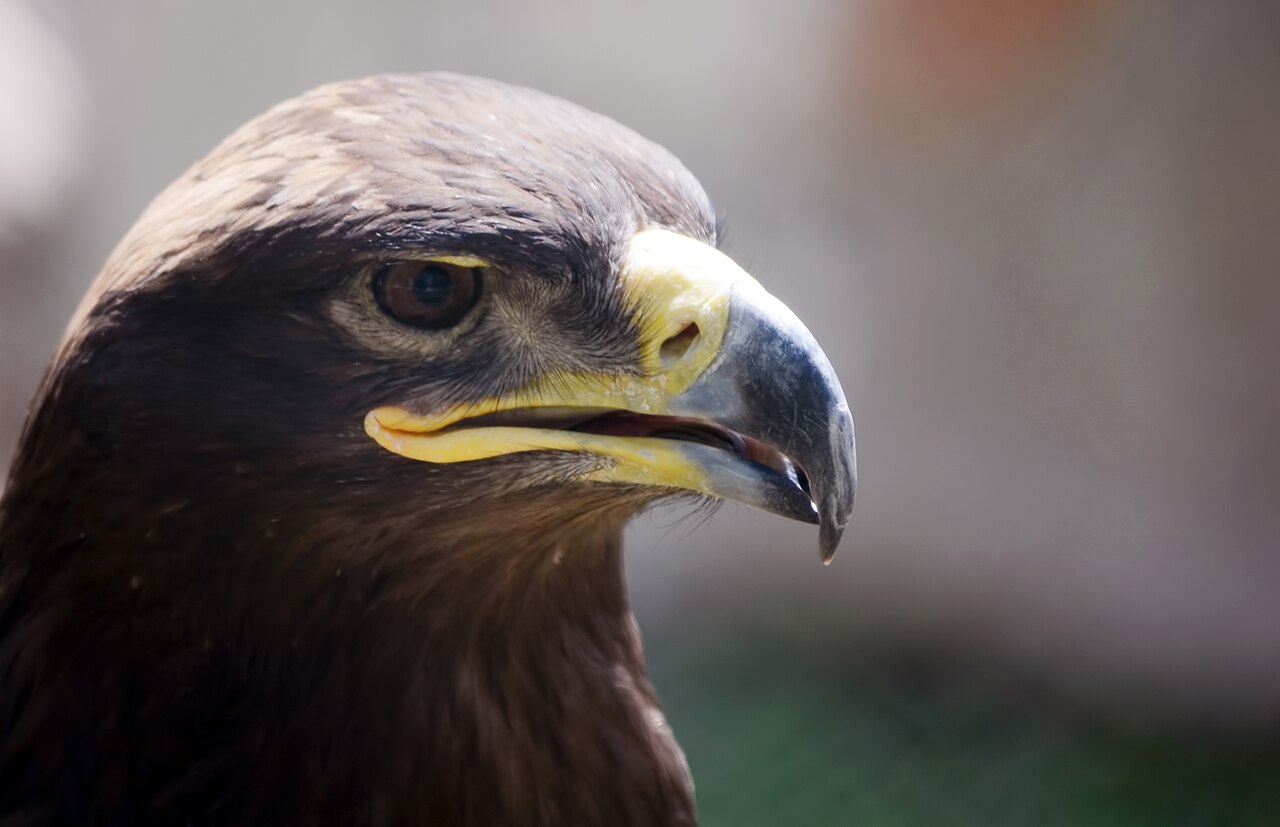


Physical characteristics and hunting
Golden eagles are powerful fliers with long, broad wings and a wingspan that commonly exceeds two metres in large individuals. Their anatomy—strong flight muscles, keen eyesight, heavy feet and long, curved talons—enables them to capture a wide range of prey. They hunt by soaring and scanning large areas, then using rapid stoops or fast low chases to seize animals. Typical prey includes lagomorphs such as hares and rabbits, and a variety of ground-dwelling mammals including marmots and ground squirrels. Golden eagles will also take birds, young ungulates on occasion, and will scavenge carrion when available.
Range, habitat and subspecies
Once common throughout much of the Holarctic, the golden eagle retains a broad distribution. It is found across parts of Eurasia, throughout much of North America, and in sections of North Africa. The species occupies a variety of open or semi-open habitats, including mountains, upland moors, steppe, tundra and some semi-desert regions. Regional forms or subspecies are recognized by ornithologists and are adapted to local climates. Nests are often placed on cliffs but trees, large crags or man-made structures are used where cliffs are scarce; pairs commonly reuse and add to large stick nests for many years.
Behavior, breeding and life history
Golden eagles are generally monogamous, forming pair bonds that can last for many years. Breeding territories may be large and are vigorously defended. Pairs construct substantial nests (sometimes called eyries) and both sexes participate in nest building, incubation and feeding of the young. Clutch sizes are usually small—commonly one to three eggs—and incubation lasts for several weeks. Young birds fledge after a period of dependence and typically disperse widely before establishing their own territories and reaching adult plumage after a few years. In the wild they can live for two decades or more; individuals in captivity sometimes live longer.
Conservation, threats and human interactions
Population trends vary regionally. In some densely populated areas golden eagles declined historically through persecution and habitat change, while in other regions populations remain stable or have recovered with legal protection. Key threats include habitat loss and fragmentation, direct persecution, poisoning (including secondary poisoning), collisions with vehicles and man-made structures, and disturbance at nesting sites. More recently, wind turbines and power lines are recognized as risks where they intersect flight paths. Conservation measures include habitat protection, species legal protection, monitoring, targeted management to reduce conflicts with livestock interests, and mitigation at energy developments. The golden eagle also has a long cultural role: it is used in falconry in parts of its range and features in local traditions, folklore and heraldry.
Distinguishing features and notable facts
- Taxonomy: scientific name Aquila chrysaetos; member of the family Accipitridae.
- Size: one of the largest birds of prey across its range; in North America only a few species such as the California condor are larger in mass.
- Historical range: widespread across the Holarctic; persists in varied landscapes including mountains and remote uplands such as the Scottish Highlands.
- Diet and ecology: primarily a predator of medium-sized mammals including hares, ground squirrels and marmots; opportunistic feeder and scavenger.
- Life history: monogamous pairs, long-lived, with substantial nest reuse and strong site fidelity in many populations.
For specialist information, regional species accounts and conservation guidance consult ornithological field guides, national red lists and conservation organizations. General background on eagles and raptor ecology can be found through overview resources and research summaries on eagles, regional faunal pages for Eurasia and North America, biogeographic discussions of the Holarctic, and country-level conservation portals for areas such as North Africa and the Scottish Highlands. Practical management and mitigation case studies are available through conservation programs and raptor monitoring schemes referenced in professional literature and national wildlife agencies.
Questions and answers
Q: What is the scientific name of the golden eagle?
A: The scientific name of the golden eagle is Aquila chrysaetos.
Q: What type of bird is a golden eagle?
A: A golden eagle is a bird of prey belonging to the family Accipitridae.
Q: Where can golden eagles be found?
A: Golden eagles can be found in Eurasia, North America, and parts of North Africa.
Q: What do golden eagles eat?
A: Golden eagles typically eat hares, rabbits, marmots and other ground squirrels.
Q: Is the golden eagle still widespread?
A: Yes, the species is still widespread across its range.
Q: How does a golden eagle hunt for food?
A: Golden eagles use their agility and speed combined with powerful feet and massive, sharp talons to snatch up prey.
Q: Is the golden eagle one of the largest birds of prey in North America?
A: Yes, it is one of the largest birds of prey in North America; only the California condor gets larger.
Related articles
Author
AlegsaOnline.com Golden eagle (Aquila chrysaetos): description, range, behavior and conservation Leandro Alegsa
URL: https://en.alegsaonline.com/art/39487