
Gamma (Greek letter Γ, γ): history, notation, and common uses
Gamma, the third Greek letter (Γ γ), represents the 'g' sound and the number 3; it appears across language, mathematics, physics, and engineering with several established notations.
Gamma (uppercase Γ, lowercase γ) is the third letter of the Greek alphabet. Historically it represented a voiced velar stop like English "g" in Ancient Greek and retained similar values in many dialects of Modern Greek. In the traditional system of Greek numerals each letter also has a numeric value: gamma corresponds to the number three. The letter's appearance — a simple angular uppercase and a rounded lowercase — has changed over millennia but remains easily recognizable.
Image gallery
1 Image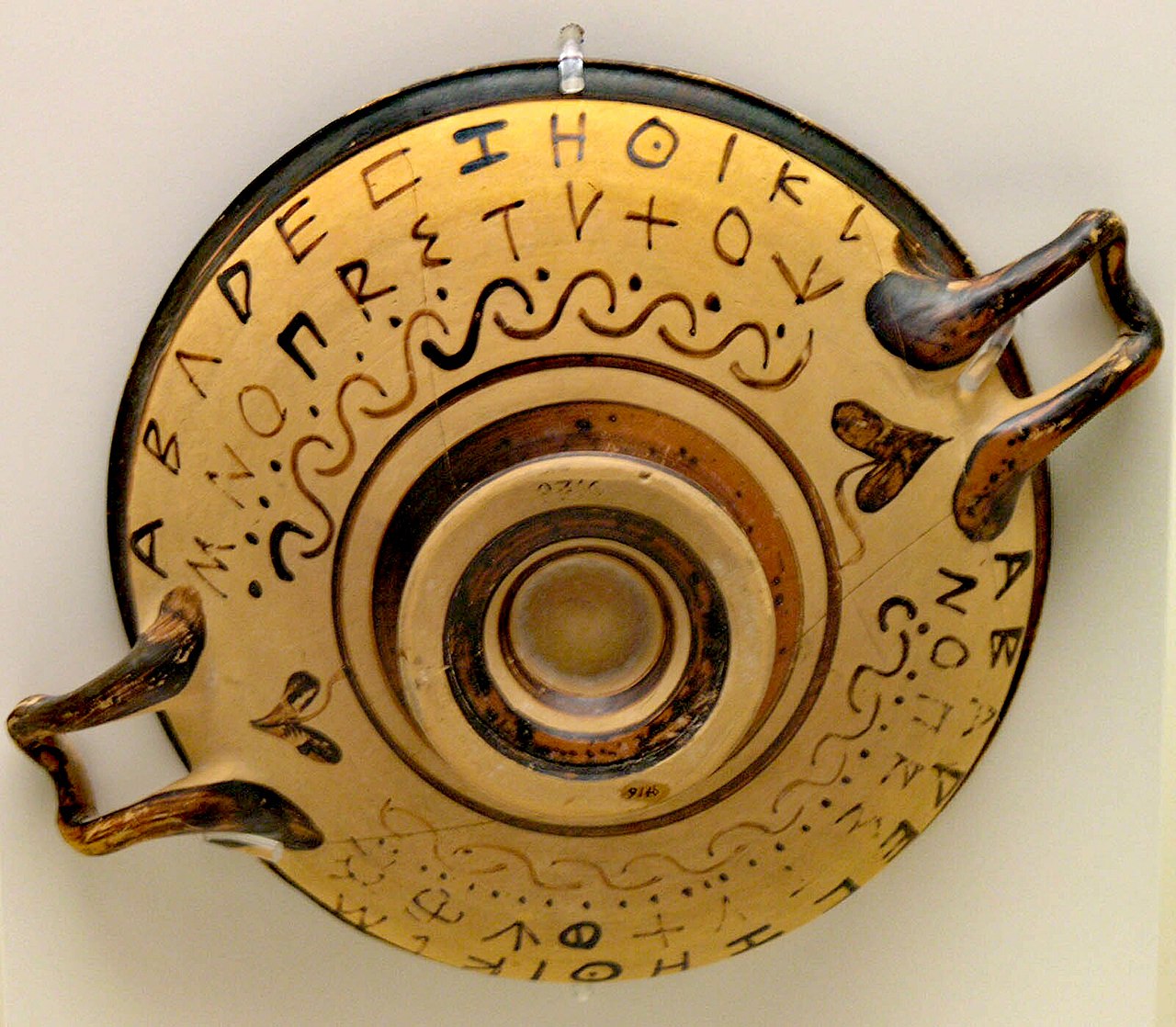
Origin and descendants
Gamma derives from the Phoenician letter gimel and is an early member of the family of alphabetic signs that spread across the Mediterranean. Its form and sound influenced the alphabets that followed: it is an ancestor of the Latin letter C (and indirectly of G), and it also gave rise to Cyrillic Г. These relationships reflect both the visual evolution of the letter shapes and shifts in phonetic values as alphabets adapted to different languages.
Mathematical and statistical uses
In mathematics, the uppercase Γ is widely used to denote the gamma function, a continuous extension of the factorial function to complex numbers. The lowercase γ commonly denotes the Euler–Mascheroni constant, a fundamental constant that arises in analysis and number theory. In probability and statistics the term "gamma" also names the gamma distribution, which models positive-valued random variables and appears in queuing theory and Bayesian inference.
Physics, engineering, and other scientific meanings
Gamma symbols serve diverse roles across the physical sciences. In particle physics and nuclear science the lowercase γ denotes gamma rays (high-energy photons) produced in radioactive nuclear decay and other processes. In relativity γ commonly denotes the Lorentz factor that relates time dilation and length contraction. Engineers and physicists also use the letter for quantities such as the ratio of specific heats, surface tension coefficients, damping ratios, and spectral indices, depending on context; see general treatments in physics and engineering literature for particular conventions.
Notation, pronunciation, and distinctions
The uppercase Γ and lowercase γ are not interchangeable: typographic form and case convey different conventional meanings in technical writing. Pronunciation varies with time and place — ancient pronunciation was closer to /g/, while Modern Greek often realizes γ as a voiced velar or palatal fricative depending on the following vowel. In transliteration schemes gamma typically becomes "g" or "gh", and when alphabets borrowed the sign its pronunciation sometimes shifted (for example, the Latin C later came to represent /k/ or /s/ in different languages).
- As a numeral: gamma = 3 in Greek numerals (see system).
- In analysis: Γ(z) denotes the gamma function (special function), γ is Euler’s constant (constant).
- In physics: γ-rays from nuclear decay, γ for the Lorentz factor (relativity).
- In applied fields: γ is used for heat-capacity ratios, damping, and distribution names in engineering contexts.
Because gamma appears in many disciplines, authors usually define their notation at first use. Readers encountering Γ or γ should consult surrounding text or a notation glossary to determine the intended meaning. For general background on the letter's linguistic role, alphabetic history, and scientific usages, introductory references on the Greek alphabet, classical phonology, and standard mathematical handbooks are useful starting points.
Related articles
Author
AlegsaOnline.com Gamma (Greek letter Γ, γ): history, notation, and common uses Leandro Alegsa
URL: https://en.alegsaonline.com/art/37427