
Geodesic (geometry and applications)
A geodesic is a curve representing the shortest or locally straightest path on a surface or manifold. This article explains definitions, equations, examples, history, and common uses.
A geodesic is the natural notion of a straight line on a curved surface or more generally on a manifold. In elementary terms it is a path that, to first order, does not deviate from a straight course and is locally distance-minimizing. For a concise mathematical introduction see geodesic. In many settings geodesics coincide with the shortest route between nearby points, but globally there can be multiple geodesics between two locations or none that minimize length.
Image gallery
2 Images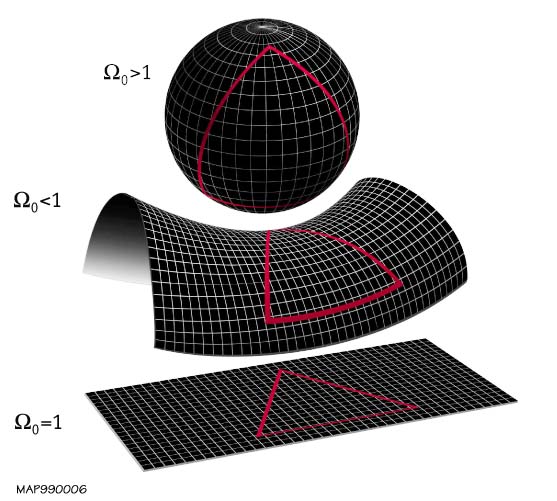

Definitions and basic properties
Formally, on a Riemannian manifold a geodesic is a curve whose acceleration vanishes when measured with the manifold's connection. Equivalently it satisfies a second-order differential equation (the geodesic equation) that involves the Christoffel symbols. Geodesics are critical points of the length or energy functional, so tools from the calculus of variations are used to study them. Key concepts include:
- Local minimality: geodesics are locally shortest but may fail to be globally minimal beyond certain points (cut locus).
- Geodesic completeness: whether geodesics can be extended indefinitely is a central topological property of a manifold.
- Conjugate points: locations where nearby geodesics reconverge, often causing loss of uniqueness or minimality.
Examples and distinctions
In flat Euclidean space geodesics are straight lines. On a sphere they are great circles: between two non-antipodal points there is a unique shortest great-circle arc; antipodal points admit infinitely many geodesics. Surfaces with handles or varying curvature (such as a torus) produce more complicated geodesic patterns and can display closed geodesics that loop periodically. For visual and computational examples see sphere and surface geodesics.
Not every geodesic is globally shortest. A minimal geodesic or geodesic segment denotes the portion that actually minimizes distance between its endpoints. The exponential map at a point sends tangent vectors to endpoints of geodesics and organizes local geometry around that point.
Geodesics also differ by context: in Riemannian geometry they minimize length, while in Lorentzian geometry (used in relativity) timelike geodesics locally maximize proper time and represent free-fall trajectories rather than shortest spatial paths.
Applications range from practical navigation (aircraft and ships follow great-circle routes on Earth) to theoretical physics (worldlines in general relativity), to computer graphics, robotics, and architectural design. For further reading on computational and applied aspects see geodesic applications.
Historically, study of geodesics grew out of classical differential geometry and was formalized in Riemannian geometry; the geodesic equation and variational viewpoint link geometry, analysis, and physics. Modern research continues to investigate geodesic flows, stability, and global structure on complex spaces.
Related articles
Author
AlegsaOnline.com Geodesic (geometry and applications) Leandro Alegsa
URL: https://en.alegsaonline.com/art/38091