
Radioactive decay
Radioactive decay is the spontaneous change of unstable atomic nuclei that emits particles or photons. It shapes nuclear chemistry, enables medical and dating technologies, and requires careful radiation protection.
Radioactive decay is a natural process in which an unstable atomic nucleus transforms into a different nucleus or nuclear state, releasing energy in the form of particles or electromagnetic radiation. Unlike ordinary chemical changes — which rearrange electrons around the nucleus — decay alters the composition of the nucleus itself. This distinction means atoms that undergo nuclear decay change identity, producing one or more new nuclides over time. See related ideas about elements and atoms, and contrast with a chemical reaction.
Image gallery
5 Images
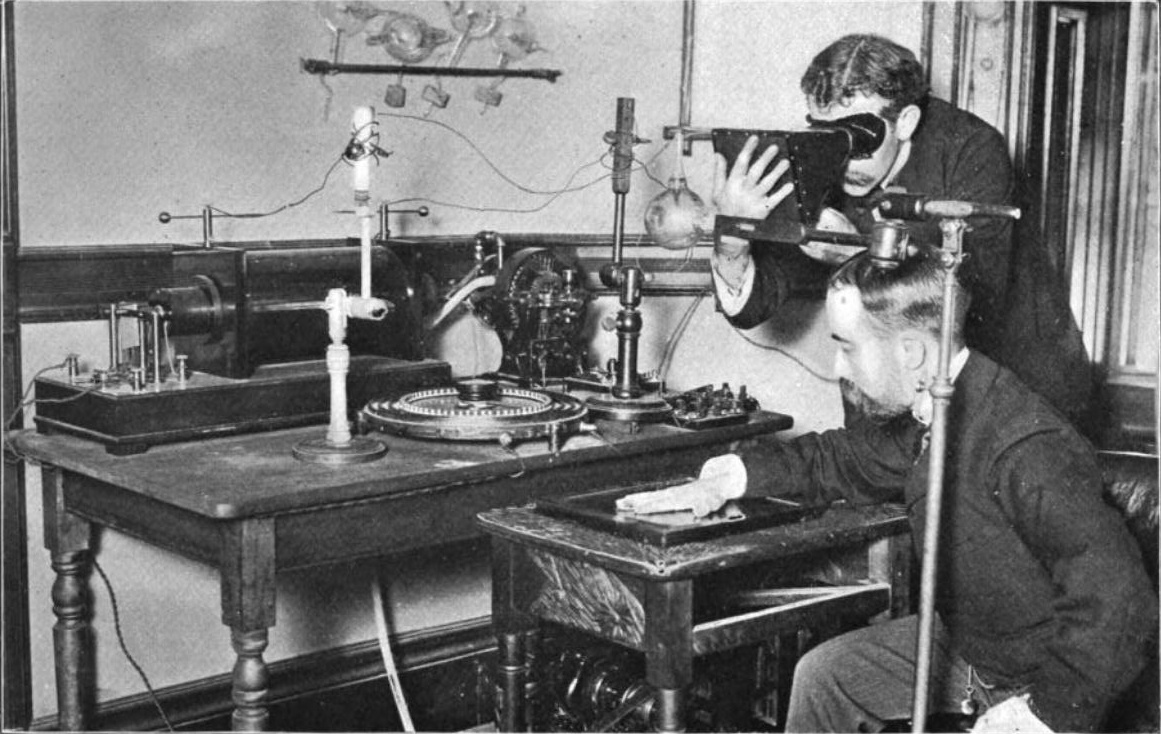


Characteristics and common modes
Decay is stochastic at the level of a single nucleus but follows precise statistical rules for large numbers of atoms. The rate of disappearance of a radioactive species is described by exponential decay and summarized by a half-life, the characteristic time in which half the nuclei in a sample will have decayed. Typical modes of decay include:
- Alpha decay: emission of a helium nucleus (two protons and two neutrons), reducing atomic number and mass.
- Beta decay: conversion of a neutron to a proton or vice versa with emission of an electron or positron and a neutrino, changing the atomic number.
- Gamma decay: emission of high-energy photons as a nucleus relaxes from an excited state, usually without changing element identity.
History and naming
Natural radioactivity was identified in the late 19th century when emissions from certain minerals were detected. Becquerel pioneered early observations of spontaneous radiation, and the work of Marie Curie and Pierre Curie clarified and popularized the phenomenon. The term "radioactivity" was established around that time, and recognition of these discoveries followed in international awards and in the naming of measurement units.
Uses and examples
Radioactive isotopes and the radiation they emit have many practical applications. In medicine, selected radionuclides are used for diagnostic imaging and for targeted radiotherapy. In industry and science they serve as tracers, process gauges, and sterilization sources. Geochronology and archaeology use decay-based methods to date materials by comparing parent and daughter isotopes. Nuclear reactors and space power systems exploit controlled decay or fission for energy, and small devices like smoke detectors rely on weak radioactive sources for detection.
Safety, regulation and notable distinctions
The radiation produced by decay is ionizing and can damage living tissue; protection strategies include minimizing exposure time, maximizing distance, and using appropriate shielding. Regulatory frameworks control the production, transport and disposal of radioactive materials. Important conceptual distinctions are stability versus instability of isotopes, spontaneous versus induced transformations, and nuclear versus chemical change. Units and terminology in this field reflect its history and the scientists who contributed to its development.
Questions and answers
Q: What is radioactive decay?
A: Radioactive decay is a phenomenon where some chemical elements have atoms that change over time.
Q: Are most chemical elements stable or unstable?
A: Most chemical elements are stable.
Q: What are stable elements made up of?
A: Stable elements are made up of atoms that stay the same.
Q: Do atoms change in a chemical reaction?
A: Even in a chemical reaction, the atoms themselves do not change ever.
Q: Who discovered radioactive decay?
A: Henri Becquerel discovered radioactive decay.
Q: Who coined the term radioactive decay?
A: Marie and Pierre Curie coined the term radioactive decay.
Q: When were Henri Becquerel and the Curies awarded the Nobel Prize in Physics for their discovery?
A: Henri Becquerel and the Curies were awarded the Nobel Prize in Physics for their discovery in 1903.
Related articles
Author
AlegsaOnline.com Radioactive decay Leandro Alegsa
URL: https://en.alegsaonline.com/art/80767
Sources
- chemteam.info : "Uranium radiation and the electrical conduction produced by It" · archive.org
- web.ihep.su : "The magnetic and electric deviation of the easily absorbed rays from Radium"
- doi.org : 10.1080/14786440309462912
- doi.org : 10.1038/234132a0