
Georg Cantor — founder of modern set theory
Georg Cantor (1845–1918) was a German mathematician who created set theory, introduced transfinite numbers and cardinalities, and posed the continuum hypothesis, profoundly shaping modern mathematics.
Georg Cantor (3 March 1845 – 6 January 1918) was a German mathematician credited with creating the modern theory of sets and introducing rigorous ways to compare sizes of infinite collections. His work transformed foundations of mathematics by treating infinity as a subject for precise study rather than only philosophical speculation. For a concise overview of his life and career see biographical resources.
Image gallery
6 Images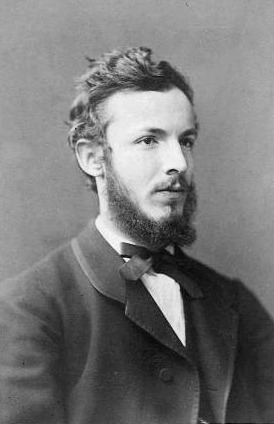


Main ideas and concepts
Cantor developed the notion of cardinality to measure the size of sets, distinguishing between countable infinities (like the integers) and uncountable infinities (like the real numbers). He introduced transfinite numbers, including the sequence of aleph numbers to enumerate sizes of well-orderable infinite sets, and produced arguments showing different infinite sizes exist.
Key contributions
- The diagonal argument, a method to prove that the real numbers cannot be put into one-to-one correspondence with the natural numbers.
- The formal introduction of cardinality and ordinal numbers to classify and compare infinite sets.
- The formulation of the continuum hypothesis, which posits a specific relationship between the cardinality of the integers and the real numbers.
- Results related to well-ordering and the structure of infinite sets that influenced later work in logic and set theory.
Cantor's ideas laid the groundwork for axiomatic set theory and for later work in mathematical logic. He published papers and correspondence that clarified the behavior of infinite sets and provided tools now standard in advanced mathematics. Many modern areas—analysis, topology, measure theory, and theoretical computer science—rely on concepts he helped establish.
Historical context and reception
When Cantor proposed his theories, they challenged prevailing intuitions about infinity and faced both intellectual debate and personal opposition from some contemporaries. Over time his work gained acceptance and became central to foundation studies. His contributions are often discussed in relation to later formalizations of set theory; see general introductions at set theory resources.
Notable aspects of Cantor's life include periods of poor health and struggles with depression, which affected his career. Despite personal hardships, his mathematical legacy is enduring: concepts he introduced continue to shape mathematics and philosophy of mathematics, and his problems and methods remain subjects of research and teaching.
Related articles
Author
AlegsaOnline.com Georg Cantor — founder of modern set theory Leandro Alegsa
URL: https://en.alegsaonline.com/art/38160
Sources
- www-history.mcs.st-andrews.ac.uk : "Georg Ferdinand Ludwig Philipp Cantor"
- wikidata.org : wikidata.org/wiki/Q76420
- catalogo.bne.es : XX999360
- catalogue.bnf.fr : cb121371602
- data.bnf.fr : (data)
- d-nb.info : 118518887
- isni.org : 0000 0001 0889 5716
- id.loc.gov : n82252409
- genealogy.math.ndsu.nodak.edu : 29561
- id.ndl.go.jp : 00435223
- aleph.nkp.cz : jn20000700275
- uli.nli.org.il : 001434630
- data.bibliotheken.nl : 070381119
- libris.kb.se : 181008
- snaccooperative.org : w65m89dq