
Galena (lead sulfide)
Galena is a common sulfide mineral (PbS) and the principal ore of lead; notable for its metallic luster, cubic crystals, and associations with minerals like sphalerite and calcite.
Overview
Galena is the mineral form of lead(II) sulfide, chemical formula PbS, and serves as the world’s principal ore of lead. It typically appears as a bright silver-gray metal with a high density and a distinctive metallic luster. In economic geology it is widely recognized as the primary ore exploited for lead and, frequently, for silver recovered as a byproduct; the metal lead extracted from galena has long been important for industry, construction, and alloys.
Image gallery
5 Images


Physical characteristics
Galena crystallizes in the cubic system and commonly forms cubes, octahedra, or combinations of these habits. It has perfect cubic cleavage, a lead-gray streak, and a metallic sheen. As a dense, brittle mineral it fractures readily and may tarnish to duller gray or iridescent surfaces in weathered samples. Many of its diagnostic traits—color, luster, cleavage, and density—make it straightforward to identify in hand specimen and ore samples.
Occurrence and formation
Galena is a common constituent of hydrothermal vein deposits, sedimentary exhalative layers, and replacement deposits in carbonate rocks. It often forms in association with other sulfide and carbonate minerals; typical paragenetic partners include sphalerite, calcite and fluorite. The mineral readily concentrates in veins where lead-bearing fluids precipitate sulfide minerals as temperature and chemistry change, and it is also found in metamorphosed deposits and sedimentary environments.
Uses, mining and processing
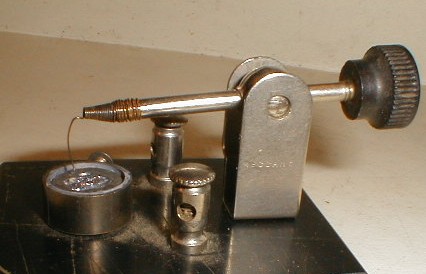
Galena is mined for lead, which has been used historically in pipes, paints, and pigments and today finds major application in lead–acid batteries, radiation shielding, and certain alloys. Ore is extracted by underground and surface mining and then concentrated and smelted to produce metallic lead; silver and other trace metals are often recovered during processing. Its electrical properties also made natural galena useful early on as a crystal detector in early radio receivers.
Health, environmental and historical notes
Lead is toxic, and historical mining and smelting of galena have left environmental legacies of contamination where dust and tailings pollute soil and water. Modern regulations control emissions and promote remediation. Galena has been exploited since antiquity; archaeological and historical records document its use for extracting lead and, occasionally, silver. The mineral remains of both scientific and industrial interest today.
Further references
For mineralogical descriptions and crystallography see sources that discuss how galena crystallizes and its common textural relationships with other ore minerals.
Related articles
Author
AlegsaOnline.com Galena (lead sulfide) Leandro Alegsa
URL: https://en.alegsaonline.com/art/37274