
Future of the Earth: Physical drivers, timelines, and likely outcomes
An overview of the long-term physical, geological, and biological factors that will shape Earth's future — from orbital cycles and plate tectonics to solar evolution and the eventual fate of the planet.
Overview
The future of Earth is determined by a mix of astronomical, geological and climatic processes working on very different timescales. Over thousands to millions of years, orbital cycles and plate tectonics drive climate fluctuations and the arrangement of continents. Over hundreds of millions to billions of years, changes in the Sun's output and the planet's internal heat will alter the environment dramatically. Researchers combine observations, theory and models to sketch plausible sequences of change, but uncertainties remain about timing and details.
Image gallery
10 Images




Main physical drivers
Several key forces shape long-term change on Earth. The Sun slowly increases in brightness as it fuses hydrogen into helium in its core; this rise in solar output influences global temperature and the stability of surface water (solar brightening). Heat loss from Earth's interior affects mantle convection and plate motions (core and mantle heat). Gravitational interactions with other Solar System bodies can shift Earth's orbit and eccentricity (orbital perturbations). Cyclic variations in Earth's orbit and axis—known collectively as Milankovitch cycles—produce recurring glacial and interglacial periods (Milankovitch theory). Plate tectonics drives continental rearrangement and can create supercontinents over geologic time (plate tectonics, supercontinent formation).
Timescales and expected stages
Scientists outline several broad stages in Earth's distant future. On timescales of 10^4–10^6 years, Milankovitch-type orbital cycles will continue to modulate ice ages and climate. Over the next few hundred million years, continental drift may produce a new supercontinent as plates converge. Over roughly 1–2 billion years, increasing solar luminosity could trigger a warming strong enough to lead to a moist or runaway greenhouse state that gradually removes surface oceans (helium buildup in the Sun and rising solar output, cessation of continental drift are often discussed in this context). Later, on billion-year timescales, axial tilt may undergo larger variations if the Moon's stabilizing influence weakens, producing extreme seasonal contrasts in some scenarios.
Biological and climatic consequences
As the climate warms over long intervals, ecosystems will change, migrate, or perish. A progressive rise in global temperature reduces habitable regions and can push atmospheric chemistry toward stronger greenhouse conditions (greenhouse effects), stressing complex life. Microbial life is more resilient and could persist in protected niches for much longer than surface-dependent organisms. By the time solar evolution makes the surface too hot for liquid water, most current biosphere structure would be lost.
Ultimate fate and key uncertainties
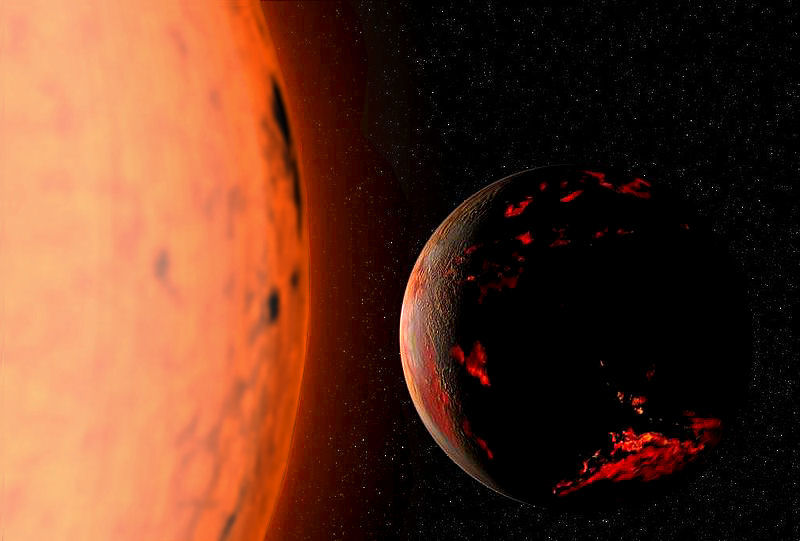
On the longest timescale, stellar evolution governs Earth's fate. In several billion years the Sun will leave the main sequence and expand into a red giant; during that phase it will envelop or severely heat the inner planets and dramatically alter or destroy Earth (red giant stage). There is uncertainty about whether Earth will be engulfed or suffer severe mass loss before then; tidal interactions, mass loss from the Sun and orbital changes complicate precise predictions.
Summary of factors and likely sequence
- Short term (10^3–10^6 years): Continued orbital-driven climate cycles (Milankovitch) and regional ecosystem shifts.
- Medium term (10^6–10^8 years): Plate motions reconfigure continents; possible supercontinent within a few hundred million years (supercontinent).
- Long term (10^8–10^9+ years): Solar brightening leads to warmer climates, eventual ocean loss and decline of complex life (solar brightening, greenhouse).
- Final stage (several billion years): Stellar evolution into a red giant likely renders Earth uninhabitable and may destroy the planet (red giant).
These projections combine well-understood physics with model-dependent details. They highlight that while human-induced climate change is the dominant concern for the next centuries to millennia, very-long-term planetary evolution is driven by astronomical and geological processes that operate on much longer timescales. For accessible introductions to these topics, consult reviews and educational resources that cover solar evolution, planetary geology, and long-term climate dynamics (planetary heat, orbital dynamics, Milankovitch cycles, tectonics, helium buildup, continental drift, greenhouse mechanisms, solar brightening, red giant evolution).
Note: Time estimates vary among studies and depend on model assumptions; statements here reflect broad consensus trends rather than precise dates.
Questions and answers
Q: What are some factors that will affect the future of the Earth?
A: Many things will affect the future of the Earth including increases in the brightness of the Sun, loss of heat energy from the Earth's core, and changes in the planet's orbit caused by other things in the Solar System.
Q: What is the Milankovitch theory?
A: The Milankovitch theory says that the Earth will continue to go into glaciation cycles because of the planet's difference in orbit from a perfect circle, the axis of the planet tilting, and pushing of the Earth's orbit.
Q: How might plate tectonics affect the future of the Earth?
A: Plate tectonics may create a supercontinent within 250 million–350 million years as part of the supercontinent cycle.
Q: What might happen to the Earth's axis in the future?
A: Some time in the next 1.5 billion–4.5 billion years, the axis's tilt may begin to change into bad versions, with changes in the axis's tilt of up to 90°.
Q: How might the Sun affect the future of the Earth?
A: One billion to two billion years in the future, the increase in solar radiation caused by the helium build-up at the core of the Sun will result in the loss of the oceans and the cessation of continental drift. Four billion years from now, the increase in the Earth's surface temperature will cause a bad greenhouse effect.
Q: What is the most likely fate of the planet?
A: The most likely fate of the planet is being destroyed by the Sun in about 7.5 billion years, after the star has entered the red giant phase and expanded to cross the planet's orbit.
Q: Will there be any life left on the Earth in 4 billion years?
A: By that point, most if not all the life on the Earth will be gone.
Related articles
Author
AlegsaOnline.com Future of the Earth: Physical drivers, timelines, and likely outcomes Leandro Alegsa
URL: https://en.alegsaonline.com/art/37098
Sources
- doi.org : 10.1086/173407
- doi.org : 10.1126/science.277.5325.494
- doi.org : 10.1038/nature02121
- pubmed.ncbi.nlm.nih.gov : 14712274
- doi.org : 10.1111/j.1365-2966.2008.13022.x