
Freeman Dyson — theoretical physicist, mathematician, and public intellectual
Overview of Freeman J. Dyson (1923–2020): life, scientific contributions in physics and mathematics, work on space concepts and nuclear propulsion, writings, awards and later views.
Freeman J. Dyson (15 December 1923 – 28 February 2020) was an English-born scientist who became an American citizen in 1957. Trained in mathematics and physics, he is widely remembered as a theoretical physicist and mathematician whose work crossed several disciplines. Dyson spent much of his career in the United States and was long associated with research and writing that connected fundamental theory to practical and speculative ideas.
Image gallery
4 Images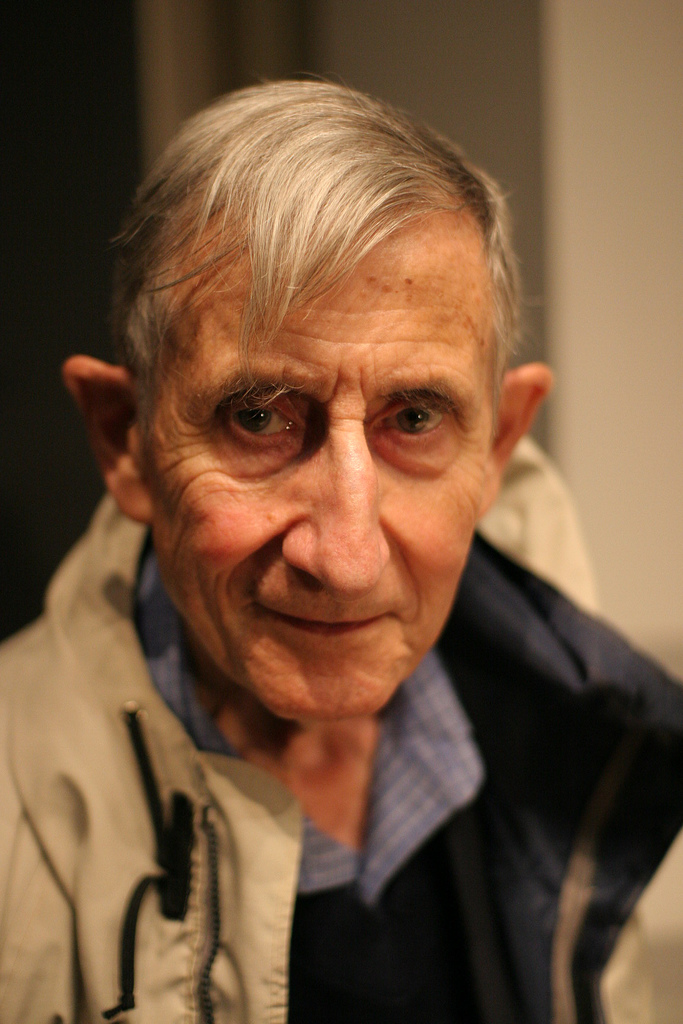


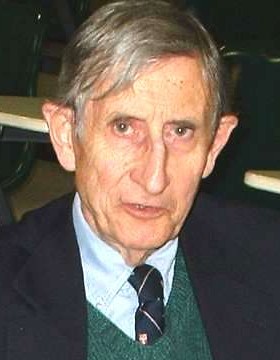
Education and career
Dyson studied at the University of Cambridge before moving to the United States after World War II. He worked at research institutes and universities and became a familiar presence at the Institute for Advanced Study in Princeton, near Princeton, New Jersey. Born in Crowthorne, England, he came from a family with artistic and technical interests and developed a reputation for wide-ranging curiosity rather than narrow specialization.
Major contributions
- Quantum theory: Dyson produced influential analyses that clarified the relationships among different formulations of quantum electrodynamics (QED) and introduced mathematical techniques now part of standard treatments.
- Condensed matter and nuclear ideas: He contributed to problems in solid-state physics and engaged with nuclear engineering projects, including early examinations of nuclear-propelled spacecraft concepts.
- Astronomy and space concepts: Dyson popularized a proposal that came to be known informally as the "Dyson sphere," a way to think about detecting advanced civilizations in astronomy by their infrared signatures.
These items capture only part of a career that ranged from rigorous mathematical work to speculative proposals about technology and exploration.
Writings, public engagement, and views
Dyson was also an essayist and author who explained complex science to general readers and reflected on the ethical dimensions of technology. He wrote books and many essays that addressed scientific creativity, the responsibilities of scientists, and big-picture problems. In later decades he voiced cautious skepticism about some climate-model projections and favored a mix of research and adaptive strategies; his public stances sometimes generated debate.
Awards, legacy and death
Freeman Dyson received major honors in recognition of his influence, including the Wolf Prize in Physics, and he was elected to prominent scientific societies. His work left a durable imprint on theoretical physics, space studies, and science writing. Dyson died in 2020 after a fall at age 96, and his wide-ranging career continues to be studied and discussed by scientists and historians.
Related articles
Author
AlegsaOnline.com Freeman Dyson — theoretical physicist, mathematician, and public intellectual Leandro Alegsa
URL: https://en.alegsaonline.com/art/36515
Sources
- news.bbc.co.uk : "Scientist wins $1m religion prize"
- nytimes.com : "Freeman Dyson, Visionary Technologist, Is Dead at 96"
- npr.org : "Physicist And Iconoclastic Thinker Freeman Dyson Dies At 96"
- nationalgeographic.com : "Freeman Dyson, legendary theoretical physicist, dies at 96"