
Nuclear engineering: principles, applications, and challenges
An overview of nuclear engineering: its scope, core technologies, historical development, practical uses and contemporary challenges including safety, waste and proliferation.
Overview
Nuclear engineering is the branch of engineering concerned with the study and practical use of phenomena that involve the atomic nuclei and subatomic particles. Drawing on concepts from nuclear physics and broader engineering disciplines, it addresses energy conversion, radiation interactions, materials behavior under irradiation, and the systems needed to harness or control nuclear processes.
Image gallery
1 Image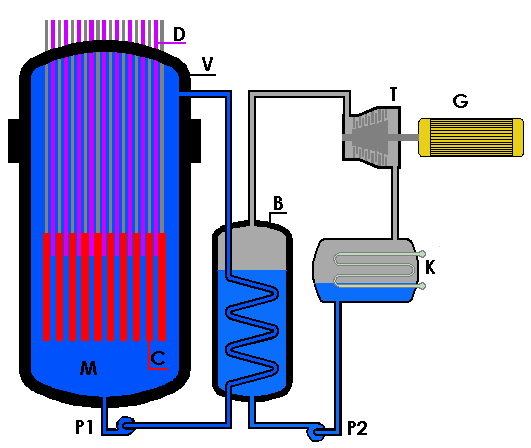
Core disciplines and systems
At its core, nuclear engineering covers both device-level and system-level topics. Designers work on the physics and mechanics of nuclear reactors and the layout and safety systems of nuclear power plants. The field also treats the physics of nuclear fission and emerging work on nuclear fusion, as well as the design and maintenance of system components such as pressure vessels, control rods, heat exchangers and shielding.
Key topics and practice areas
- Reactor physics: neutron behavior, chain reactions and core design.
- Thermal-hydraulics: coolant flow and heat transportaway from the core.
- Fuel and materials: development and handling of nuclear fuel and radiation-resistant structural materials.
- Radiation protection: measurement, shielding and regulatory compliance to limit exposure.
- Policy and security: non-proliferation measures related to nuclear proliferation and safeguards.
History and development
The discipline emerged in the 20th century as discoveries in atomic structure were translated into practical systems. Early research established the principles of chain reactions and reactor control, while wartime and postwar programs accelerated engineering applications for both power generation and military purposes, including development of nuclear weapons. In the civilian era, efforts shifted toward safe electricity production, research reactors, medical isotope production and, more recently, experimental fusion devices. Progress has been incremental and closely coupled to advances in materials science, computation and regulatory frameworks.
Applications and examples
Nuclear engineering contributes to a wide range of sectors. The most visible application is generation of electricity in power plants. Other examples include propulsion for naval vessels, production of medical and industrial isotopes, materials testing in research reactors, and experimentation aimed at achieving sustained fusion energy. Engineers also design systems for safe handling, storage and transportation of radioactive waste, and develop monitoring technologies used in environmental protection.
Challenges and notable distinctions
Key challenges include ensuring operational safety, long-term management of radioactive byproducts, effective regulatory oversight and public communication. The field exists at the intersection of technical, environmental and political concerns: debates over cost, climate impacts, waste disposal, and non-proliferation inform research priorities and deployment choices. Despite these challenges, nuclear engineering remains a specialized discipline with distinctive expertise in controlling high-energy processes and managing the risks associated with radioactivity.
For introductory technical material and further reading on subtopics mentioned above, see resources on reactor design, radiation protection and fuel cycle management, or consult educational and professional organizations that publish standards and guidance for the discipline. Engineering resources, materials on nuclear physics fundamentals, and documents addressing non-proliferation and waste policy are useful starting points.
Additional specialized sources may cover the physics of fission and the engineering of reactors, design of plant components, performance of fuel under irradiation, transport of heat, and the research pathways toward fusion. Policy discussions often link technical topics to global concerns over proliferation and environmental impacts from radioactive waste.
Questions and answers
Q: What is nuclear engineering?
A: Nuclear engineering is a field of engineering that deals with the application of atomic nuclei breakdown and other sub-atomic physics, based on the principles of nuclear physics.
Q: What does nuclear engineering involve?
A: Nuclear engineering involves the interaction and maintenance of nuclear fission systems and components such as nuclear reactors, nuclear power plants, and nuclear weapons. It also includes the study of nuclear fusion, medical and other applications of radiation, radiation safety, heat transport, nuclear fuel and other related technologies, nuclear proliferation, and the effect of radioactive waste or radioactivity on the environment.
Q: What is the study of nuclear fusion?
A: Nuclear engineering includes the study of nuclear fusion.
Q: What are the applications of radiation studied in nuclear engineering?
A: Nuclear engineering involves the study of medical and other applications of radiation.
Q: What is the concern regarding radioactive waste or radioactivity in nuclear engineering?
A: Nuclear engineering studies the effect of radioactive waste or radioactivity on the environment, which is a significant concern.
Q: What is the aim of nuclear engineering?
A: The aim of nuclear engineering is to utilize nuclear energy in a safe and effective manner to meet energy demands and other societal needs.
Q: What are the types of nuclear systems and components addressed in nuclear engineering?
A: Nuclear engineering deals with the interaction and maintenance of nuclear fission systems and components such as nuclear reactors, nuclear power plants, and nuclear weapons.
Related articles
Author
AlegsaOnline.com Nuclear engineering: principles, applications, and challenges Leandro Alegsa
URL: https://en.alegsaonline.com/art/71352
Sources
- eia.doe.gov : U.S. Electric Power Industry Statistics
- aapm.org : Medical Physicist, AAPM