
Flugelhorn (Flügelhorn)
A conical-bore brass instrument similar to the trumpet and cornet, pitched in B♭ and noted for a warm, mellow sound; commonly used in brass bands, jazz and some orchestral settings.
The flugelhorn is a brass instrument with a conical bore and a dark, mellow timbre. It belongs to the brass family and is normally pitched in B♭, like the trumpet and cornet. Visually it resembles these instruments but is distinguished by wider, more tapered tubing and a larger bell, which together produce a softer, rounder sound.
Image gallery
6 Images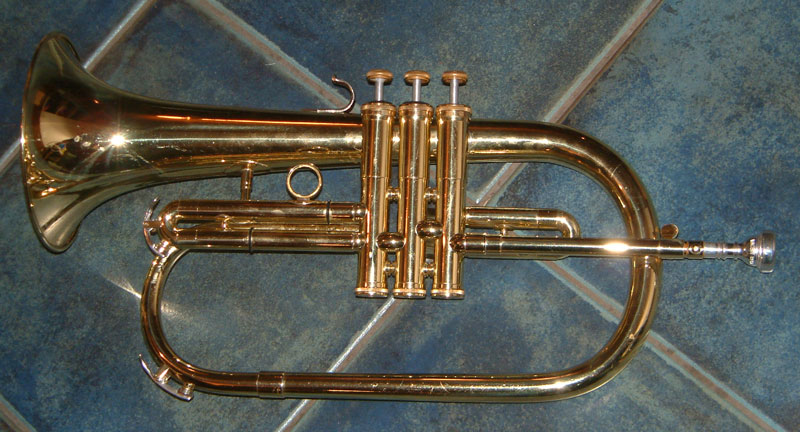


Construction and sound
The flugelhorn typically has three piston valves, though some models use rotary valves. Its mouthpiece is deeper and more funnel-shaped than a trumpet's, contributing to the instrument's darker tone and less penetrating attack. Players find its sound well suited to lyrical lines and solo passages where warmth is desirable rather than brilliance. Basic characteristics include:
- Conical bore giving a mellow, rounded timbre
- Usually three valves (piston or rotary)
- Pitched in B♭ with a range similar to the trumpet but with different color
- Often described as a bugle with valves because of its tonal lineage
Origins and development
The flugelhorn developed in the 19th century from European hunting horns and post-horn designs. It became widely adopted in British-style brass bands in the mid-1800s, where its sonority blended well with cornets and trombones. Over time instrument makers refined its bore and valve mechanisms to improve intonation and response.
Uses and repertoire
While common in brass-band and military contexts, the flugelhorn has also found a place in jazz, popular music and occasional orchestral passages. Jazz trumpeters and flugelhornists appreciate its lyrical qualities for ballads and mellow solos. Notable musicians who have featured the instrument include Miles Davis, who used its timbre to expand the palette of jazz trumpet-derived sounds. It is also used as an alternative to the cornet when a darker color is desired.
Practical distinctions and care
Compared with the trumpet, the flugelhorn requires subtle adjustments in breath and articulation because of its different resistance and sound production. Players switching between trumpet, cornet and flugelhorn must adapt mouthpiece choice and embouchure. Routine maintenance—valve oil, slide greasing and cleanings—follows the same principles as other piston or rotary brass instruments.
Because of its distinctive tone and expressive capability, the flugelhorn remains a valued option for soloists and ensemble players seeking a warmer alternative to brighter brass voices.
Related articles
Author
AlegsaOnline.com Flugelhorn (Flügelhorn) Leandro Alegsa
URL: https://en.alegsaonline.com/art/35260
Sources
- commons.wikimedia.org : Flugelhorns
- jewelrygenius.com : "Flügelhorn history, information, definition"
- credoreference.com : "Flügelhorn"
- highbeam.com : "Edinburgh Jazz Festival Orchestra: Miles Ahead, Queen's Hall, Edinburgh"