
Flanking Maneuver: Principles, History, and Military Applications
A flanking maneuver is an attack on an opponent's side or rear aimed at degrading their ability to fight or move. This article explains how flanking works, its history, distinctions, and factors for success.
Overview
A flanking maneuver, often called a flank attack, is a military move that targets the side or rear of an opposing formation rather than its front. By striking where the enemy is less prepared, the attacker reduces the opponent's freedom of movement and ability to concentrate fire, increasing the chance of local superiority. If executed successfully, a flanking action can lead to encirclement or force the defender to reorient and fight on multiple fronts.
Image gallery
5 Images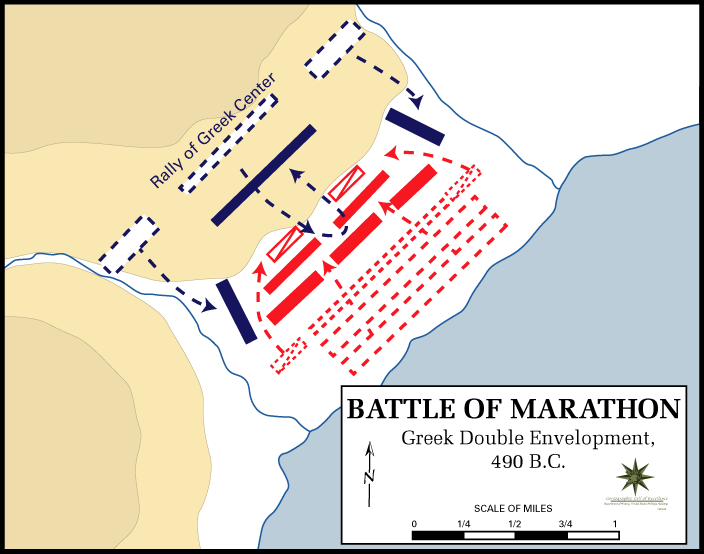


Characteristics and mechanics
Successful flanking depends on timing, speed, reconnaissance and coordination. The essential idea is to exploit an enemy's forward orientation or gaps in their line: while the main body engages from the front, a flanking force moves around an exposed side. Terrain and obstacles influence route selection and feasibility. A deliberate distinction exists between a simple flank attack and a broader envelopment, which attempts to encircle; a flank attack can be smaller and faster, using movement initiated by the opponent.
Historical development
Flanking has been a feature of warfare since antiquity. Commanders who sought decisive results often tried to turn or attack enemy flanks rather than conduct costly frontal assaults. Throughout history, the tactic has been applied from small-unit skirmishes to large campaigns. Well-known military writers and schools of tactics analyze flank attacks as a core component of maneuver warfare and combined-arms operations.
Uses, examples and scale
Flanking appears at multiple levels: infantry platoons and companies use local flank moves in combat; at higher scales entire corps or even armies can attempt turning movements. When flanking targets formations larger than a brigade, it is sometimes described as a strategic flanking operation: the aim is to unbalance divisions or whole divisions and even threaten armies. Modern applications include armored or mechanized forces exploiting speed, amphibious landings aiming to hit a seaward flank, and air-mobile forces seizing rear areas.
Advantages, risks and psychological effects
A flank attack can produce a disproportionate effect: disorganizing command and control, creating crossfires, and inducing panic. The perception of being attacked from an unexpected direction can have a strong psychological impact, sometimes causing units to withdraw or rout (flee) rather than stand. However, attempting to flank carries risks: the flanking unit may overextend, be cut off, or expose its own flank to counterattack. Proper reconnaissance and secure lines of retreat are essential.
Distinctions and related concepts
- Flank attack — focused strike against a side or rear to gain local advantage.
- Envelopment — broader operation aiming to surround the enemy for destruction or surrender; related to but larger than many flank attacks (see envelopment).
- Turning movement — a maneuver that seeks to pass around the enemy's flank and compel them to abandon a position.
Practical considerations
Commanders weigh many variables before committing to a flank: terrain, enemy dispositions, logistics, and the ability to synchronize actions with the main effort. Intelligence and communication are crucial to avoid duplication or friendly fire. Doctrine emphasizes flexibility—using a flank when it promises decisive advantage while preparing contingencies if the maneuver fails.
For additional conceptual material and doctrinal discussion, see texts on maneuver tactics and analyses of battlefield psychological effects of multi-directional threat.
Questions and answers
Q: What is a flanking maneuver in military tactics?
A: A flanking maneuver is an attack on the sides or rear of an opposing force in military tactics.
Q: What happens if a flanking maneuver succeeds?
A: If a flanking maneuver succeeds, the opposing force would be surrounded or have to fight from two or more directions, thereby reducing its ability to move or defend itself.
Q: How is a flanking maneuver different from an envelopment?
A: A flanking maneuver is different from an envelopment in that it uses the enemy's forward movement to create an attackable flank, rather than depending on the defensive position of the enemy, obstacles, and terrain.
Q: What is the advantage of a flanking maneuver in terms of psychology?
A: The advantage of a flanking maneuver in terms of psychology is that the confusion and threat from multiple directions can often cause shock and panic, which may cause soldiers to run from the battle.
Q: What is a larger-scaled tactical flanking called?
A: A larger-scaled tactical flanking is called a strategic flanking.
Q: What are the possible targets of a strategic flanking?
A: The possible targets of a strategic flanking could be as large as divisions or even entire armies.
Q: What is the aim of a flanking maneuver?
A: The aim of a flanking maneuver is to reduce the opposing force's ability to move or defend itself by attacking its sides or rear.
Related articles
Author
AlegsaOnline.com Flanking Maneuver: Principles, History, and Military Applications Leandro Alegsa
URL: https://en.alegsaonline.com/art/35003
Sources
- thefreedictionary.com : "flank"
- globalsecurity.org : "Offensive Operations"
- nps.gov : "Battle of Chancellorsville History: The Flank Attack"