
Focke-Wulf Fw 190 (Würger) — German World War II fighter
Single-seat German fighter introduced in 1941. The Fw 190 combined a powerful radial engine, heavy armament and rugged construction, serving in air-superiority and ground-attack roles during WWII.
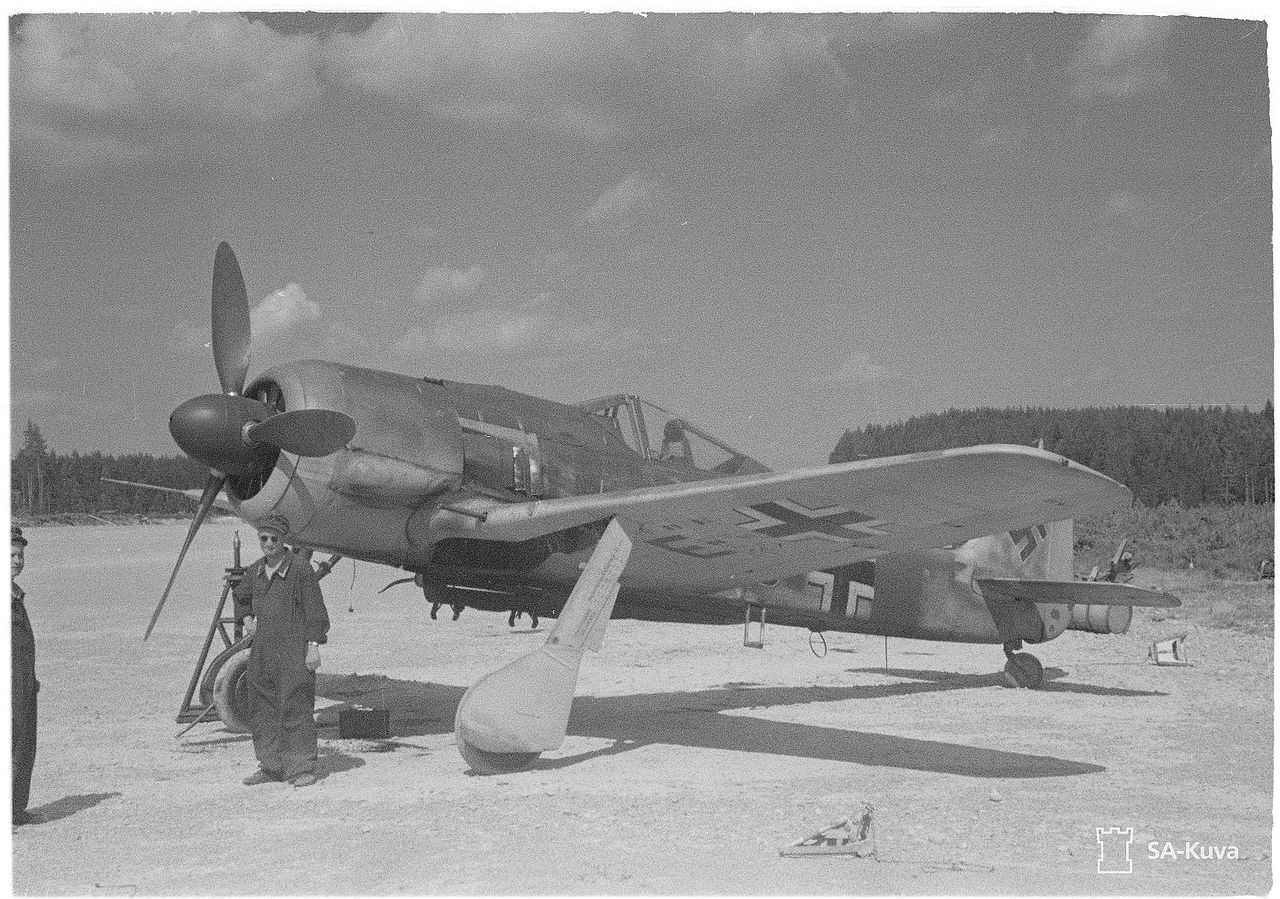
The Focke-Wulf Fw 190, widely known by its informal German name "Würger" (commonly translated as "Shrike" or "Butcher Bird"), was a single-seat fighter that became one of the Luftwaffe's principal combat types during World War II. Designed under Kurt Tank at Focke-Wulf, the prototype first flew in 1939 and early production machines reached frontline units in 1941. The aircraft was noted for its compact, robust airframe, powerful radial engine installation and concentrated forward firepower, features that gave it strong performance at low and medium altitudes and made it an adaptable platform for multiple combat roles.
Image gallery
10 Images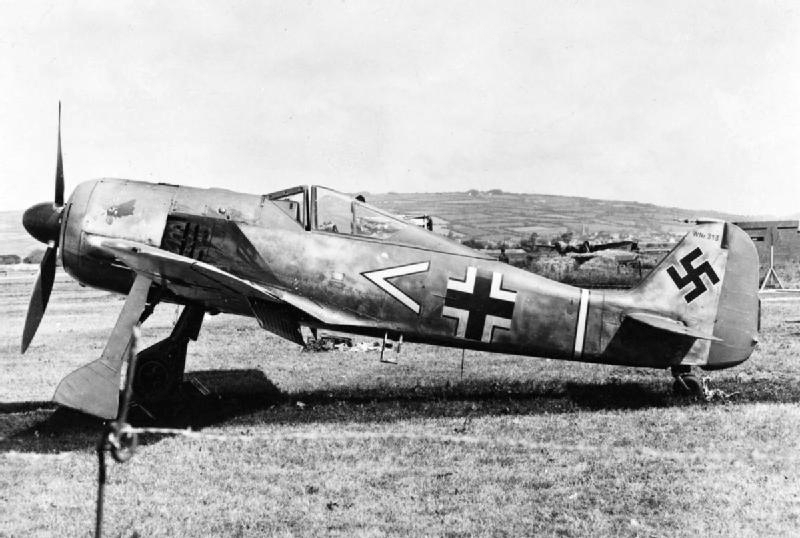




Development and design
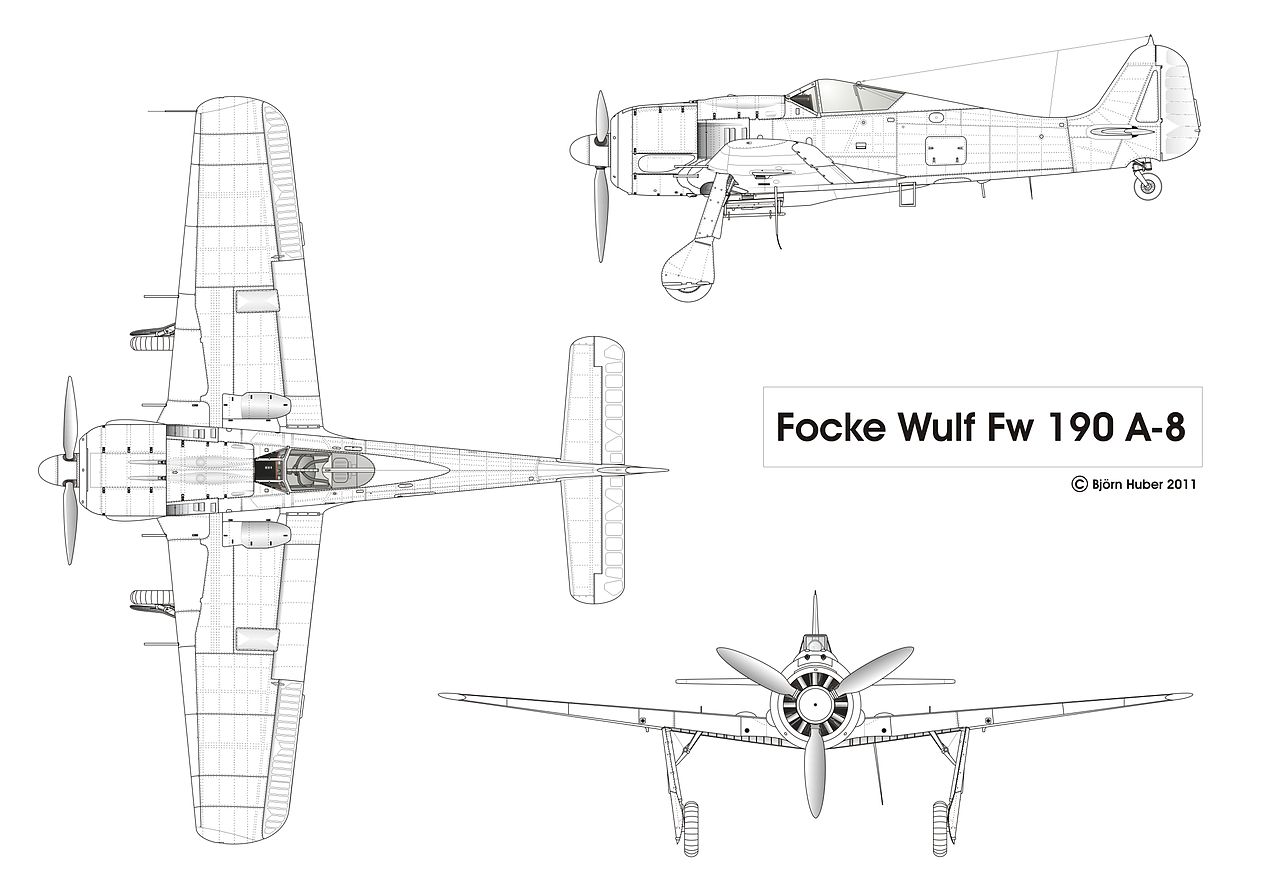
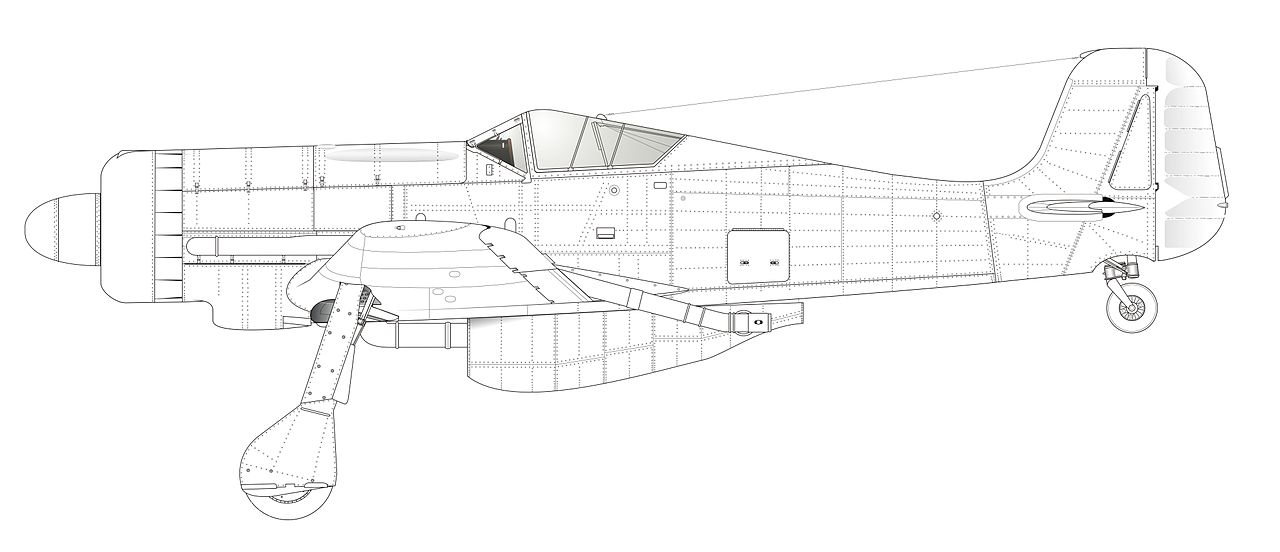
The Fw 190 was developed to supplement and in many roles to surpass existing fighters. The design emphasized structural strength, pilot protection and serviceability. A wide-track, inward-retracting landing gear improved ground handling, and the radial engine installation reduced vulnerability to frontal damage compared with in-line liquid-cooled engines. Most production A-series Fw 190s used the BMW 801 radial engine family; later variants and experimental high-altitude efforts explored alternative powerplants and supercharging installations to extend operational ceiling and speed.
Technical characteristics
Dimensions, weights and performance varied by subtype and loadout, but common A-series figures are broadly representative: a length near 8.8 m (about 29 ft), a wingspan around 10.5 m (roughly 34 ft 5 in) and a service ceiling in the order of 11,000 meters. Empty and loaded weights rose with armor and equipment, and cruising or ferry ranges were typically several hundred miles. In combat configuration many Fw 190s could reach speeds in the vicinity of 650 km/h (about 400 mph) at their optimum altitude, making them comparable or superior to many contemporaries in short- to medium-range missions.
Armament and protection
The Fw 190 carried a concentrated forward armament arrangement that varied by model: combinations of fuselage-mounted machine guns and multiple wing-mounted cannons were common, and some specialized variants fitted heavier-calibre weapons for bomber interception or anti-armour work. The airframe was built to accept additional armour and self-sealing tanks, reflecting a design priority on survivability during ground-attack operations as well as air combat.
Operational history
Entered service in 1941, the Fw 190 saw action on both the Western and Eastern fronts. Pilots appreciated its handling at low and medium altitudes, strong roll response and heavy firepower. As the war progressed the type was adapted to fighter-bomber and ground-attack roles, including so-called "Sturmbock" (battering ram) versions that were optimized for destroying heavy bombers and ground targets. The Fw 190's robustness and adaptability extended its usefulness even as allied air forces introduced newer types and tactics.
Capture and intelligence value
In 1942 a notable intelligence event occurred when a German pilot, Armin Faber, mistakenly landed an intact Fw 190 at a British-controlled airfield. Examination of the captured machine allowed Allied technicians and engineers to study the aircraft's construction, systems and equipment directly, yielding insights that informed tactics, maintenance understanding and countermeasures. Contemporary technical assessments and reports from that period preserved valuable data about the type.
Variants, comparison and legacy
The Fw 190 family included numerous subtypes: standard single-seat fighters, fighter-bombers, two-seat trainers and purpose-built ground-attack versions. Compared with the Messerschmitt Bf 109, the Fw 190 was generally heavier and carried a heavier forward armament loadout; it offered better ground handling and pilot protection at the cost of some climb and high-altitude performance. Its combination of pragmatic engineering, concentrated armament and structural strength has made the Fw 190 a frequent subject of historical study, museum preservation and flight restorations. For manufacturer background see Focke-Wulf, for technical summaries see technical summaries, for wartime context see World War II, for service and organization references see Luftwaffe, and for accounts of captured examples see captured aircraft reports.
Today the Fw 190 is studied for its design trade-offs and battlefield adaptability. A number of restored airframes and reproductions preserve the type's legacy and allow historians, modelers and aviation enthusiasts to examine an aircraft that played a central role in mid-20th-century aerial combat development.
Questions and answers
Q: What was the Fw 190?
A: The Fw 190 was a German fighter aircraft made by Focke-Wulf during World War II.
Q: When was the Fw 190 introduced?
A: The Fw 190 was introduced in 1941.
Q: What is the top speed of the Fw 190?
A: The Fw 190 could go 408 miles per hour (653 kilometers per hour).
Q: What other names was the Fw 190 known by?
A: The Fw 190 was also called the Shrike and the Butcher Bird.
Q: What happened when Luftwaffe pilot Armin Faber landed at a British airfield?
A: When Luftwaffe pilot Armin Faber landed by accident at a British airfield, they were able to find out things about the aircraft.
Q: How was the armament of the Fw 190 compared to the Bf 109?
A: The Fw 190 was much better armed than Bf 109 - it had 2 machine guns above the engine and four cannons in the wings. Bf 109 had only one cannon and two machine guns.
Q: How did the Fw 190 compare to the Bf 109 in terms of speed and weight?
A: FW 109 was 1500 kg heavier than Bf 109. It was also faster (FW 190 A-8 was 16 kph faster than Bf 109 G-6) but it didn't climb as fast as Bf 109 (at 15 m/s compared to 17 m/s of Bf 109).
Related articles
Author
AlegsaOnline.com Focke-Wulf Fw 190 (Würger) — German World War II fighter Leandro Alegsa
URL: https://en.alegsaonline.com/art/35327
Sources
- aviation-history.com : "Focke-Wulf Fw 190"
- vectorsite.net : vectorsite.net/avfw190.html · webcitation.org
- tsohost.com : "tsoHost: UK Web Hosting Services and Solutions"