
Flying Tigers (American Volunteer Group)
The Flying Tigers were a volunteer group of American pilots who fought in China in 1941–42 under Claire Lee Chennault, noted for their P-40 fighters, shark-mouth nose art, and early successes against Japanese air forces.
The Flying Tigers was the popular name for the American Volunteer Group (AVG), a unit of U.S. volunteer pilots organized to defend China against Imperial Japan in 1941–1942. Recruited from U.S. military personnel and civilians, the group operated before the United States formally entered large-scale combat in the China–Burma–India theater. Their leader was Claire Lee Chennault, whose tactics and training shaped the unit's approach to air combat.
The AVG was formed under contract with the Chinese government and drew aviators from multiple U.S. services and backgrounds. Many members had served in or come from the United States Army Air Forces, while others had connections to the United States Navy and the United States Marine Corps. That cross-service mix contributed to a blend of experience and improvisation during early operations in China and Burma.
Image gallery
10 Images




Aircraft, tactics, and characteristics
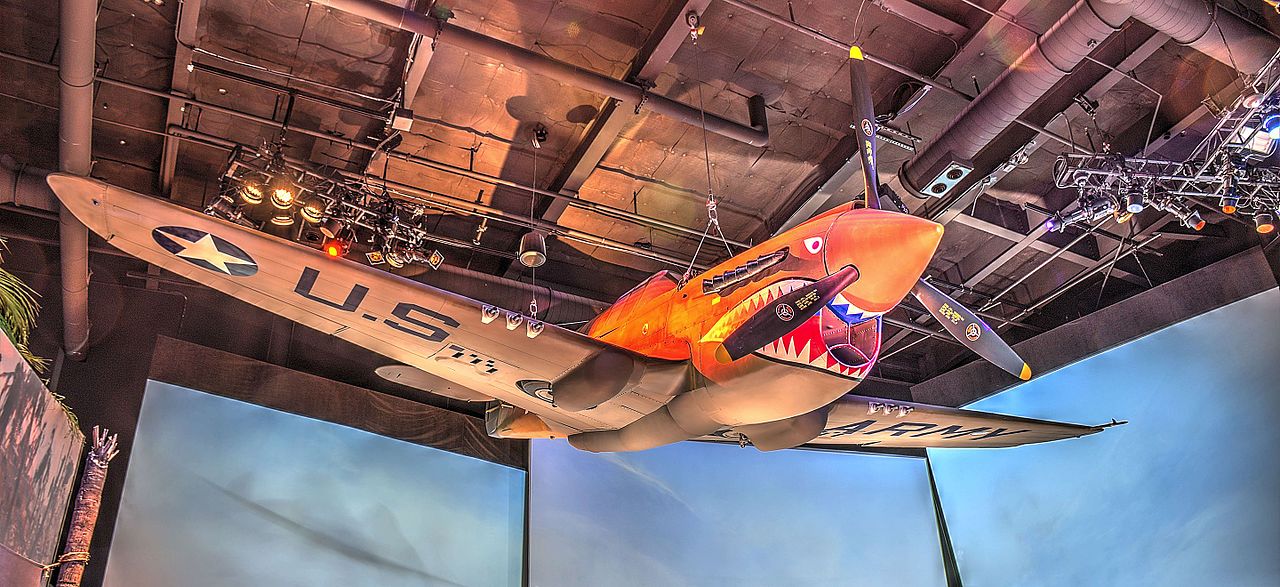
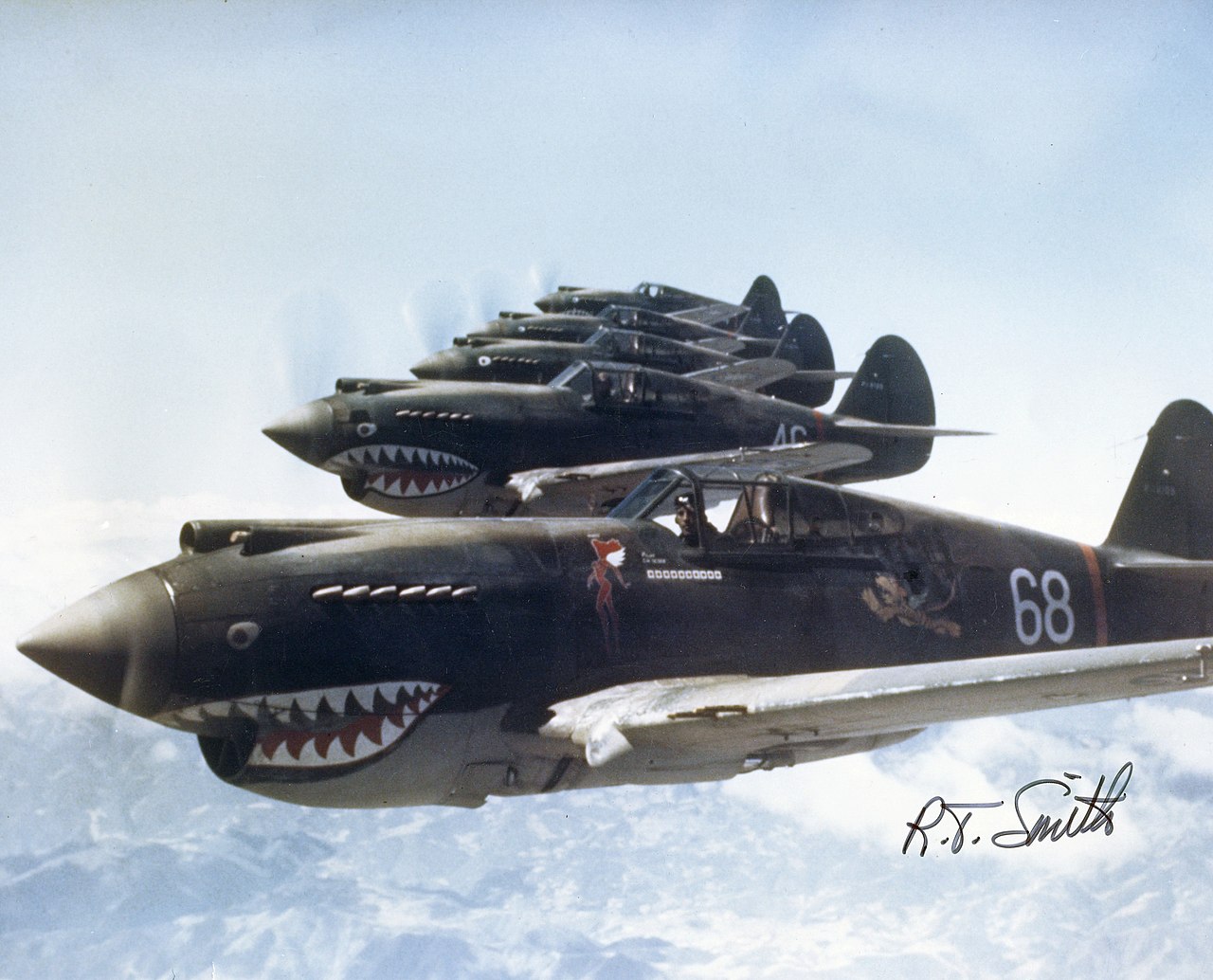
- Primary aircraft: The AVG flew the Curtiss P-40 fighter (often called the Tomahawk or Warhawk), favored for its ruggedness, firepower, and suitability for low- to medium-altitude engagements.
- Tactics: Under Chennault’s direction the pilots emphasized diving, slashing attacks and surprise hit-and-run strikes rather than turning dogfights—techniques effective against many Japanese designs of the period.
- Identity: Distinctive markings such as the shark-mouth nose art became a visual trademark and a morale symbol for Allied forces and civilians alike.
Operationally, the Flying Tigers escorted transports, attacked enemy airfields and ground targets, and defended supply routes that sustained Chinese resistance. Their actions protected convoys and the Burma Road approaches and helped maintain the flow of materiel into China, while also providing a propaganda boost and a symbol of American support for China.
After the AVG disbanded or was absorbed into U.S. military structures, many of its pilots were offered commissions in regular forces and the unit’s legacy continued in successor formations. The name "Flying Tigers" persisted as an emblem of early U.S. involvement in the Asian air war and of international cooperation; it remains prominent in books, museums, and memorials.
Distinctive aspects include the volunteer status of many aviators, the cross-service recruitment that drew on skills from the American Volunteer Group roots, and the leadership style of Chennault, whose ideas on air tactics influenced later operations. For further reading on unit organization and biographies of its members see more detailed sources and archival collections referenced by organizations that preserve their history.
Questions and answers
Q: Who were the Flying Tigers?
A: The Flying Tigers was a group of American fighter pilots from the United States Army Air Force, the United States Navy, and the United States Marine Corps.
Q: Who was the commander of the Flying Tigers?
A: Claire Lee Chennault was the commander of the Flying Tigers.
Q: Which branch of the military did the Flying Tigers come from?
A: The Flying Tigers consisted of fighter pilots from the United States Army Air Force, the United States Navy, and the United States Marine Corps.
Q: What was the objective of the Flying Tigers?
A: The objective of the Flying Tigers was to provide air support for China during World War II.
Q: What was the role of Claire Lee Chennault in the Flying Tigers?
A: Claire Lee Chennault was the commander of the Flying Tigers and played a significant role in training the pilots and devising successful tactics for combat.
Q: Did the Flying Tigers participate in any other military conflicts?
A: The Flying Tigers only participated in the Second Sino-Japanese War (1937-1945) and were not involved in any other military conflicts.
Q: What was the significance of the Flying Tigers in World War II?
A: The Flying Tigers were significant in World War II as they provided crucial air support to the Chinese forces against Japan at a time when the United States had not yet entered the war.
Related articles
Author
AlegsaOnline.com Flying Tigers (American Volunteer Group) Leandro Alegsa
URL: https://en.alegsaonline.com/art/35311
Sources
- flyingtigersavg.com : flyingtigersavg.com/tiger1.htm
- acepilots.com : "The Flying Tigers - American Volunteer Group, flew P-40s over China"
- af.mil : af.mil/news/story.asp?id=123071654