
Ensifera: Long-horned orthopterans including crickets and katydids
Ensifera is the suborder of Orthoptera that contains crickets, katydids and relatives. Members have long antennae, many produce songs by wing rubbing, and females often bear a long ovipositor.
Ensifera is a major suborder within the insect order Orthoptera. It groups the familiar long-horned orthopterans such as crickets, katydids (also called bush crickets) and several related families. The name derives from the Latin root meaning "sword bearer" and refers to the elongated egg-laying organ of many females.
Image gallery
6 Images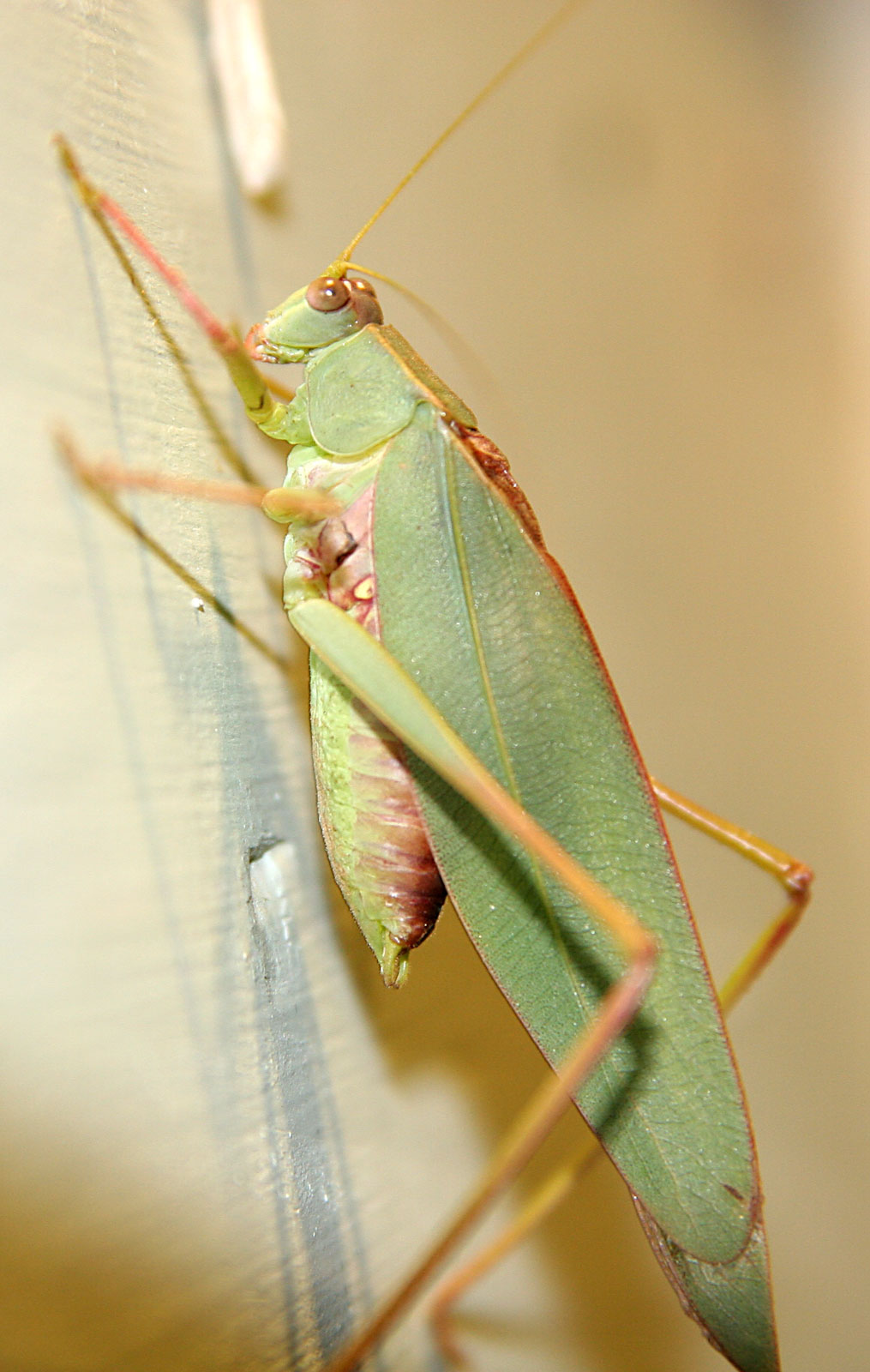


Typical characteristics
Members of Ensifera generally share several recognizable traits. They usually have very long, thread-like antennae that exceed the length of the body. Females often possess an extended, blade-shaped ovipositor; the Latin term "Ensifer" reflects this feature. Many ensiferans have conspicuous forewings (tegmina) used in sound production.
Sound, hearing and behavior
A hallmark of many species is acoustic communication. Males commonly produce species-specific songs by rubbing specialized parts of the forewings together (stridulation) to attract mates or to defend territory. Hearing organs (tympana) are often located on the front legs and are tuned to these signals. Most ensiferans are active at night and rely on sound and chemical cues for mating.
Ecology, life cycle and examples
Ensiferan diets vary from largely herbivorous to omnivorous or predatory depending on the family. Typical life cycles include egg, multiple nymphal instars and adult. Well-known examples include field and house crickets, katydids, bush crickets and mole crickets. Female anatomy with the long ovipositor allows eggs to be laid in soil, plant tissue or other substrates.
Classification and history
Ensifera is contrasted with the suborder Caelifera (short-horned grasshoppers and locusts) chiefly by antenna length, wing and sound organs, and reproductive structures. Fossil and molecular evidence show that ensiferans have an ancient evolutionary history with representatives recorded in Mesozoic deposits; modern families diversified into the forms familiar today.
Importance and notable facts
These insects play important ecological roles as herbivores, predators and prey, and their songs are of interest in behavior and evolutionary studies. Some species are agricultural pests, while others are valued for pest control, ecosystem function, or as subjects in acoustic research and natural history. For further classification details see broader resources on Orthoptera and group treatments of crickets and katydids.
Related articles
Author
AlegsaOnline.com Ensifera: Long-horned orthopterans including crickets and katydids Leandro Alegsa
URL: https://en.alegsaonline.com/art/31572