
Entognatha: the entognathous hexapods
Entognatha are small, wingless hexapods with internalized mouthparts. This group includes springtails, diplurans and proturans, important in soil ecology and early hexapod evolution.
Entognatha is a grouping of small, wingless hexapods distinguished by mouthparts that are withdrawn into the head capsule. They belong to the broader assemblage of Hexapoda and are traditionally set apart from true insects by this entognathous condition. Entognaths are ametabolous, meaning they do not undergo metamorphosis and young resemble miniature adults. They are often encountered in soil, leaf litter, under bark, in caves and other moist microhabitats.
Image gallery
4 Images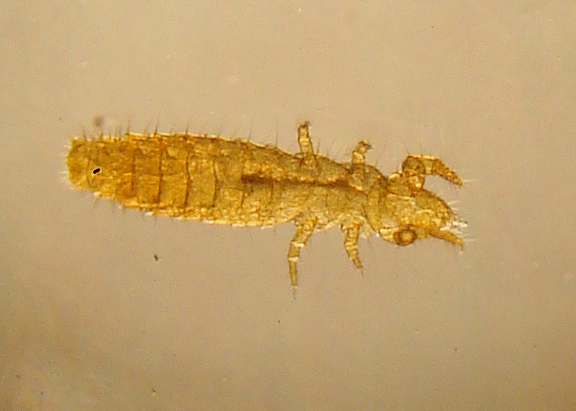


Characteristics
- Entognathous mouthparts: mandibles and maxillae are enclosed within folds of the head.
- Six legs: like all hexapods, they have three pairs of legs but lack wings.
- Size and senses: most species are minute, frequently eyeless or with simple ocelli, and rely on antennae or modified forelegs for sensing.
- Development: ametabolous growth — no pupal stage; juveniles molt into larger forms.
Major orders
The class is usually divided into three orders, each with distinctive morphologies and life habits:
- Collembola (springtails) — numerous, with a furcula (a forked jumping organ) or a ventral tube (collophore) in many species; important in decomposition.
- Protura — tiny, eyeless animals that lack antennae and use their forelegs like sensory organs.
- Diplura — elongated, often eyeless hexapods with a pair of cerci (terminal appendages) that may be filamentous or forceps-like.
Entognaths fall within the wider context of arthropods but differ in body plan and lifestyle from conventional insects. Their ecological roles often center on breaking down organic matter and recycling nutrients in soils and detritus.
From an evolutionary and taxonomic perspective, Entognatha occupy an early-branching position among hexapods. Some phylogenetic studies treat the group as monophyletic, while others suggest it may be paraphyletic with respect to true insects; this remains an active area of research. Fossils and molecular data indicate a long history of diversification in terrestrial microhabitats.
Entognaths are frequently used as indicators of soil health and are studied in ecology, soil biology and environmental monitoring. Field collection methods include soil cores, litter extraction and pitfall traps; laboratory observation requires fine handling because of their minute size. For further general information see resources on hexapods and each order: Hexapoda overview, springtails, diplurans, protura.
Related articles
Author
AlegsaOnline.com Entognatha: the entognathous hexapods Leandro Alegsa
URL: https://en.alegsaonline.com/art/31611